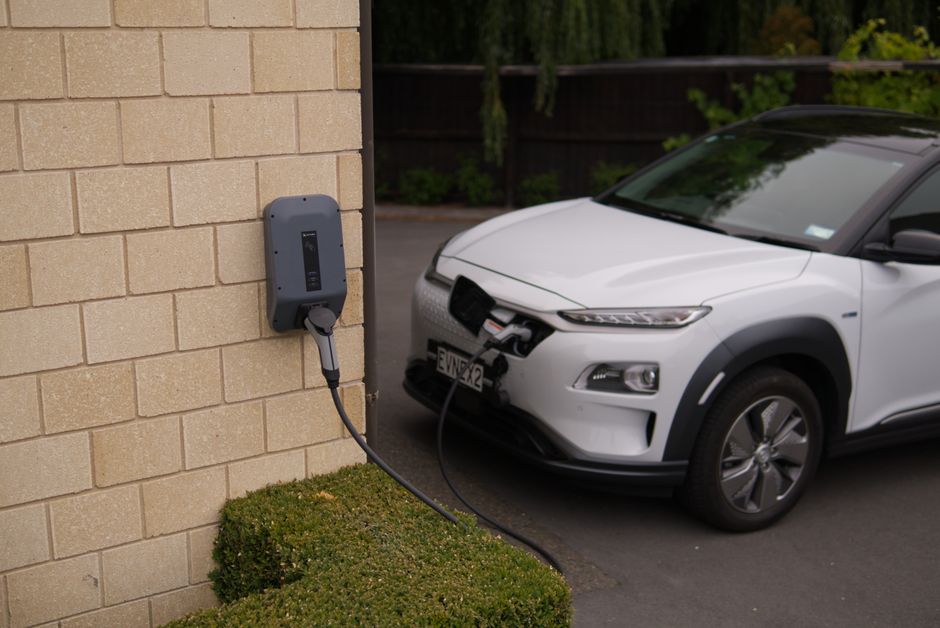
Here is the straight answer: if you can charge at home and your busiest regular day is under 100 miles, almost every electric car on sale covers your daily life without you thinking about it. Range only becomes a real decision if you regularly drive 150+ miles in a day, or you can't charge where you park.
Key Takeaways
- Use a simple working rule: expect roughly 80% of the official WLTP range in mixed UK driving, roughly 70% at sustained 70mph motorway speeds or in cold winter conditions, and roughly 60% when you face both together.
- According to Department for Transport National Travel Survey data for 2024, the average car in England covered around 7,100 miles a year - about 19 miles a day. Most drivers are nowhere near the limits of a modern EV.
- Size your range against your busiest regular day, not your once-a-year drive to Cornwall. Long trips are solved by charging stops, not by battery size.
- Home charging changes the maths completely - you start every morning full, so daily range resets overnight.
- Your lease's contracted annual mileage and the car's range are two separate decisions. Getting the mileage wrong costs you money at handback; getting the range wrong costs you patience.
What's in this guide
- How much EV range do you actually need?
- What is WLTP range and why doesn't it match reality?
- What range will you really get in the UK?
- What affects EV range the most?
- Does charging at home change the answer?
- How does range work on a long motorway journey?
- Range versus lease mileage: two different decisions
- Your EV range decision checklist
- Frequently Asked Questions
How much EV range do you actually need?
Work it out from your busiest regular day, not your annual total. If that day is under 40 miles, a 200-mile WLTP car is plenty. Under 100 miles, look for 250+. Beyond 150 miles a day, or without home charging, you want 400 miles WLTP and rapid charging speed.
Most people massively overestimate. According to the Department for Transport's National Travel Survey vehicle mileage data, the average car in England covered around 7,100 miles in 2024 - roughly 19 miles a day. Even the higher-mileage end of the market isn't extreme: RAC Foundation analysis of 2024 data puts battery electric cars under three years old at just over 10,000 miles a year, broadly level with new diesels.
So the honest position is this. For the large majority of UK drivers, range stopped being the deciding factor a few years ago. What matters far more is where you charge and how often you do genuinely long single-hop journeys.
| Your busiest regular day | WLTP range to aim for | What that means in winter motorway driving |
|---|---|---|
| Under 40 miles | 200 miles or more | About 120 miles - three times your daily need |
| 40 to under 100 miles | 250 miles or more | About 150 miles - comfortable with overnight charging |
| 100 to under 150 miles | 300 miles or more | About 180 miles - still a single charge, most days |
| 150 miles or more | 400 miles or more, plus 150kW+ charging | About 240 miles - one short rapid stop on the worst days |
If you can't charge at home, treat that as a modifier on top: move up one band and prioritise charging speed over battery size. A car that takes 400kW-era charging and refills 10-80% in twenty minutes beats a slow-charging car with a bigger battery when you're relying on public infrastructure.
What is WLTP range and why doesn't it match reality?
WLTP - the Worldwide Harmonised Light Vehicles Test Procedure - is the standardised laboratory test that produces the official range figure on every new car's spec sheet. It's run at 23°C with climate control off, on rolling road equipment, at an average speed well below UK motorway pace. It's a fair comparison tool, not a promise.
WLTP replaced the older and notoriously optimistic NEDC test, and it is considerably tougher. The cycle covers four phases - low, medium, high and extra-high speed - over roughly 23km, with an average speed of about 46.5km/h. Useful. But two things in that description matter enormously for a British driver: the 23°C lab temperature, and the fact that nobody is running the heater.
That's why the same car quoted at 300 miles WLTP might show 240 on your commute in May and 180 on the M6 in January. The car isn't broken and the manufacturer hasn't lied. You're simply driving in conditions the test doesn't simulate.
The practical upside of WLTP is consistency. Every car is measured the same way, so comparing a 280-mile car with a 340-mile car tells you something real about which will go further - even though neither will hit its number in the wild.
What range will you really get in the UK?
As a working rule, plan on roughly 80% of the WLTP figure in mixed UK driving, roughly 70% at sustained motorway speeds or in cold winter conditions, and roughly 60% when you get both at once. These are planning figures rather than guarantees, but they're deliberately conservative and they hold up well across most modern EVs.
| Official WLTP range | Mixed driving (~80%) | Motorway or winter (~70%) | Winter motorway (~60%) |
|---|---|---|---|
| 200 miles | 160 miles | 140 miles | 120 miles |
| 250 miles | 200 miles | 175 miles | 150 miles |
| 300 miles | 240 miles | 210 miles | 180 miles |
| 400 miles | 320 miles | 280 miles | 240 miles |
| 450 miles | 360 miles | 315 miles | 270 miles |
One quirk that surprises people coming from petrol: electric cars are at their best in town. Stop-start traffic that ruins fuel economy in a combustion car is close to free in an EV, because regenerative braking recovers energy every time you slow down. Urban drivers often beat the 80% figure comfortably. Motorway drivers rarely do, because aerodynamic drag rises steeply with speed - the difference between 60mph and 70mph is bigger than most people expect.
Cold weather is the other half of the story, and it deserves its own treatment. Our guide on how cold weather affects EV range covers preconditioning, heat pumps and what a genuine British winter does to your numbers.
What affects EV range the most?
Speed and temperature dominate, and everything else is a rounding error by comparison. Sustained motorway speed and a cold cabin heater will move your range far more than tyre pressures, roof bars or a boot full of luggage - though those all count too. Understanding the order of importance is what lets you plan properly.
Speed
Aerodynamic drag rises with the square of speed. Holding 70mph on the M1 uses considerably more energy per mile than 55-60mph, which is why long-distance EV drivers often sit a little slower than they used to. Dropping 10mph on a long run genuinely buys you miles.
Cold and cabin heating
Cold cells deliver less energy, and unlike a petrol car there's no waste engine heat to warm the cabin - the heater draws directly from the traction battery. A heat pump softens this considerably, so check whether one is fitted or optional on the trim you're considering.
Wheels and tyres
The larger alloy option on the spec sheet usually costs you range - bigger wheels, wider tyres and open designs all add drag and rolling resistance. Underinflated tyres cost you more. This is one of the few places where the cheaper option is also the better one.
Load, roof bars and terrain
A roof box on a family holiday run is worth a noticeable chunk of range. So are hills, headwinds and towing. None of these are dealbreakers - they just need factoring into the plan for the days they apply.
Battery ageing sits slightly apart from all of this. Capacity does decline gradually, though modern packs hold up far better than the early scare stories suggested, and most manufacturers back them with an eight-year warranty. On a typical three or four-year lease it's rarely something you'll notice, and we've set out the detail in our guide to EV battery degradation on a lease.
Try before you commit: match the car to your week
Take your single busiest regular week and add up the longest day in it. Then check that figure against the winter motorway column in the table above - the worst-case column, not the best. If the car still clears it, range will never be something you think about. If it doesn't, you either need a longer-range model or a charging plan, and our team can talk you through both.
We arrange thousands of leases a year, and the drivers who end up frustrated with an EV are almost always the ones who chose on headline range instead of on where they'd actually plug in.
Does charging at home change the answer?
Enormously. With a home charger you start every single morning at full charge, so your daily range requirement resets overnight and total battery size stops mattering for everyday driving. Without home charging, the calculation shifts from how far the car goes to how conveniently and quickly you can refill it.
This is the single biggest variable in the whole decision, and it gets less attention than it deserves. A driver with a driveway wallbox and a 250-mile car will rarely think about range. A driver relying on public charging with a 400-mile car may still think about it weekly - because the question isn't distance, it's access.
If you're on a smart overnight tariff, home charging is also far cheaper per mile than public rapid charging. We cover the numbers in our guide to what it costs to charge an EV, and the practicalities of home, workplace and public options in charging a leased EV.
No driveway? It's not a dealbreaker, but be honest with yourself about it. According to Department for Transport statistics published in January 2026, there were 116,052 public EV chargers across the UK - a network that has grown quickly and continues to. On-street and destination charging near home is worth checking on a map before you sign anything. Our guide on whether you need a home charger to lease an EV works through the alternatives properly.
How does range work on a long motorway journey?
On a long trip you don't use the full battery. You typically drive from around 80% down to 10-20%, then rapid charge back to 80% - because charging slows sharply above 80% to protect the cells. So your practical hop between stops is roughly 60-70% of your real-world range, not 100% of it.
Take a 300-mile WLTP car on a January motorway run. Apply the 60% winter motorway figure and you have about 180 miles of real range. Drive from 80% to 15% of that and you're covering roughly 115-120 miles between charges. That sounds restrictive written down. In practice a 20-30 minute rapid stop is a coffee and a comfort break, and you'd have stopped anyway on a four-hour drive.
Now the same maths on a 450-mile car: about 270 miles of winter motorway range, and something close to 175 miles between stops. That's the difference the bigger battery buys you - fewer stops, not a fundamentally different experience.
So is a long-range EV worth paying more for?
Only if you actually do those journeys often. We see people specify a 400-mile car for two trips a year and then commute eleven miles each way in it. If your long drives are occasional, take the cheaper, smaller-battery car and accept one extra stop on those days - the monthly saving usually dwarfs the inconvenience. If you're on the motorway every week, the extra range earns its keep.
Range versus lease mileage: two different decisions
Range is how far the car goes on a charge. Contracted annual mileage is how many miles your lease agreement allows per year. They're unrelated, and mixing them up is a common and expensive mistake. You can happily lease a 200-mile EV on a 20,000-mile-a-year contract, or a 450-mile EV on 5,000 miles.
Your contracted mileage affects the rental directly - lower mileage means a higher forecast value at the end of the term, which narrows the gap you fund. A lease rental is the gap between what the vehicle costs to acquire and what it's forecast to be worth at the end of the contract, plus interest charges. Higher mileage widens that gap.
Go over your contracted total and the funder charges excess mileage, quoted as a pence-per-mile rate in your agreement. Set the mileage too high and you've paid for miles you never drove. Neither is a disaster, but the first one stings at the end of a three-year term.
A few practical points from our team:
- Base your contracted mileage on what you actually drive, then add a modest buffer. Check your last two MOT certificates for a real figure rather than a guess.
- Excess mileage rates are set out up front. Ask what yours is before you sign - it's a simple question and a good broker will answer it plainly.
- Under BVRLA fair wear and tear standards, which govern what's acceptable at handback, higher mileage is expected to bring more wear. That's normal, but keeping the car tidy still matters.
- If your circumstances change mid-term, tell us early. Adjusting mileage during a contract is sometimes possible and always cheaper than discovering the problem at collection.
Company car drivers: the tax picture is separate from range
If you're taking an EV as a company car or through salary sacrifice, the tax treatment is a big part of the value - and it doesn't change with range. According to HMRC's published company car tax rates, fully electric cars carry a Benefit in Kind (BIK) rate - the tax charge on a company car available for private use - of 4% of P11D value for the 2026/27 tax year, rising to 5% in 2027/28, 7% in 2028/29 and 9% in 2029/30. Petrol and diesel cars sit at roughly 15% to 37%, scaling with CO2 emissions.
Example: a £40,000 EV at 4% BIK gives a taxable benefit of £1,600 for 2026/27. A 40% taxpayer pays £640 a year on that, or around £53 a month. That gap is why so many company drivers make the switch regardless of how far the car goes.
Your EV range decision checklist
Run through these five questions in order and you'll land on the right car without agonising over spec sheets. The whole exercise takes about ten minutes, and it beats reading another fifty range reviews.
Step by step
- Find your busiest regular day. Not your annual mileage, and not the airport run you do once a year. The longest day you do in a normal month.
- Match it to a band. Under 40 miles: 200+ miles WLTP. 40 to under 100: 250+. 100 to under 150: 300+. 150 or more: 400+ with 150kW or faster charging.
- Apply the home charging modifier. If you can't charge where you park overnight, move up one band and weight your choice towards charging speed rather than battery size.
- Sanity-check against winter. Take your candidate car's WLTP figure, multiply by 0.6, and confirm that still clears your busiest regular day. If it does, you're covered in the worst conditions the UK throws at you.
- Set your lease mileage separately. Use your real annual mileage from your MOT history, add a sensible buffer, and check the excess mileage rate before signing.
If step four fails and a longer-range car is out of budget, a plug-in hybrid may fit better than forcing an EV that doesn't suit your week. Our guide to BEV, PHEV and hybrid options sets out the trade-offs, and if you're still weighing up the switch entirely, start with should I lease an electric car?
Not sure which range band you fall into?
Tell our team what your week looks like and we'll tell you honestly which cars fit - including when a cheaper, shorter-range model is the sensible answer. Call 0333 003 3325 or browse the current electric deals.
Browse Electric Car DealsFrequently Asked Questions
Sources
- National Travel Survey: vehicle mileage and occupancy - Department for Transport
- Electric vehicle public charging infrastructure statistics: January 2026 - Department for Transport
- Tax on company benefits: company cars - HMRC / GOV.UK
Written by the team at First Vehicle Leasing. We've been arranging personal and business vehicle leases for over 25 years, and we're authorised and regulated by the Financial Conduct Authority and a member of the BVRLA. If you'd like a straight opinion on whether an EV fits your driving, call our team on 0333 003 3325.
Will I be approved?
Five questions, no sign-up, and an honest answer before you apply for anything.
Check my eligibility