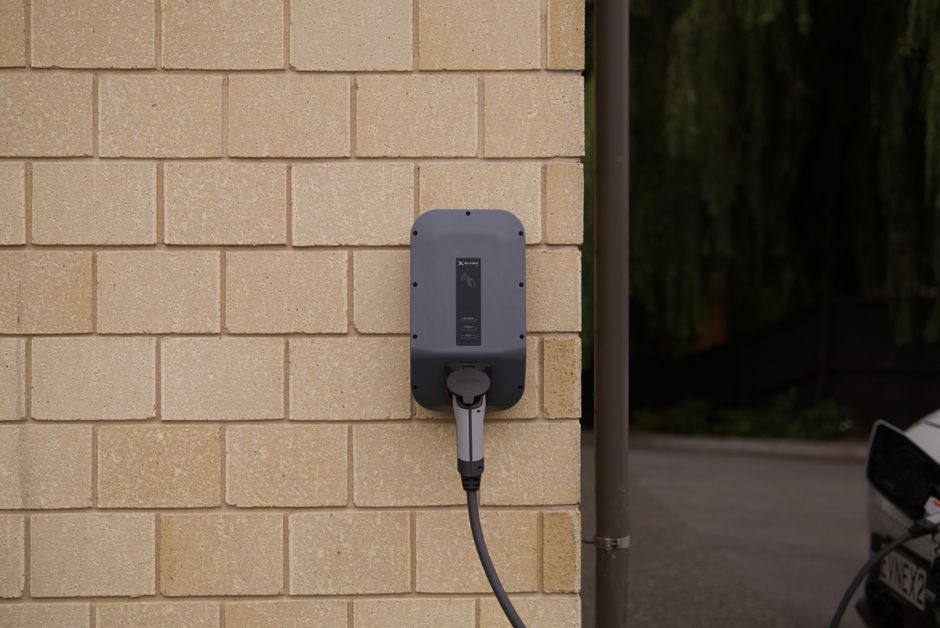
You charge a leased EV the same way you'd charge one you owned outright. Most drivers do the bulk of it at home overnight on a 7kW wallbox, use the public rapid network on longer journeys, and top up free at work if their employer offers it. Leasing changes nothing about where you can plug in.
Key Takeaways
- Home charging on an off-peak EV tariff is far and away the cheapest option - roughly 7p to 9p per kilowatt-hour (kWh) against a public rapid average of about 80p/kWh as at mid-2026.
- A leased car counts as an eligible vehicle for the government's EV chargepoint grants. According to GOV.UK guidance, eligible applicants get 75% off the cost of buying and installing a socket, up to £500, with the current schemes running to 31 March 2027.
- Homeowners with a private driveway are not eligible for a grant - that route closed in 2022. Renters, flat owners and households with on-street parking (using a cross-pavement channel) are.
- Workplace charging provided to employees generally is exempt from Benefit in Kind (BiK) tax - the tax charge on a non-cash perk from your employer. Free electricity at work is genuinely free.
- No driveway doesn't rule out an EV, but it changes the sums. Be honest with yourself about your local charging before you sign.
What's in this guide
- How do you charge a leased EV?
- Can you install a home charger on a leased car?
- What does charging actually cost?
- How does public charging work in practice?
- How does workplace charging work?
- Can you lease an EV with no driveway?
- Does charging affect your lease agreement?
- Charging a company or salary sacrifice EV
- Build your charging plan before you order
- Frequently Asked Questions
How do you charge a leased EV?
Three ways, and most drivers use all three. A home wallbox handles 80-90% of your miles, plugged in overnight while you sleep. Public chargers cover longer trips and top-ups when you're out. Workplace chargers, where they exist, are often free. Your lease agreement doesn't restrict any of it.
That's the honest short version. The car is yours to use for the whole contract - you're the registered keeper on the V5C, the funder is the legal owner - and nobody at the funding house has any interest in where you get your electricity from. Plug in wherever suits.
What actually differs between the three is cost and convenience, and the gap is enormous. Here's the comparison our team walks customers through:
| Where you charge | Typical speed | Rough cost per kWh | Best used for |
|---|---|---|---|
| Home wallbox, off-peak EV tariff | 7kW (about 8 hours for a full charge) | 7p-9p | Everyday driving - your default |
| Home wallbox, standard tariff | 7kW | About 26p | Still cheap, but you're leaving money on the table |
| Three-pin plug at home | 2.3kW (24 hours or more) | Same as your tariff | Emergencies and very low mileage only |
| Workplace charger | 7kW-22kW | Often free to the employee | Commuters with a bay at work |
| Public slow/fast (3kW-49kW) | 1-6 hours | About 54p | Supermarkets, car parks, on-street, hotels |
| Public rapid/ultra-rapid (50kW+) | 20-45 minutes, 10-80% | About 80p | Motorway journeys and en-route top-ups |
A kilowatt-hour (kWh) is simply a unit of electricity - the same unit on your household bill. Battery sizes are quoted in kWh, so a 60kWh battery holding a full charge at 8p/kWh costs about £4.80 to fill. The same 60kWh on an 80p rapid costs £48. Same electricity, same car, ten times the price.
Can you install a home charger on a leased car?
Yes. A home chargepoint is fitted to your property, not to the vehicle, so it has nothing to do with your lease contract and stays with the house when the car goes back. If you rent, you'll need your landlord's written permission. If you own a leasehold flat, you'll need the freeholder or managing agent to agree.
Installation of a standard 7kW smart wallbox with a straightforward cable run typically lands somewhere in the region of £800 to £1,500 fitted, with longer cable routes, consumer unit upgrades or groundworks pushing it higher. Get more than one quote - prices vary a lot by installer and region.
Do you qualify for a chargepoint grant?
This trips people up constantly, so let's be clear. According to GOV.UK guidance on electric vehicle chargepoint grants, the schemes administered by the Office for Zero Emission Vehicles (OZEV) give 75% off the purchase and installation of a socket, capped at £500, and run until 31 March 2027. The cap rose from £350 to £500 on 1 April 2026.
Renters & flat owners
Eligible if you live at the property and have private off-street parking. You need written permission from the landlord, freeholder or managing agent, and an OZEV-approved installer.
On-street parking only
Eligible if you fit a permanent cross-pavement solution - a channel or gully under the footpath - and have consent from your local highways authority. Temporary cable mats don't count.
Homeowner with a driveway
Not eligible. The old Electric Vehicle Homecharge Scheme closed to owner-occupiers with off-street parking back in 2022 and hasn't come back. You pay the full installed cost.
Crucially for anyone reading this page: the grants require you to own or lease an eligible electric vehicle. A contract hire agreement of six months or more qualifies you just as an outright purchase would. Your installer submits the application on your behalf, and the grant is deducted from your invoice.
One piece of timing advice from our team - order the charger once your delivery date is firm, not before. Installers usually want evidence of the vehicle, and lead times on new cars move.
If you're still weighing up whether a wallbox is essential at all, our guide on whether you need a home charger to lease an EV goes into the trade-offs in more detail.
What does charging actually cost?
Charging cost is decided almost entirely by where you plug in, not which car you chose. On an off-peak home tariff you're looking at roughly 2p to 3p a mile. At the standard price cap rate it's around 7p to 8p a mile. Rely on public rapid chargers and you're at roughly 23p a mile - more than petrol.
Take a 60kWh battery doing about 3.5 miles per kWh, which is a fair real-world average for a mid-sized EV. Filling it from empty costs about £4.80 on an 8p off-peak tariff, about £15.70 at the Ofgem price cap rate of 26.11p/kWh applying from 1 July to 30 September 2026, and about £48 on an 80p rapid charger. Those are illustrative round numbers, but the ratio is the point.
Two things drive the gap. First, off-peak EV tariffs price overnight electricity low because suppliers want your flexible demand when the grid is quiet. Second, tax: domestic electricity carries 5% VAT while public charging carries 20%, and the operator also has to recover hardware, grid connection and site rent.
So is an EV still cheaper to run if you can't charge at home? Sometimes, but the margin narrows to almost nothing if you live on rapid chargers. Slower public units at around 54p/kWh work out close to a frugal petrol car per mile; ultra-rapids don't. That's the honest answer, and it's worth knowing before you commit to a three or four-year contract rather than after. Our guide on what it costs to charge an EV breaks the arithmetic down further.
How does public charging work in practice?
You find a charger in an app, park, plug in, and pay by contactless card or through the network's app. Nearly all modern EVs use a Type 2 socket for AC charging and a CCS connector for DC rapid charging, so compatibility is rarely an issue. Older Nissan Leafs use CHAdeMO for rapids.
The bits nobody tells you
- AC vs DC. AC (alternating current) chargers up to 22kW feed your car's onboard charger, which caps the speed - many EVs only accept 7kW or 11kW on AC no matter what the post says. DC (direct current) rapids bypass that and go straight to the battery.
- Charge to 80%, not 100%. Rapid charging slows dramatically above 80% to protect the battery. On a motorway stop you're wasting time and money going further.
- Bring your own cable. Slow and fast AC posts are usually untethered - you need the Type 2 cable that came with the car. Rapids have cables attached.
- Prices vary hugely. The spread across major rapid networks runs from around 60p to over 90p per kWh on pay-as-you-go. A roaming app or network membership normally beats the walk-up rate.
- Cold weather costs more. Not per kWh, but you'll use more of them. Expect to charge more often in winter.
In practice, a sensible driver treats the public network as a tool for journeys, not a fuel station habit. If your daily round trip is comfortably inside the car's range, you'll go weeks without touching a public charger. Our guide to how EV range really works covers how much range you actually need, which is usually less than people assume.
How does workplace charging work?
If your employer provides chargers at or near the workplace and makes them available to employees generally, the electricity is exempt from Benefit in Kind tax. No BiK charge, no Class 1A National Insurance, whether the car is a company vehicle or your own. It's one of the more generous corners of HMRC's rules.
The condition that catches employers out is the "available to employees generally" test. A single charger reserved for one director doesn't qualify. It doesn't matter that not every member of staff drives an EV - the facility has to be open to the workforce in principle.
For employers, the Workplace Charging Scheme provides up to £500 per socket for up to 40 sockets across all sites, on the same GOV.UK grant page as the domestic schemes. Businesses can also claim capital allowances on the equipment, though your accountant should confirm the position for your accounting period.
Worth asking before you order
If your employer has chargers, ask two questions: is the electricity free to staff, and are the bays first-come-first-served? Free workplace charging plus a modest home top-up is about the cheapest way to run an EV in Britain. A single shared 7kW post fought over by twelve people is not a charging plan.
Can you lease an EV with no driveway?
Yes, and plenty of our customers do - but go in with your eyes open. Without home charging you'll pay two to three times more per mile, and you're dependent on local infrastructure being reliable. If you have a decent on-street network, workplace charging or a supermarket hub you pass daily, it works. If not, be cautious.
Your realistic options, roughly in order of preference:
| Option | How it works | The catch |
|---|---|---|
| Cross-pavement channel | A permanent gully under the footpath lets you run a cable from your own wallbox to a car parked at the kerb - home electricity prices, no trip hazard. Grant-eligible up to £500. | Needs local highways authority consent, and not every council permits them. The grant confers no right to the parking space outside your house. |
| Workplace charging | Charge while you work, usually free of BiK and often free of charge. | Only useful if you commute regularly and bays aren't oversubscribed. |
| On-street lamp-post and kerbside posts | Council-backed slow/fast charging, typically around 54p/kWh - cheaper than rapids. | Coverage is patchy outside cities, and you can't guarantee the bay is free. |
| Destination charging | Supermarkets, gyms, retail parks - top up while you're doing something else. | Fine as a supplement, unreliable as your only source. |
| Rapid hubs only | Fast, widely available, no infrastructure needed at home. | The most expensive way to run an EV. At around 23p a mile it can cost more than petrol. |
Our blunt view: if the only realistic option on that list is the last one, and you do high mileage, look hard at an efficient petrol or self-charging hybrid instead. A guide that pretends otherwise isn't doing you any favours. Our comparison of BEV, PHEV and hybrid sets out where each genuinely makes sense.
Does charging affect your lease agreement?
Not the electricity itself - but three related things do matter at handback. You must return every cable and accessory that came with the car, the charge port and flap need to be in reasonable condition, and your mileage allowance still applies regardless of how you charge. Battery health is the funder's risk, not yours.
Cables and accessories
The Type 2 cable supplied with the vehicle is part of the car. Lose it and you'll be recharged for a replacement at handback, which is not a small sum. Keep it in the boot and keep the bag. This is the single most common avoidable charge we see on returned EVs.
Fair wear and tear
Under BVRLA fair wear and tear standards - the industry benchmark most UK funders apply at end of contract - the charge port and its surround are assessed like any other panel or fitting. Normal use is fine. A cracked flap, a damaged port or heat-scorched contacts from a dubious third-party cable are not. Nothing exotic here; just don't be careless with it.
Battery degradation
Frequent rapid charging is generally accepted to be harder on a battery than slow AC charging over many years. On a typical three or four-year lease this rarely matters, and more to the point, the residual value risk sits with the funder rather than with you. That's one of the quiet advantages of leasing an EV during a period of fast-moving battery technology. We cover it properly in our guide on EV battery degradation on a lease.
Charging a company or salary sacrifice EV
For business drivers the tax rules around charging are unusually favourable. HMRC does not treat electricity as fuel for company car purposes, so there is no fuel benefit charge on an electric company car - your employer can pay for all your charging, private mileage included, without triggering the equivalent of the petrol fuel benefit.
Where employers reimburse business mileage, HMRC publishes Advisory Electric Rates. Under the rates published on the GOV.UK advisory fuel rates page, there are separate figures for home and public charging - 7p and 15p per mile respectively for the quarter from June 2026, reviewed every three months. Reimburse at or below the rate and it's tax and NI free; pay above it and the excess is reportable. HMRC's Employment Income Manual guidance on electric cars sets out the detail.
Meanwhile the company car tax itself remains the headline attraction. For the 2026/27 tax year the BiK appropriate percentage for a fully electric car is 4% of P11D list price, rising to 5% in 2027/28 under HMRC's published company car tax rates. Petrol and diesel cars sit far higher - roughly 15% to 37% depending on CO2 emissions, with the highest-emitting models at the top of that band.
Example: a £45,000 electric company car at 4% gives a taxable benefit of £1,800. A 40% taxpayer pays £720 a year - about £60 a month. Illustrative figures only; your own position depends on the car's P11D value and your marginal rate.
That low BiK figure is also what makes electric car salary sacrifice work so well, since you give up gross salary and pay tax only on the small benefit value. If your employer runs a scheme, the numbers are usually hard to beat.
Build your charging plan before you order
Ten minutes of checking now saves three years of irritation. Work through this before you commit to a contract:
- Can you park within cable reach of a wall or post at home? If yes, get a wallbox quote.
- Do you rent or own a flat? Ask for written permission early and check whether the £500 grant applies to you.
- No off-street parking? Check whether your council permits cross-pavement channels, then map the on-street posts within a five-minute walk.
- Does your employer have chargers, and are they free to staff?
- Look up the rapid chargers on the two or three long journeys you make most often. Not the whole country - just your actual routes.
- Check whether your energy supplier offers an off-peak EV tariff and what the smart meter requirements are.
- Match the car's real-world range to your longest regular trip, with winter allowance built in.
Score three or more of those in your favour and an EV lease will very likely work for you. If home charging and workplace charging are both a no, think carefully.
Talk to someone who leases EVs every day
Our team has spent over 25 years arranging vehicle leases, and in recent years a large share of those have been electric. We'll tell you straight if your charging setup doesn't suit the car you're considering - and we'd rather do that before you sign than after. First Vehicle Leasing is authorised and regulated by the Financial Conduct Authority (FCA) and is a member of the British Vehicle Rental and Leasing Association (BVRLA).
Frequently Asked Questions
Sources
- Electric vehicle chargepoint grants - GOV.UK / Office for Zero Emission Vehicles
- Advisory fuel rates, including Advisory Electric Rates - HMRC / GOV.UK
- EIM23900: Car benefit - issues relating to electric cars - HMRC Employment Income Manual
Written by the electric vehicle team at First Vehicle Leasing, an FCA-authorised leasing broker and BVRLA member with over 25 years arranging personal and business contract hire across the UK. Our guides are reviewed and updated as tax rates, grant schemes and charging costs change.
Will I be approved?
Five questions, no sign-up, and an honest answer before you apply for anything.
Check my eligibility