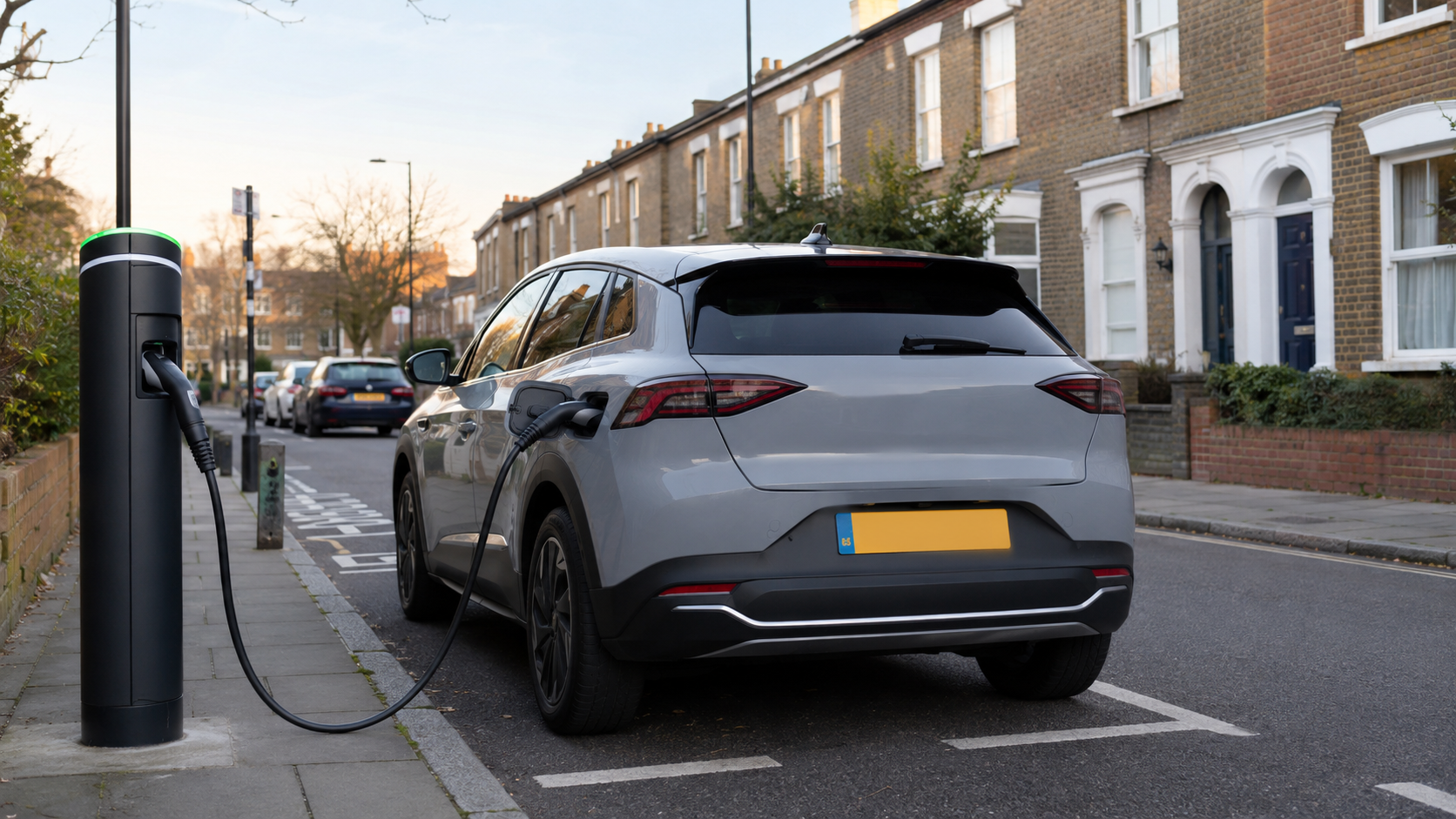

Leasing an EV without home charging can still work in 2026, but only if the charging routine is realistic. The important questions are not just whether the car is electric, but where you will charge it, how often, what it is likely to cost, and whether the lease terms still fit your normal mileage and budget.
This guide is for UK drivers weighing up an EV lease without a dependable driveway charger, including renters, flat owners, terraced-street drivers and company-car users. It is not here to push one answer. It is here to help you spot when an electric car lease fits everyday life, and when a PHEV, hybrid, petrol or diesel lease may be the more sensible choice.
Short answer: can an EV work without home charging?
It can, but only where three things line up: charging access, mileage and budget.
If you can do most of your charging on slower public chargers, workplace chargers or reliable destination chargers, an EV can still be a sensible lease choice. If you mainly need rapid charging at motorway services or busy hubs, the convenience improves but the cost usually rises. That is where the calculation starts to change.
According to Zapmap's Price Index, checked 17 July 2026 and updated 6 July 2026, the June 2026 weighted-average PAYG public charging price was 54p/kWh on 3kW up to 49kW chargers and 79p/kWh on 50kW+ rapid and ultra-rapid chargers. Zapmap gives average-efficiency equivalents of 16 pence per mile and 24 pence per mile respectively. Those are national weighted-average PAYG figures, not a promise of what you will pay at the charger round the corner.
So the practical rule is blunt but useful: no home charger does not rule out an EV, but mostly rapid charging can change the whole calculation.
Current UK public charging prices in 2026
Public charging prices vary by network, charger speed, location, payment method, membership and time of day. Some operators offer subscriptions, off-peak rates, loyalty deals or partner discounts. Others are pure PAYG. Before choosing a car, check the chargers you would actually use, not just the national average.
For public charging context, Zapmap's June 2026 weighted-average PAYG figures show the gap between slower public charging and rapid or ultra-rapid charging:
- Standard / Standard Plus public chargers, 3kW up to 49kW: 54p/kWh, around 16p per mile for an average-efficiency EV.
- Rapid / Ultra-rapid public chargers, 50kW and above: 79p/kWh, around 24p per mile for an average-efficiency EV.
Source: Zapmap Price Index, checked 17 July 2026, page updated 6 July 2026, using June 2026 figures.
Public charging cost split, June 2026
Standard / Standard Plus public chargers
54p/kWh
3kW up to 49kW, around 16p per mile.
Rapid / Ultra-rapid public chargers
79p/kWh
50kW+, around 24p per mile.
National weighted-average PAYG figures. Local prices vary by network, location, membership, payment method and time of day. Source: Zapmap Price Index, checked 17 July 2026; page updated 6 July 2026.
That speed split matters. Slower public charging is often the sort you use while parked for a while: near home, at work, in a town-centre car park, at a gym, supermarket or destination. Rapid and ultra-rapid chargers are built for shorter stops and longer journeys. They are useful, but you generally pay for that convenience.
Why charger type changes the cost and convenience
The easiest EV ownership is boring EV ownership. You park, plug in, walk away, and the car is ready when you come back. Without a home charger, your question is whether public charging can become boring enough to fit your week.
Slower public and destination charging can work if you already park there for a decent length of time. A flat owner with reliable overnight on-street charging nearby may have a workable routine. A renter with a dependable workplace charger could also be fine, especially if their weekly mileage is predictable. It does the job if it fits around life rather than becoming a second hobby.
Rapid and ultra-rapid charging is different. It is faster, often better for longer journeys, and can rescue a busy week. But if most of your charging depends on rapid sites, you need to budget with that in mind. You also need to think about queueing, charger reliability, payment apps, weather, lighting, accessibility and whether the charger is somewhere you actually want to spend 20 to 40 minutes.
There is also a battery and vehicle-fit point, though this article should avoid model-specific claims unless the final page uses approved manufacturer data. A bigger battery may reduce how often you charge, but it can cost more to lease. A smaller, cheaper EV may suit short urban mileage, but it could push you towards more frequent charging. The right answer depends on route, mileage, lease cost and charging access together.
| Charger type | Typical use | Evidence price where approved | Buyer watch-out |
|---|---|---|---|
| Standard / Standard Plus, 3kW up to 49kW | Parking for longer: near home, work, town-centre car parks, gyms, supermarkets or destinations. | 54p/kWh; around 16p per mile, June 2026 weighted-average PAYG. | Works best if the car is already parked there. Check availability, dwell limits, payment method and whether the charger is reliable at your normal times. |
| Rapid / Ultra-rapid, 50kW+ | Shorter stops, long journeys, awkward weeks and backup charging. | 79p/kWh; around 24p per mile, June 2026 weighted-average PAYG. | Faster but typically more expensive. Budget for queues, hub location, payment apps, weather, lighting and the value of your time. |
Source: Zapmap Price Index, checked 17 July 2026; page updated 6 July 2026. Slower public charging may suit parked time; rapid charging is faster but typically costs more.
UK charging network context
The UK public charging network is much bigger than it used to be, but national growth does not guarantee local convenience.
Zapmap's EV charging statistics page, checked 17 July 2026 and updated 6 July 2026, reports that at the end of June 2026 there were 121,171 EV chargers across 46,731 charging locations in the UK. It also reports 28,887 rapid or ultra-rapid EV chargers across 7,005 locations.
The official GOV.UK/DfT public EV charging infrastructure statistics for 1 April 2026, published 21 May 2026, reported 119,080 public EV chargers in the UK, including 27,372 rated rapid or above. The GOV.UK collection page was last updated 8 July 2026 with monthly regional data.
UK public charging network, end June 2026
EV chargers
Charging locations
Rapid or ultra-rapid chargers
National scale helps, but your real network is near home, work and regular routes. Source: Zapmap EV charging statistics, checked 17 July 2026; page updated 6 July 2026.
Those numbers are reassuring at a national level. Still, a driver in a Manchester terrace, a rural village, a block of flats, or a busy London borough does not experience a national total. They experience the two or three chargers they can actually reach on a wet Tuesday evening. Local availability is the bit that decides whether this is easy, tolerable or too much hassle.
Practical driver scenarios
This scenario comparison shows why the same EV can feel easy for one no-home-charging driver and awkward for another. The main difference is not the badge on the car; it is where charging happens most weeks, how much rapid charging is needed, and whether the routine fits normal life.
| Scenario | Best fit | Main benefit | Main caution | Check before leasing |
|---|---|---|---|---|
| Mostly on-street or destination charging | Modest weekly mileage and a reliable charger where the car already parks. | Charging can fit around normal life. | Needs a backup if chargers are busy, broken or blocked. | Visit likely chargers at your normal times and confirm payment, parking rules and reliability. |
| Mixed public charging | Drivers who can use slower chargers sometimes and rapid chargers when needed. | Flexible enough for many real weeks. | Budget can creep up if rapid charging becomes regular. | Estimate your actual charger mix before comparing lease costs. |
| Mostly rapid charging | Some motorway, route-based or company-car users with reliable hubs nearby. | Faster stops and stronger backup for long journeys. | Usually the most expensive public-charging pattern and least like home charging. | Compare lease rental, initial rental, insurance, charging budget, mileage allowance, excess mileage, maintenance, parking while charging and time cost. |
Scenario 1: mostly on-street or destination charging
This is the strongest no-home-charging EV case. You have a reliable lamppost charger, car-park charger, workplace charger, supermarket charger or nearby destination charger that fits your normal routine. You are not making special trips just to charge, and you can usually charge at slower public rates rather than relying on 50kW+ rapid sites.
This can work well for modest weekly mileage, local commuting and predictable routines. You still need a backup plan, because chargers can be occupied, out of service or blocked. But if charging naturally happens where the car already sits, an EV lease is worth considering.
Scenario 2: mixed public charging
This is probably the most realistic middle ground for many no-driveway drivers. You use slower public charging when convenient, workplace or destination charging where available, and rapid charging for longer trips or awkward weeks.
This can still make sense, but the budget needs to reflect the mix. Do not price the lease as if every kilowatt-hour will be at the cheaper public average if you know half your charging will happen at rapid hubs. Apps and charge cards matter here. So does patience. If you are already juggling school runs, commuting and a supermarket shop, another charging stop can feel like one job too many.
Scenario 3: mostly rapid charging
This is where caution is needed. Mostly rapid charging can suit some drivers: people doing motorway miles, company-car users with route charging, or drivers who value speed and have reliable hubs nearby. But it is usually the most expensive public-charging pattern and the least like the easy home-charging EV experience.
If your plan is to run an EV lease almost entirely from rapid chargers, compare the total monthly picture before applying: lease rental, initial rental, insurance, charging budget, mileage allowance, likely excess mileage, maintenance, parking while charging, and the value of your time. It may still be right, but those costs need to be visible before you commit.
EV vs PHEV or hybrid if you cannot charge at home
An EV is not automatically the best answer without home charging. Nor is a hybrid automatically the sensible compromise. The right choice depends on how you drive and charge.
A full EV can suit drivers with reliable public or workplace charging, predictable mileage, and a willingness to plan longer journeys. It can also suit company-car users, but any Benefit-in-Kind or tax discussion needs current, factual review by Lisa/compliance before publication. No tax advice should be implied.
A plug-in hybrid can suit drivers who can charge regularly and do many shorter trips. Without charging, the benefit falls away quickly. If you cannot charge at home, at work or nearby, a PHEV deserves extra scrutiny. Used properly, a PHEV can fit some drivers very well; treated as a petrol car with an unused plug, it can miss the point.
A normal hybrid can suit drivers who want lower-hassle electrification without plugging in. It will not give the same EV-only capability, and it may not deliver the same company-car treatment as a full EV, but for no-driveway drivers with poor local charging it can be the more practical choice.
Petrol or diesel may still be the right answer for some high-mileage, rural, towing or irregular-use cases. If you are weighing up the broader commitment, FVL's leasing vs buying guide can help frame the decision. The right car is the one that works properly for the job.
Leasing-specific costs to check before choosing an EV
Before you apply for an EV lease without home charging, check the whole contract and running-cost picture. A fixed monthly rental is useful, but the fuel or energy side is still on you. A cheap-looking rental can become less attractive if the charging routine is expensive or inconvenient.
Contract costs
- Check the monthly rental against a realistic public-charging budget, not in isolation.
- Understand the initial rental and how the upfront payment affects cash flow.
- Choose an honest mileage allowance and know the excess-mileage charge before signing.
- Only rely on current, approved FVL deal data for delivery timing, availability or live price claims.
Running costs and responsibilities
- Build the charging budget around your actual charger mix, not the cheapest headline rate.
- Get insurance quotes early, as EV insurance varies by model, repair cost and driver profile.
- Check whether maintenance is included or optional, and budget for tyres and wear items.
- Read the damage, fair wear and tear, return-condition and end-of-contract obligations.
What to check before leasing an EV without home charging
Do these checks before choosing a car, not after it arrives on the transporter. The aim is to prove that the charging routine fits your week, rather than hoping it will work once the vehicle is already on the drive, street or company fleet.
Charging near home
Search your real local chargers, then visit at the times you would actually charge. A charger that is empty at 10am may be full at 6pm.
Check payment method, parking rules, accessibility, lighting, safety and recent reliability comments where available.
Charging during your routine
Look at workplace chargers, supermarkets, gyms, town-centre car parks and regular longer routes so charging fits into trips you already make.
Ask whether workplace charging is actually available to you, what it costs and whether access is reliable enough to plan around.
Cost and backup options
Work out your weekly mileage honestly, including school runs, commuting, weekend trips and motorway miles.
Keep a backup charging option for busy or broken chargers, and consider grants only where you may be eligible.
Quick sense check before you choose
If you can identify where you would charge most weeks, understand the likely public charging cost, and have a backup option for longer journeys or busy chargers, leasing an EV without home charging may be realistic. If any of those are unclear, a hybrid, PHEV, petrol or diesel lease may still be easier to live with.
FVL next step
First Vehicle Leasing is an independent UK vehicle finance broker, not a lender or manufacturer. FVL can help you compare EV lease deals, PHEV, hybrid, petrol and diesel lease options around your mileage, budget and usage, then explain the commitment clearly before you apply. The finance provider makes the credit decision.
For no-home-charging drivers, the useful conversation is not simply "which EV is cheapest this month?" It is: where will you charge, how often, at what likely cost, and what happens when the easy option is not available? That is the bit that stops a tempting lease becoming a daily irritation. For wider contract basics, FVL's Car Leasing in the UK 2026 guide explains how lease terms, mileage and return responsibilities fit together.
Short verdict
Lease an EV without home charging only if your charging routine is realistic. If you have dependable public or workplace charging, sensible mileage and a budget that allows for public prices, it can work nicely. If you will rely mainly on rapid chargers and hope for the best, pause. A hybrid, PHEV or conventional car may suit your life better. Sensible is not boring when it saves you grief.