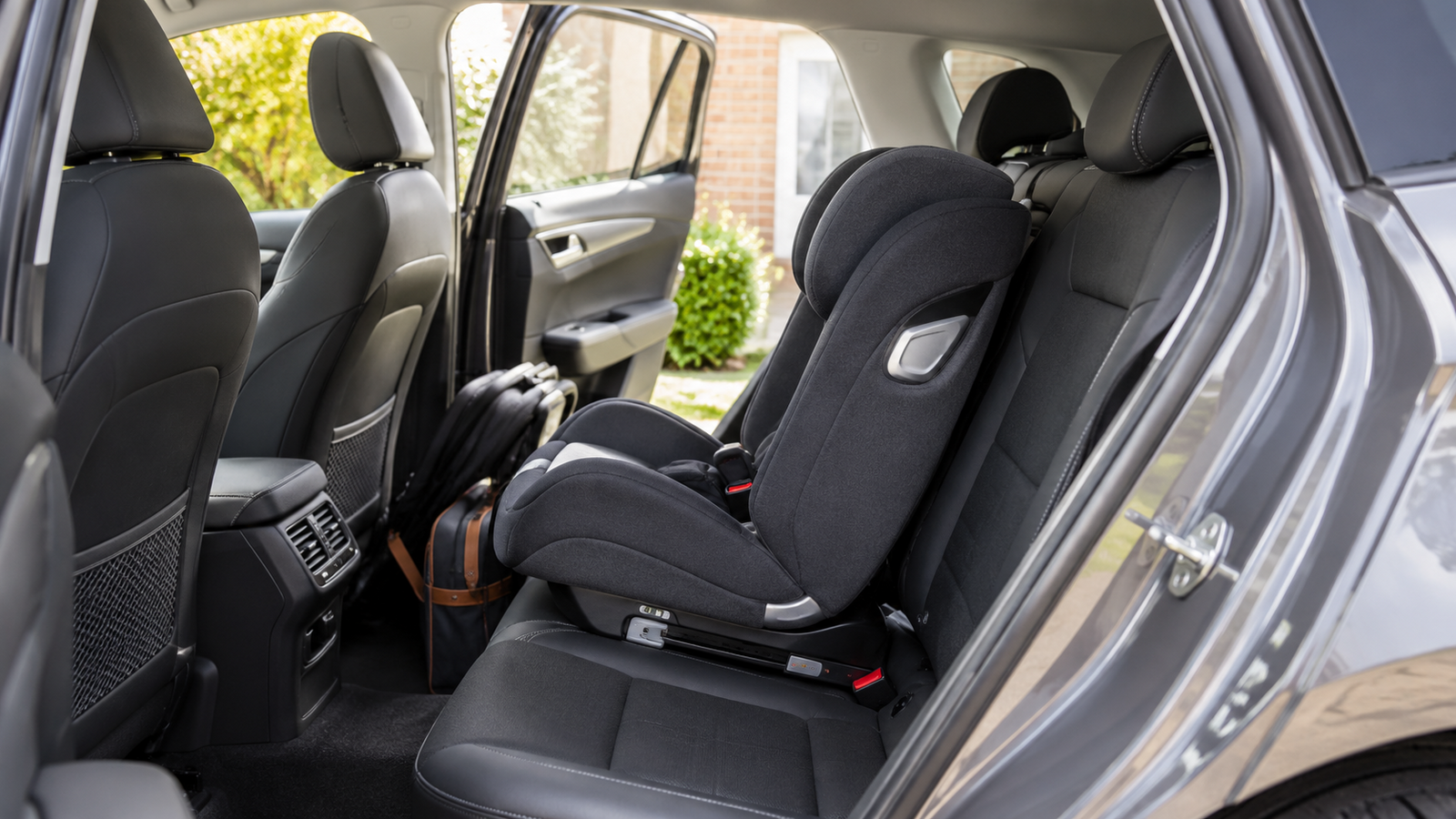

Choosing the best cars for child seats is about secure fitment, usable rear-seat space and practical family storage, not just the biggest SUV. For leasing customers, the right car needs to work across several years of child-seat stages, mileage needs and everyday family use.
What ISOFIX Actually Does
ISOFIX is a standardised child-seat mounting system. Instead of securing the seat only with the adult seat belt, compatible child seats or bases clip into fixed metal anchor points built into the car. Many seats also use a support leg or a top-tether strap, depending on the seat and vehicle.
The important bit is location. Plenty of cars have ISOFIX on the two outer rear seats, but fewer have it on the front passenger seat or the middle rear seat. Some seven-seat cars may have ISOFIX only in the second row, not the third.
Why UK Child-Seat Law Still Matters Before Car Choice
GOV.UK says children must normally use a child car seat until they are 12 years old or 135cm tall, whichever comes first. After that, they must wear a seat belt. That legal baseline is only the start: the right car seat still needs to suit the child's height or weight, and it needs to be approved and fitted correctly.
So do not shop only by the car's safety badge. Start with the actual child seats you use, or the ones you plan to buy, then check the vehicle handbook and child-seat compatibility list before signing a lease.
The Family-Space Checks That Matter
Rear-seat space, door openings and boot shape can matter as much as headline dimensions. A rear-facing child seat can push the front passenger seat forward, while bulky buggies and school bags quickly expose whether the boot shape works in real family use.
Rear-Seat Space
A rear-facing infant carrier or extended rear-facing toddler seat can push the front passenger seat a long way forward. Test the seat behind the tallest regular front passenger.
Door Openings
Wide-opening rear doors make it much easier to lift a baby seat in without twisting your back, especially in tight supermarket and nursery car parks.
Boot Shape
Look for a flat floor, a low loading lip, useful underfloor storage and a boot opening wide enough for bulky family kit.
What Euro NCAP Can And Cannot Tell You
Euro NCAP is useful because it separately reports child-occupant protection and checks child-restraint installation. It can show whether a tested vehicle protected child dummies well and whether compatible restraints could be installed and accommodated.
It is not a guarantee that your exact seat, trim, model year and seating plan will work. A car can score well and still be awkward with a bulky rotating base, a support leg that clashes with floor storage, or a centre seat too narrow for three-across fitting. Treat Euro NCAP as evidence, then do the fitment test yourself.
Good Cars To Start Your Child-Seat Shortlist
These are not absolute rankings and they are not live lease recommendations. They are sensible starting points where current official evidence gives families something useful to check. Exact trim, model year, powertrain and seating plan still need verifying before ordering.
| Model | Why It Is Worth Checking | Evidence Note |
|---|---|---|
| Skoda Octavia Estate | A strong option if you want estate-car practicality rather than SUV height. | Verify exact current boot capacity, trim and model-year ISOFIX layout before ordering. |
| Kia Sportage | A mainstream family SUV with official Kia UK specification listing ISOFIX child-seat top tethers and anchor fixings for the outer rear seats. | Euro NCAP rated the Sportage at 86% for child occupant protection in its 2022 assessment. |
| Hyundai Tucson | Another family SUV worth trying with your own seats, especially for rear-facing fit behind the usual front passenger. | Hyundai manual evidence supports ISOFIX anchorages on the left and right rear outboard seating positions; Euro NCAP rated the Tucson at 87% child occupant protection. |
| Volkswagen ID.4 | A useful electric-family option if home charging and lease budget make sense. | Volkswagen UK lists a 543-litre boot with seats up and 1,575 litres folded; Euro NCAP records 89% child occupant protection. |
| Peugeot 5008 | Worth a look if you need occasional seven-seat flexibility, but do not assume every row is child-seat friendly. | Peugeot UK says the outer rear seats in the second row have full ISOFIX mountings with top tether; Euro NCAP records 85% child occupant protection for the 2025 5008. |
The Test-Drive Checklist For Parents
Take the child seats with you. If the retailer or broker cannot support a physical fitment check, ask for the vehicle handbook and the manufacturer's child-seat compatibility information before making a decision.
Seat And Safety Checks
- Rear-facing seat fit behind the tallest regular front passenger.
- Access to ISOFIX points without digging through seat cushions.
- Top-tether routing or support-leg position, depending on your seat.
- Whether the front passenger airbag can be disabled if you ever need to use a rear-facing seat there.
Everyday Family Checks
- Seat-belt buckle position when using high-back boosters.
- Whether three children can buckle themselves in without scraped hands and arguments.
- Boot fit with your buggy, bags and charging cables if it is an EV or PHEV.
- Rear-door opening angle in a tight supermarket bay.
Leasing-Specific Points Families Should Not Skip
With a lease, think beyond the first monthly rental. Mileage, maintenance, tyres, fair wear and tear, upholstery marks and charging practicality can all affect whether a family car works over the full lease term.
Mileage matters when the car is doing school runs, nursery drop-offs, weekend sport and holiday trips. Underestimating mileage can get pricey through excess-mileage charges.
Also check whether maintenance is included or optional, who handles tyres, and how fair wear and tear will be assessed at the end of the contract. Child seats can mark upholstery, and family cars have a hard life. Seat protectors may help, but make sure they are compatible with your child-seat manufacturer's instructions.
If you are considering a plug-in hybrid or electric car, be honest about charging. A PHEV bought for family economy makes much less sense if you cannot charge it regularly. An EV can be excellent for family leasing, but check the boot cable storage, rear-seat floor height, public charging routine and longer holiday journeys before deciding.
Final Verdict
The best ISOFIX cars are the ones that fit your actual family, not just the ones with the biggest boot figure or the boldest safety advert. Start with ISOFIX locations, rear-facing space and Euro NCAP child-occupant evidence, then test your own seats and buggy before narrowing the lease shortlist.
FVL can help compare personal car leasing deals, business car leasing, SUV lease deals and electric car leasing guidance, but the final choice should come down to the car that suits your family routine, mileage and budget. No drama, no brochure theatre - just a car that does the job.