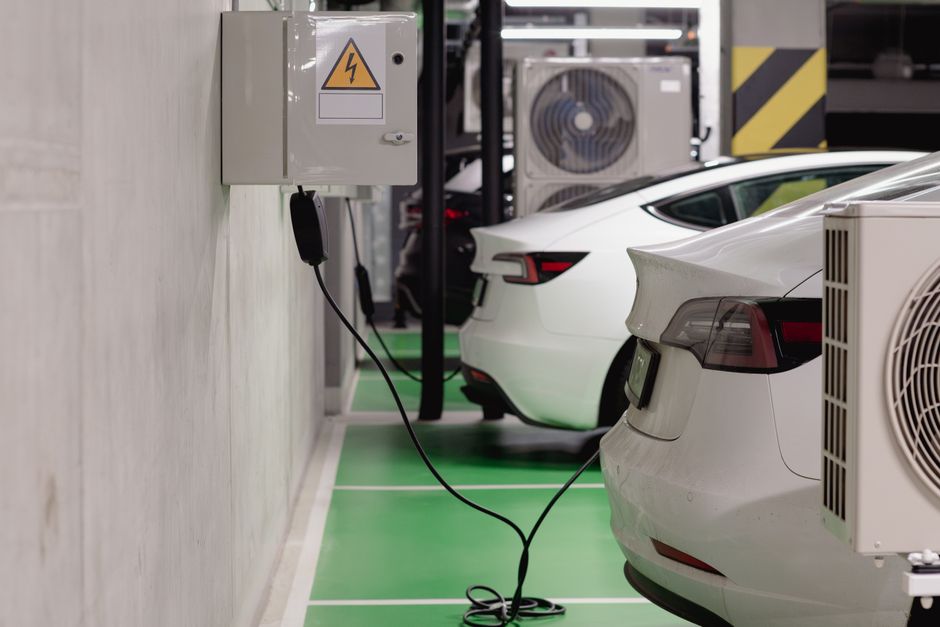
Short answer: if you can charge at home or at work, lease a battery electric car (BEV). If you can charge but regularly drive long, unpredictable distances - or you tow - a plug-in hybrid (PHEV) may fit. If you can't charge anywhere reliably, choose a self-charging hybrid. Charging access decides this, not the badge.
What's in this guide
- What's the difference between BEV, PHEV and hybrid?
- Which one suits you? A quick decision guide
- Can you charge at home or at work?
- What does each type cost to run?
- How do BEV, PHEV and hybrid compare on company car tax?
- What about long journeys, towing and cold weather?
- Which lease term suits each type?
- Common mistakes we see people make
- Your next steps
- Frequently asked questions
Key Takeaways
- Charging access is the deciding factor. Home or workplace charging makes a BEV the cheapest and simplest option for most drivers.
- A PHEV is only cheap if you plug it in. Driven on the engine with a flat battery it can use more fuel than the equivalent petrol car.
- According to HMRC's published company car tax rates, a fully electric car is taxed at 4% of P11D value for the 2026/27 tax year, against 4% to 16% for PHEVs depending on electric range, and roughly 15-37% for petrol, diesel and self-charging hybrids (most sit between 17% and 37%).
- From 6 April 2028 every car emitting 1-50g/km CO2 moves to a flat 18% BIK regardless of electric range, rising to 19% in 2029/30 - so a long PHEV lease needs planning.
- A self-charging hybrid needs no plug and no behaviour change. It's the honest answer for drivers with no off-street parking and no workplace charging.
What's the difference between BEV, PHEV and hybrid?
A battery electric vehicle (BEV) has no engine and must be plugged in. A plug-in hybrid (PHEV) has both an engine and a usefully sized battery you charge from a socket. A self-charging or "full" hybrid (HEV) tops up its small battery from the engine and braking - there's no plug at all.
There's a fourth type worth naming, because it's often sold as though it were a hybrid: the mild hybrid (MHEV). A mild hybrid uses a small motor to assist the engine and smooth out stop-start driving. It can't move the car on electricity alone, and for tax it's treated exactly like the petrol or diesel it's based on. Useful, mildly more efficient, but not a hybrid in the sense most people mean.
| Type | Plug in? | Electric-only driving | Best suited to |
|---|---|---|---|
| BEV (battery electric) | Always | Every mile | Drivers with home or workplace charging |
| PHEV (plug-in hybrid) | Yes, to get the benefit | Typically 30-70 miles on newer models | Short daily runs plus frequent long trips, with charging available |
| HEV (self-charging hybrid) | No | Short bursts at low speed | Town and mixed driving with no charging access |
| MHEV (mild hybrid) | No | None | Drivers who simply want a slightly more efficient petrol or diesel |
One planning point that applies to all four. Under the Government's response to its consultation on phasing out new petrol and diesel cars, sales of new pure petrol and diesel cars end in 2030, with full hybrids and plug-in hybrids permitted until 2035 and all new cars zero emission from then. Mild hybrids are not included in that 2030-2035 window. It doesn't affect a lease you take today, but it does tell you which way residual values are pointing.
Which one suits you? A quick decision guide
Work through four questions in order: can you charge where you park overnight or at work; how far is your longest regular journey; how many miles a year do you cover; and is this a company car or a personal lease? In our experience the first question settles it for around three drivers in four.
Choose a BEV if...
You can plug in at home or at work most nights, your regular journeys fit comfortably inside the car's real range, and you want the lowest running costs and the lowest company car tax. High-mileage commuters with home charging often save the most.
Choose a PHEV if...
You can charge, your daily driving is short enough to run on the battery, but you also do long unpredictable trips, tow, or drive to places where charging is genuinely awkward. Take the tax cliff in April 2028 into account before you pick a term.
Choose a hybrid if...
You have nowhere to charge, or your driving is too varied to plan around a plug. A self-charging hybrid gives you better urban economy than a petrol car with no change to how you use it - and no charging cable to think about.
What if you're stuck between a PHEV and a BEV?
Look at your last three months of driving rather than your worst-case week. Most people size their car around the two long trips a year and pay for that flexibility on all 363 other days. If your longest regular journey is under about 200 miles and you charge at home, a BEV covers it with a short stop at most. If you genuinely tow a caravan every other weekend, the PHEV case is real - towing hammers electric range far more than it hurts a hybrid's fuel economy.
Our guide on how EV range really works is the fastest way to sanity-check the range you actually need, rather than the one that feels safe.
Can you charge at home or at work?
This is the question that decides the answer. A BEV charged overnight at home on an EV tariff is dramatically cheaper per mile than a petrol car. The same BEV charged exclusively on public rapid chargers is a far weaker financial case - it still works, but the saving shrinks considerably.
You don't strictly need a wallbox. Some drivers manage on a workplace charger alone, or a reliable on-street or supermarket routine. But be honest with yourself about it, because "I'll sort a charger out later" is the single most common reason an EV lease disappoints. We cover the practicalities in do I need a home charger to lease an EV? and charging a leased EV, and the pence-per-mile maths in what it costs to charge an EV.
The same logic applies to a PHEV, only more sharply. A plug-in hybrid with a 40-mile battery needs charging every day or two to deliver what the brochure promises. No charger, no benefit - just a heavier, more complicated petrol car.
What does each type cost to run?
A BEV is normally cheapest per mile if you can charge at home, has the fewest wearing parts and pays the lowest first-year road tax. A PHEV sits between the two, entirely depending on how often you plug it in. A self-charging hybrid costs roughly what an efficient petrol car costs, with better economy in town.
| Cost | BEV | PHEV | Self-charging hybrid |
|---|---|---|---|
| Energy or fuel | Lowest on a home EV tariff; higher on public rapids | Very low on battery miles, petrol economy once it's flat | Petrol costs, best in stop-start town driving |
| Vehicle Excise Duty (VED), 2026/27 | £10 first year, then the £200 standard rate | CO2-based first-year rate, then £200 | CO2-based first-year rate, then £200 |
| Expensive car supplement (years 2-6) | £440/yr if list price over £50,000 | £440/yr if list price over £40,000 | £440/yr if list price over £40,000 |
| Servicing and brakes | Fewest moving parts, brakes last well | Two systems to maintain | Similar to petrol, brakes last well |
| From April 2028 (eVED) | 3p per mile on top of VED | 1.5p per mile on top of VED | Not applicable |
Two details worth knowing. According to DVLA guidance published on GOV.UK, the expensive car supplement threshold for zero-emission cars rose to more than £50,000 from April 2026, while petrol, diesel and hybrid cars keep the £40,000 threshold - which quietly takes a lot of family EVs out of the surcharge. And the pence-per-mile charge (electric Vehicle Excise Duty, or eVED) arriving in April 2028 applies to EVs and PHEVs, not to self-charging hybrids. We've written about that in more detail in our explainer on pay-per-mile tax and PHEVs.
On a contract hire agreement the road fund licence is normally included in your rental for the contract term, so VED tends to affect the price you're quoted rather than a bill landing on your doormat. Check your quotation confirms it.
How do BEV, PHEV and hybrid compare on company car tax?
If this is a company car or salary sacrifice vehicle, the tax gap is enormous and it points one way. Benefit in Kind (BIK) is the tax you pay on a car your employer makes available for private use, charged on the P11D value - the manufacturer's list price including VAT, delivery and factory options.
| Car type (CO2 / electric range) | BIK rate 2026/27 | From 6 April 2028 |
|---|---|---|
| Fully electric (0g/km) | 4% | 7% in 2028/29, 9% in 2029/30 |
| PHEV, 1-50g/km, 130 miles or more | 4% | 18%, then 19% in 2029/30 |
| PHEV, 1-50g/km, 70 to under 130 miles | 7% | 18%, then 19% in 2029/30 |
| PHEV, 1-50g/km, 40 to under 70 miles | 11% | 18%, then 19% in 2029/30 |
| PHEV, 1-50g/km, 30 to under 40 miles | 13% | 18%, then 19% in 2029/30 |
| PHEV, 1-50g/km, under 30 miles | 16% | 18%, then 19% in 2029/30 |
| Petrol, diesel, mild and self-charging hybrid (51g/km and above) | Roughly 15-37%, scaling with CO2 - most sit between 17% and 37% | Rises by 1 percentage point a year to a 39% cap in 2029/30 |
Put numbers on it. Example: a £40,000 car and a 40% taxpayer, using the 2026/27 rates above.
- BEV at 4%: £40,000 × 4% = £1,600 taxable benefit × 40% = £640 a year, about £53 a month.
- PHEV with a 40-69 mile electric range at 11%: £4,400 × 40% = £1,760 a year, about £147 a month.
- Self-charging hybrid at, say, 30%: £12,000 × 40% = £4,800 a year, £400 a month.
Now run the same PHEV into 2028/29 at the flat 18%: £7,200 × 40% = £2,880 a year, or £240 a month. The BEV at 7% that year costs £1,120, about £93 a month. That's the whole argument in two lines - and it's why we'd push back on anyone taking a four-year PHEV company car without modelling the back end of the contract.
One softening detail from HMRC: a temporary easement introduced at Budget 2025 mitigates the effect of new PHEV emissions testing standards, applying from 1 January 2025 to 5 April 2028, with transitional treatment for eligible cars accessed on or before 5 April 2028 running until 5 April 2031. It protects the CO2 figure used for the calculation. It does not stop the flat 18% band arriving in April 2028.
Does your employer offer salary sacrifice?
If it does, and you're leaning electric, that changes the maths again. Salary sacrifice lets you give up gross salary in exchange for the car, so you save Income Tax and National Insurance on the amount sacrificed and pay BIK at the electric rate instead - 4% for the 2026/27 tax year. It's the cheapest route to a new EV for most higher-rate taxpayers, and it doesn't work anything like as well for a PHEV.
Worth checking with HR before you look at personal contract hire (PCH) pricing at all.
What about long journeys, towing and cold weather?
Long motorway runs are where the three types diverge most. A BEV uses more energy at 70mph than in town and needs a planned charging stop on very long trips. A PHEV runs on its engine once the battery's empty, so a 400-mile motorway day is simply a petrol day. A self-charging hybrid is at its least impressive on the motorway and its best in traffic.
Cold weather narrows a BEV's range - batteries are less efficient when cold and cabin heating draws real power. It's predictable rather than alarming, and pre-conditioning the car while it's still plugged in removes most of the pain. There's a full breakdown in our guide to how cold weather affects EV range.
Towing deserves a blunt note. Hitching a caravan or a loaded trailer to any car increases consumption sharply, but on a BEV it can cut usable range by a large margin, and not every charging bay is easy to reach with a trailer attached. If towing is a regular part of your life rather than an occasional one, a PHEV or a diesel may still be the practical answer. That's not the fashionable view. It's the accurate one.
Which lease term suits each type?
For a BEV, a standard 36 or 48-month contract is fine - the tax position is known and gentle, rising to 5% in 2027/28, 7% in 2028/29 and 9% in 2029/30. For a PHEV company car, a shorter 24 or 36-month term is usually the smarter call, so your contract ends before or shortly after the flat 18% band lands in April 2028.
A few practical pointers our team give customers most weeks:
- Set your mileage honestly. Excess mileage charges at the end of a contract hurt more than a slightly higher rental. Under BVRLA fair wear and tear standards, condition is assessed against a published guide at handback - mileage is separate and contractual.
- Personal lease, PHEV, no charger? Don't. You'll pay a premium for hardware you never use.
- Company car, can charge, undecided? Take the BEV. The tax gap does the deciding for you.
- Very low annual mileage, no charging? A self-charging hybrid is often the cheapest total package, and there's no shame in it.
- Compare like with like. When you're weighing two deals, hold the term, mileage and initial rental the same - our car lease comparison guide explains how to do that properly.
If the electric case stacks up but you want the full argument for and against, should I lease an electric car? goes deeper on the leasing side specifically.
Common mistakes we see people make
Four errors come up again and again: buying a PHEV with no intention of charging it, over-buying range, assuming EVs are still road-tax free, and ignoring what happens to a company car's tax bill in year three or four of a contract. Each one is avoidable in about ten minutes of thinking.
The unplugged PHEV
A plug-in hybrid running permanently on its engine carries a heavy battery it never uses. Fuel economy can end up worse than the equivalent petrol model, and on a company car you've paid a tax premium for range you never touch.
Paying for range you don't use
Bigger batteries cost more and weigh more. If you charge at home and drive 30 miles a day, a mid-size battery covers you comfortably and leaves budget for a better-equipped car.
"EVs don't pay road tax"
They have since 1 April 2025. A new EV pays a £10 first-year rate then the standard rate - £200 for 2026/27 - plus the expensive car supplement above £50,000 list price in years two to six.
Only pricing year one
Company car tax is charged every year of the contract. On a PHEV signed today, part of the term may fall after April 2028 at the flat 18% rate. Average the cost across the whole term before you sign.
One more, less obvious: don't discount an electric car because of battery worry. On a lease you hand the car back at the end of the term, so long-term battery health is the funder's risk rather than yours - the detail is in our guide to EV battery degradation on a lease.
Your next steps
Decide your charging position first, then your budget, then look at what represents the best value inside that - rather than fixing on one model and working backwards. Most people get a better car for the money that way, because the sharpest lease offers sit where a broker has committed to volume.
- Check whether you can charge at home or at work, and whether your employer runs a salary sacrifice scheme.
- Look at your last three months of journeys and find your longest regular trip.
- Set a realistic annual mileage figure and a monthly budget.
- If it's a company car, work out the BIK at your tax rate for every year of the term, not just the first.
- Shortlist two or three cars across the shortlist, then compare deals on the same term, mileage and initial rental.
Worth knowing: the Government's Electric Car Grant offers £3,750 or £1,500 off eligible new electric cars depending on the band a model falls into, and where it applies it's reflected in the vehicle price before a lease rental is calculated. Eligibility is set by the vehicle, not by you, and the approved list changes as manufacturers are certified.
Still not sure which one fits?
Tell us where you park overnight, how far you drive and whether it's a personal or business lease, and our EV and hybrid specialists will tell you straight - including when a hybrid beats an EV for your situation. FVL is FCA authorised and regulated and a BVRLA member, with over 25 years arranging leases for UK drivers and businesses.
Call our team on 0333 003 3325 or browse the current offers.
Frequently Asked Questions
Sources
- Phasing out sales of new petrol and diesel cars from 2030: government response - Department for Transport, GOV.UK
- Vehicle tax for electric, zero and low emission vehicles - DVLA, GOV.UK
- VED changes: Expensive Car Supplement for EVs - BVRLA
- Plug-in hybrid electric vehicles: benefits in kind easement - HMRC, GOV.UK
- Electric Car Grant: vehicle eligibility - OZEV, GOV.UK
- Pay per mile eVED for company car drivers - What Car?
Written by the leasing team at First Vehicle Leasing, an FCA authorised and regulated broker and BVRLA member with over 25 years arranging car and van leases for UK drivers and businesses. Questions about which powertrain fits your driving? Call 0333 003 3325.
Will I be approved?
Five questions, no sign-up, and an honest answer before you apply for anything.
Check my eligibility