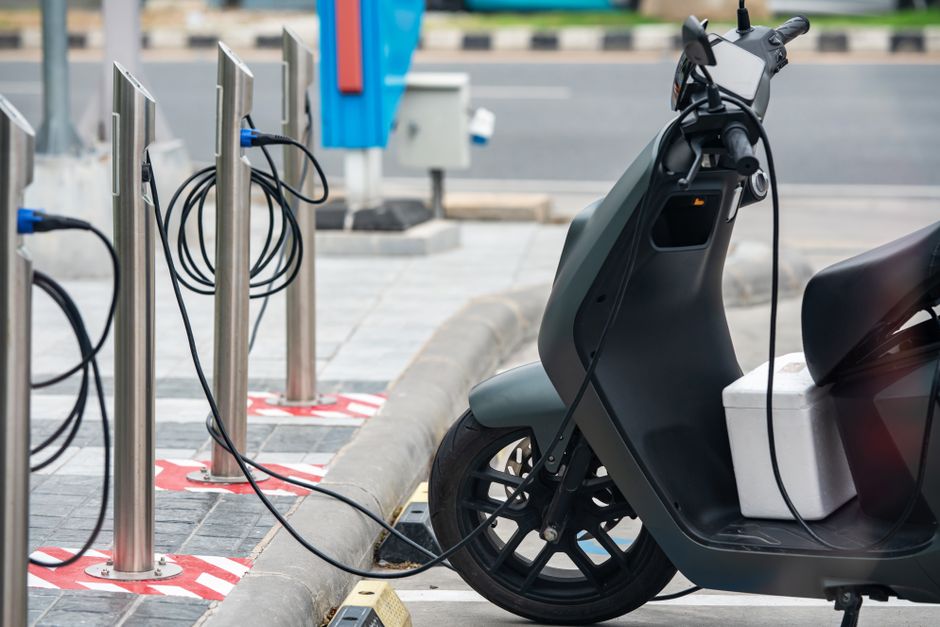
No. You don't need a home charger, or even a driveway, to lease an electric car. No UK funder, broker or dealer will ask whether you can charge at home before approving a lease. What a home charger changes is what the car costs to run - and that difference is big enough to be worth reading on.
What's in this guide
- Do I need a home charger to lease an EV?
- What does charging cost with and without a home charger?
- Who can genuinely manage without a driveway?
- What are the alternatives to a home charger?
- Can you get a grant for a charger without a driveway?
- Does the lease itself change if you can't charge at home?
- How to test it before you sign: a two-week checklist
- Would a plug-in hybrid suit you better?
- Frequently asked questions
Key Takeaways
- A home charger is never a condition of a lease. It's a running-cost decision, not an eligibility one.
- On a dedicated off-peak overnight tariff, home charging works out at roughly 2p per mile. Public rapid charging averages around 24p per mile - broadly what a reasonably economical petrol car costs to fuel.
- Public charging carries 20% VAT; domestic electricity carries 5%. That gap is baked into every public charge and isn't going away on its own.
- If you can charge at work, or you have reliable slower public charging near where you park overnight, an EV still stacks up comfortably.
- Company car drivers get the tax saving regardless of where they plug in: pure-electric Benefit in Kind (BiK) - the tax on a car provided by your employer - sits at 4% of list price for the 2026/27 tax year.
Do I need a home charger to lease an EV?
No. You can lease any electric car in the UK with no home charger, no driveway and no off-street parking. Funders assess your credit profile and affordability, not your parking arrangements. Plenty of our EV customers charge entirely at work, at supermarkets or on the street - and have done for years.
That's the straight answer, and it's the one the industry sometimes fudges. What nobody should fudge is the second half: whether an EV is a good idea for you without home charging depends almost entirely on what your local charging looks like and what you're prepared to pay per mile.
Here's the honest position. A driver with a driveway and a smart overnight tariff runs an EV for a fraction of petrol costs. A driver who does every charge on a motorway rapid unit pays roughly petrol money per mile - while still enjoying the lower servicing costs, no fuel duty exposure, and (for company car drivers) a tax bill that's a small fraction of the petrol equivalent. Neither of those drivers is doing anything wrong. They're just running very different sums.
What does charging cost with and without a home charger?
Home charging on a dedicated off-peak EV tariff costs roughly 7p to 8p per kWh, or about 2p per mile. The standard domestic rate under the Ofgem price cap works out around 7p per mile. Public rapid charging averages roughly 24p per mile. Same car, same miles - the bill swings by a factor of ten.
Those per-mile numbers assume a reasonably typical efficiency of about 3.5 miles per kWh. Here's what that looks like over a year at 10,000 miles - which needs around 2,857 kWh of electricity. These are illustrative figures based on published mid-2026 average rates, and energy prices move.
| Where you charge | Typical rate | Cost per mile | 10,000 miles a year |
|---|---|---|---|
| Home, off-peak EV tariff | ~7p per kWh | ~2p | ~£200 |
| Home, standard price-cap rate | ~26p per kWh | ~7p | ~£745 |
| Public standard/on-street (up to 49kW) | ~54p per kWh | ~16p | ~£1,545 |
| Public rapid/ultra-rapid (50kW+) | ~80p per kWh | ~24p | ~£2,285 |
Two things jump out. First, the on-street and destination chargers sitting between those extremes matter enormously - if your overnight parking has a lamppost or kerbside unit at standard rates, you're at roughly half the cost of living on rapids. Second, most drivers without a driveway don't do 100% of their charging at 80p. They mix workplace, supermarket, gym and the odd motorway stop, and land somewhere in the middle.
Part of the gap is structural. Public charging is subject to 20% VAT, while domestic electricity is charged at 5%. That's a fifth of the price difference before a network has paid for a single grid connection. Our full breakdown of the numbers sits in what it costs to charge an EV.
So is an EV still cheaper than petrol without a home charger?
On fuel alone, if you rely purely on rapid chargers - roughly a wash against an economical petrol car. Add in cheaper servicing, no oil changes or cambelts, and the far lower company car tax, and an EV usually still comes out ahead. But we won't pretend the fuel saving survives if every kWh comes from a motorway service station.
Who can genuinely manage without a driveway?
Four groups manage well without home charging: drivers with workplace charging, people with reliable on-street or car park charging where they sleep, low-mileage drivers doing under about 6,000 miles a year, and anyone whose regular routine already passes a supermarket or gym with chargers. If none of those apply, think hard.
You can charge at work
The strongest position after a driveway. Free or subsidised workplace charging removes the cost question entirely - and where an employer provides it, HMRC does not treat electricity for charging at the workplace as a taxable benefit.
You have on-street charging nearby
Lamppost and kerbside units are usually the cheapest public option and are designed for long, slow overnight charges. The catch is availability - you cannot reserve a bay, and neither can anyone else.
You're a low-mileage driver
Under roughly 6,000 miles a year, a modern EV with 250 miles of usable range needs charging perhaps every two to three weeks. One planned rapid stop a fortnight is a minor inconvenience, not a lifestyle change.
Charging fits your existing routine
If you already spend 40 minutes at a supermarket, gym or station car park each week and it has chargers, you're charging for free in time terms. That's what makes public charging painless.
Who should be cautious? High-mileage drivers with no home or workplace charging, people in flats with unallocated parking and no nearby infrastructure, and anyone whose nearest reliable rapid is a fifteen-minute detour. We've talked customers out of EVs in exactly those situations - it's a poor experience and, at 24p a mile, an expensive one. A petrol or self-charging hybrid on a short lease is often the better call while local charging catches up.
Check your postcode before you check the car
The single most useful thing you can do before leasing an EV without a driveway is spend twenty minutes on a charge point map, looking at what's within five minutes of where you park overnight and where you work. Filter for anything 7kW and above. If you find three or more separate locations, you'll be fine. If you find one, you're relying on it - and chargers do break.
More than 120,000 public EV chargers were installed across the UK by mid-2026 according to Department for Transport statistics, but the distribution is uneven. London has far more chargers per head than most regions, while rapid coverage is thinner in some rural areas.
What are the alternatives to a home charger?
There are five realistic alternatives: workplace charging, on-street lamppost and kerbside units, destination charging at supermarkets and car parks, en-route rapid hubs, and a cross-pavement cable channel that lets you run power from your house to the kerb. Most drivers without a driveway end up combining two or three.
| Option | Typical speed | Best for | Watch out for |
|---|---|---|---|
| Workplace charging | 7kW - 22kW | Commuters; often free or subsidised | Bay competition as more colleagues go electric |
| On-street / lamppost | 3kW - 7kW | Overnight charging where you live | No reserved bay; you may need to move the car |
| Destination (supermarket, gym, car park) | 7kW - 50kW | Topping up during things you already do | Time limits and overstay fees |
| Rapid / ultra-rapid hub | 50kW - 350kW | Long journeys, quick full top-ups | The most expensive way to charge, by a distance |
| Cross-pavement channel + home unit | 7kW | Terraced homes with reliable kerbside parking | Needs highways authority consent; not every council permits them |
The cross-pavement option is the interesting one and it's still poorly known. A gully or channel is cut into the footpath so your cable runs beneath the pavement surface rather than across it, which removes the trip hazard that makes trailing a lead over the public footway a non-starter. You need consent from your local highways authority, and policies vary considerably between councils - some have established schemes, others haven't approved them at all.
Three-pin charging deserves a mention too. Every EV comes with, or can take, a granny cable that plugs into a normal socket at around 2.3kW. That's roughly 8 miles of range an hour - fine as an occasional backup for a plug-in hybrid or a low-mileage EV, painfully slow for anything else, and it must be a dedicated socket in good condition, never an extension lead.
Can you get a grant for a charger without a driveway?
Yes. The Electric Vehicle Chargepoint Grant for Households with On-Street Parking covers 75% of the cost of buying and installing a chargepoint socket, up to £500, for households with no private off-street parking - provided you install a permanent cross-pavement solution alongside it. Funding is confirmed until 31 March 2027.
The conditions are worth reading properly on the GOV.UK chargepoint grants guidance, because they're specific:
- You must not have private, exclusive off-street parking such as a driveway, garage or residential car park - if you do, this particular grant isn't for you.
- The cross-pavement solution must be permanent. Cable mats and covers laid on top of the footpath don't qualify.
- You need permission from your local highways authority, and planning permissions where your local planning authority requires them.
- You must own, lease or have ordered an eligible electric vehicle - a lease of six months or more counts, so a standard contract hire agreement qualifies.
- The grant does not reserve you a parking space. You may not always be able to park outside your own house.
A separate grant of up to £500 per socket runs for renters and flat owners who do have private off-street or allocated parking - so if you rent a house with a driveway, or a flat with an allocated bay, that's your route. In both cases your OZEV-approved installer submits the application; you don't apply directly. Grant rates and eligibility change, so check the GOV.UK page before budgeting.
Does the lease itself change if you can't charge at home?
The agreement doesn't change at all. Whether you take Personal Contract Hire (PCH - a personal lease with VAT included in the monthly figure) or Business Contract Hire (BCH - a business lease quoted excluding VAT), the contract, the credit checks and the end-of-contract standards are identical however you charge. Your term and mileage choices matter more.
A few things do deserve thought:
Mileage and term
If you're relying on public charging, be realistic about annual mileage when you set the contract - a driver who quietly starts avoiding long trips because of charging faff can end up well under their contracted mileage, and unused miles aren't refunded on a standard contract hire agreement. Our guide to how EV range really works is a sensible read before you fix the numbers.
Battery condition and handback
Frequent rapid charging is often raised as a worry. On a typical three or four-year lease it's a non-issue: the funder carries the residual value risk, and manufacturer battery warranties cover capacity retention over the lease term. Under BVRLA fair wear and tear standards, battery state of health isn't assessed at handback in the way panel damage or tyre tread is. We cover it properly in EV battery degradation on a lease.
The tax position is unchanged
This is where drivers without a driveway sometimes miss the point. Company car tax doesn't care where you plug in. For the 2026/27 tax year, pure-electric cars attract a BiK rate of 4% of list price under HMRC's published company car tax rates, rising to 5% in 2027/28, 7% in 2028/29 and 9% in 2029/30. Petrol and diesel cars sit at roughly 15% to 37% depending on CO2 emissions.
Example: a £40,000 electric car at 4% gives a taxable benefit of £1,600 for 2026/27. A 40% taxpayer pays £640 a year - about £53 a month. The same driver in a £40,000 petrol car at 30% would face a £12,000 taxable benefit and £4,800 a year. That gap swamps the difference between home and public charging for most mileages. If your employer runs a scheme, electric car salary sacrifice is usually the cheapest way to access it, and you can also read about how we handle salary sacrifice arrangements.
How to test it before you sign: a two-week checklist
Before committing to a three or four-year agreement, run your actual life against the charging you actually have. Two weeks of honest observation will tell you more than any calculator. Work through the following in order - it takes very little effort and it's the difference between a good decision and an expensive one.
Map your overnight parking
Count every charger within a five-minute walk of where the car sits at night. Note the speed and the operator. Three or more separate locations is comfortable; one is a risk.
Ask your employer
Even a single 7kW socket at work changes the maths completely. Ask whether one exists, whether one is planned, and whether the workplace charging grant has been considered.
Log two weeks of driving
Write down daily mileage and where you stopped for 30 minutes or more. You're looking for natural charging windows you're already spending time in.
Price your worst case
Take your annual mileage, divide by 3.5 to get kWh, and multiply by 80p. If that number is tolerable, everything else is upside.
Ask your council
A quick email about cross-pavement channels and on-street chargepoint requests costs nothing. Many authorities maintain a resident request list for kerbside units.
Prioritise charge speed
If you'll be on public chargers, peak DC charging speed and 10-80% times matter more than headline range. A car that takes 18 minutes beats one that takes 40.
One practical point our team makes a lot: if you're going to live on public chargers, an 800-volt architecture or a genuinely fast-charging model is worth paying a little more per month for. You'll spend measurably less of your life standing in a car park. Kia and Hyundai's larger EVs, Porsche and several newer Chinese-built models charge notably quickly. That advice reverses if you have a driveway, where charge speed barely matters at all.
Would a plug-in hybrid suit you better?
Possibly - but only if you can plug in somewhere regularly. A plug-in hybrid (PHEV) without any charging access is the worst of both worlds: you carry the weight of a battery you never use, and fuel economy suffers. A conventional hybrid, which charges itself from the engine and braking, is the better answer for a driver with no charging at all.
Where a PHEV earns its place is the driver with a short commute and occasional charging - workplace, a relative's driveway, a nearby destination charger - who also does regular long trips. Company car BiK on PHEVs is higher than pure electric, and from 2028/29 the electric-range bands are being removed and PHEV rates rise substantially, which matters if you're signing a four-year agreement now. The comparison is set out in BEV vs PHEV vs hybrid.
Not sure which side of the line you're on?
If you've mapped your local charging and you're still 50/50, that's exactly the conversation our team has every day. We'll ask about your mileage, your parking and your commute, and we'll tell you honestly if we think a petrol or hybrid lease is the better fit for the next three years. We'd rather you came back in 2029 than took the wrong car now.
What should you do next?
Work through the three-step framework below and you'll have your answer within a fortnight. If you have workplace charging or good on-street provision, go electric with confidence. If you're low mileage, go electric and treat rapid charging as an occasional cost. If neither applies and you cover big miles, a hybrid on a shorter term is the sensible move.
- Confirm your charging. Map it, ask your employer, email your council about a cross-pavement channel or a kerbside request.
- Price your realistic mix. Use the per-mile figures in the table above and weight them by how you'll actually charge.
- Then choose the car. Set your budget and requirements first, then look at what represents the best value within that - the strongest deals sit where volume has been committed, not necessarily on the model you had in mind. Our current special offers are the place to start.
And if you'd rather just talk it through with someone who does this all day, that's what we're here for.
Frequently Asked Questions
Sources
- Electric vehicle chargepoint grants - GOV.UK (Office for Zero Emission Vehicles)
- Public electric vehicle charging infrastructure statistics - Department for Transport, GOV.UK
- Current benefit-in-kind (BIK) company car tax bands - Fleet News
- Fair wear and tear standards and industry guidance - British Vehicle Rental and Leasing Association (BVRLA)
Written by the electric vehicle team at First Vehicle Leasing, an FCA-authorised and regulated leasing broker and BVRLA member with over 25 years arranging personal and business vehicle leases across the UK. Our guides are reviewed and updated as tax rates, grants and charging costs change.
Will I be approved?
Five questions, no sign-up, and an honest answer before you apply for anything.
Check my eligibility