
The Polo's best-selling middle trim has quietly changed name and content. Match is now stock-only, Match Plus has taken its place, and anyone browsing car leasing deals on a supermini will see both names side by side. First Vehicle Leasing has pulled apart what actually differs, and what it does to the monthly rental.
Key Takeaways
- Match Plus sits above Life in the Polo range and has replaced Match as the mainstream mid-spec choice. Match is listed by Volkswagen as available from stock only.
- Over Match, the Plus adds a rear-view camera, keyless entry and start, heated front seats, front parking sensors and adaptive cruise control.
- On the 1.0 TSI 95 PS manual, list price moves from £23,730 (Match) to £24,185 (Match Plus), a gap of £455. The DSG automatic shows the same £455 gap (£25,165 to £25,620). Figures correct October 2026.
- Because a rental reflects list price, forecast residual value and interest charges, the monthly difference between the two trims is usually smaller than the £455 list gap implies.
- CO2 is 116 g/km for the manual and 122 g/km for the DSG, which matters for company car Benefit in Kind (BIK) and first-year vehicle tax.
What's the Difference Between Polo Match and Match Plus?
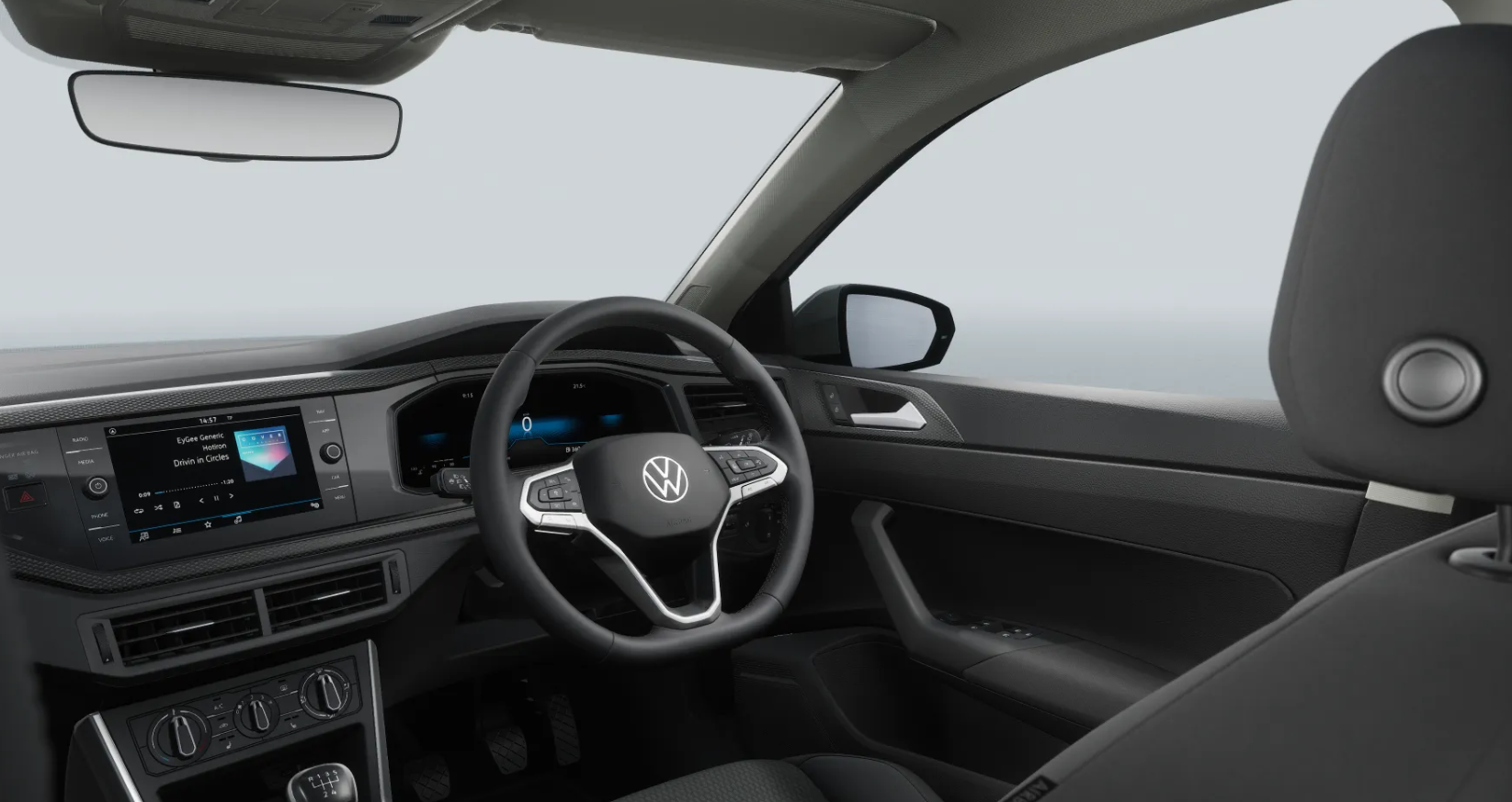
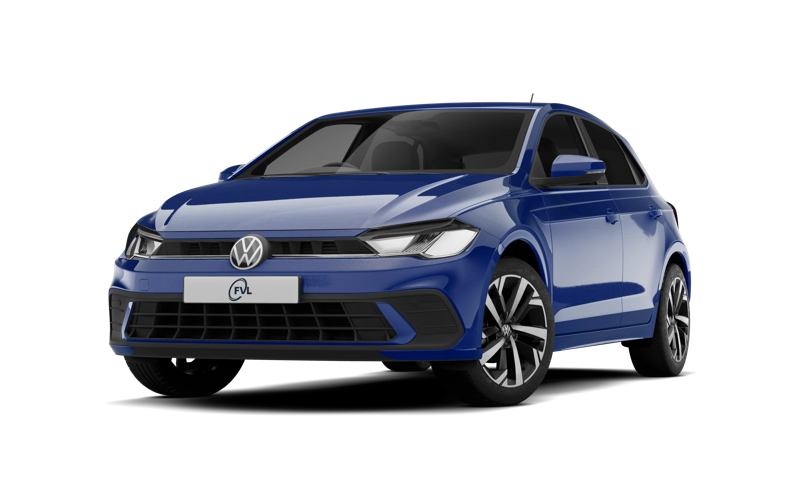
Match Plus is built on the entry-level Life trim and adds 16-inch Torsby diamond-turned alloy wheels, keyless entry and start, front and rear parking sensors, a rear-view camera, wireless phone charging, heated front seats, adaptive cruise control and rear privacy glass. Match, the trim it supersedes, covered most of that list but not the camera, keyless system or heated seats.
Match Plus trim adds rear privacy glass, 16-inch alloys, a reversing camera, keyless entry and start, adaptive cruise control, heated front seats and front parking sensors. There's a neat quirk further up the range worth knowing about: the sportier R-Line misses out on the heated front seats, front parking sensors and reversing camera that the less expensive Match Plus gets as standard. Spend more, get less kit. It happens more often than you'd think.
| Specification | Polo Match (stock only) | Polo Match Plus |
|---|---|---|
| List price, 1.0 TSI 95 PS manual | From £23,730 | £24,185 |
| List price, 1.0 TSI 95 PS DSG auto | From £25,165 | £25,620 |
| 16" Torsby alloy wheels | Yes | Yes |
| Rear-view camera | No | Standard |
| Keyless entry and start | No | Standard |
| Heated front seats | No | Standard |
| Front parking sensors | Rear only on most cars | Front and rear |
| Availability | While stocks last | Full factory order |
Why Has Volkswagen Replaced Match With Match Plus?
Volkswagen rebuilt the Polo line-up around Life, Match Plus, R-Line, Edition 50 and Black Edition. Match remains visible on the configurator but is flagged as available from stock only, meaning dealers and funders are working through existing build slots rather than placing fresh factory orders against that trim code.
Match has history. It originally arrived as a replacement for the SE trim, adding alloy wheels, front fog lights, rear tinted windows and parking sensors for only a small price rise. That pattern repeats here: Volkswagen bundles in equipment buyers were specifying anyway, nudges the price, and the trim looks better value than the sum of its options. Volkswagen positions Match Plus as its mid-range trim delivering useful extras without stepping into R-Line money.
For leasing, the practical consequence is simple. Match stock is finite. Once a funder's allocation goes, it goes, which is why you'll sometimes see a Match listed at a sharp rental one week and absent the next.
How Does Match Plus Change Polo Leasing Prices?
A lease rental is not the car's price divided up. You pay the gap between what the vehicle costs to acquire and what it's forecast to be worth at the end of the term, plus interest charges. Match Plus costs £455 more on list than Match, but it also carries kit that supports a stronger forecast residual value, so the monthly gap is normally narrower than £455 spread over the term.
Residual value, for anyone new to the term, is what the funder expects the car to be worth when it comes back at the end of the contract. Used-car buyers pay real money for a reversing camera, keyless entry and heated seats on a supermini. Trade guides reflect that. So the extra specification works on both halves of the calculation at once: it lifts the cost side and the end-value side together.
That said, Match can still win on monthly rental in one specific situation, and it's the one our team sees most often: a funder holding stock they want to move. A car already built and sitting in a compound is priced to shift. If you're flexible on colour and transmission, an in-stock Match can undercut a factory-order Match Plus even though it has less equipment. In-stock lease cars are worth checking for exactly this reason, and they deliver faster.
So is the Match Plus worth the extra each month?
If the difference is a few pounds, yes, comfortably. Heated seats and a camera are things you use every single day for three or four years. If the gap is substantial, that usually signals the Match deal is a stock clearance rather than a fair reflection of the trim difference, and it may not last the week. Either way, compare the two on the same term, the same annual mileage and the same initial rental, or the comparison means nothing. Our car lease comparison guide explains how to judge whether a given rental represents genuine value.
Running Costs, Tax and What's Included
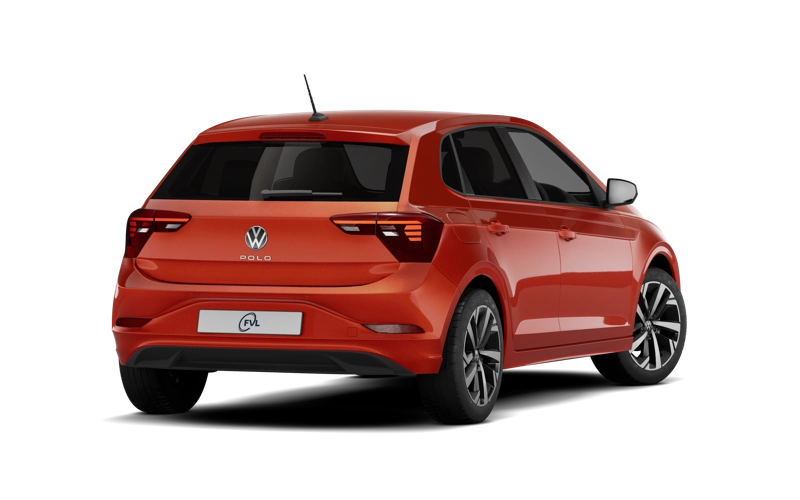
The 1.0 TSI 95 PS Match Plus manual records 116 g/km CO2 and around 55 mpg on the combined cycle. The seven-speed DSG automatic moves to 122 g/km and roughly 53 mpg. Those numbers drive two separate bills, so they're worth checking before you sign.
Vehicle Excise Duty (VED, or road tax) is included in your rental for the whole contract. The funder is the registered keeper with the DVLA, so the first-year rate set by the car's CO2 band is their problem, not yours, and so is every renewal during the term. That's one of the quieter advantages of contract hire over owning outright.
If you're taking a Polo through a company, Benefit in Kind (BIK) is the tax you pay on the private use of a company car. For petrol models the appropriate percentage runs roughly 15% to 37% of list price, scaling with CO2 emissions, under HMRC's published company car tax rates. A 116 g/km petrol supermini sits well up that scale, which is why electric alternatives look so attractive to company drivers. Check the current tables before you commit.
Company drivers choosing between a petrol Polo and an EV should also look at salary sacrifice, where an electric car is funded from gross salary and the low BIK percentages on zero-emission vehicles do the heavy lifting. For a petrol Polo on Business Contract Hire, the arithmetic is different and usually less generous.
Which Polo Trim Should You Actually Choose?
Decide by how you'll use the car rather than by trim hierarchy. Life covers the basics well. Match Plus adds the daily-use convenience items. R-Line buys looks but drops three features Match Plus includes as standard. Work through the checklist below, then compare rentals on an identical term, mileage and initial rental.
Choose Life if
You want the lowest rental on a factory-order Polo and can live without a camera or heated seats. LED headlights, wireless App-Connect and inductive charging are already standard.
Choose Match Plus if
You park in tight spaces, do short winter commutes, or simply want the convenience kit. This is the trim most of our Polo customers land on.
Choose a stock Match if
You need a car in weeks rather than months and the rental is clearly keener. Accept that colour and gearbox choice will be limited to whatever exists.
Choose R-Line or above if
Styling matters more than the camera, front sensors and heated seats you'll be giving up. Check the spec sheet line by line before you order.
Your next steps, in order
- Set your annual mileage honestly. Excess mileage charges are pence per mile but they compound, and underestimating is the most common mistake our experts correct at order stage.
- Pick a term. Three or four years both work on a Polo; shorter terms carry higher monthly rentals.
- Choose your initial rental profile. A 9+35 profile means nine months' rental upfront then 35 monthly rentals. There is no deposit on a lease, and the initial rental is not refunded.
- Compare Match and Match Plus on identical term, mileage and profile. Nothing else is a fair comparison.
- Decide between manual and DSG. The DSG costs more to lease, emits more CO2 and returns fewer mpg, so only take it if you genuinely want an automatic.
Talk to Someone Who Prices These Daily
We've arranged Polo contracts in every trim the model has worn for over 25 years, and our team can tell you in minutes whether a Match stock deal genuinely beats a factory-order Match Plus on the profile you want. First Vehicle Leasing is authorised and regulated by the Financial Conduct Authority and is a member of the British Vehicle Rental and Leasing Association (BVRLA).
Call 0333 003 3325 or browse the current range online.
Frequently Asked Questions
Sources
- Volkswagen Polo specifications and dimensions - Carwow
- Volkswagen Polo review: price, interior and trim levels - Auto Express
- Calculate tax on company cars - GOV.UK
- Fair Wear and Tear standards - BVRLA
Written by the editorial team at FVL. We've been arranging personal and business contract hire for UK drivers for over 25 years, and we're authorised and regulated by the Financial Conduct Authority and a member of the BVRLA.