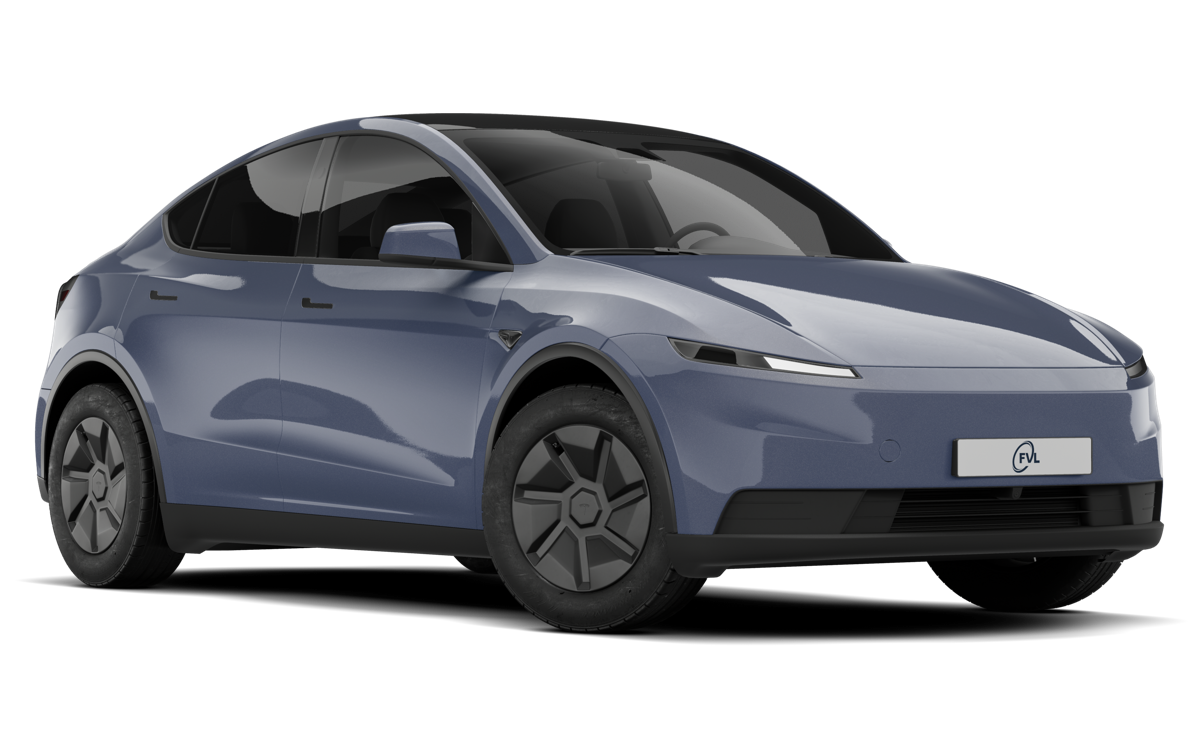

Tesla's two best sellers used to share one complaint: a ride that felt too firm on British roads. The 2026 Tesla Model Y and Model 3 are much better, but how comfortable they are now depends on the trim you pick. Below we cover how each version rides, what it costs in tax for 2026/27 and how to lease the right one through First Vehicle Leasing.
Key Takeaways
- Both cars have had major suspension overhauls: the Model 3 in its 2024 'Highland' facelift and the Model Y in its 2025 'Juniper' update.
- Damper type depends on trim. The entry Rear-Wheel Drive versions use passive dampers, Premium Long Range versions get frequency-selective dampers and Performance models get adaptive dampers.
- For comfort, the Premium Long Range versions are the best balance. The entry Model 3 Rear-Wheel Drive is noticeably firmer.
- Electric company cars carry a 4% Benefit in Kind (BIK) rate in 2026/27, rising to 5% in 2027/28.
- From 1 April 2026, electric cars only pay the Expensive Car Supplement if their list price is over £50,000.


Has Tesla Fixed the Model Y and Model 3 Ride?
Largely, yes. Tesla retuned the Model 3's dampers, bushes and suspension geometry in its 2024 Highland facelift, and softened the Model Y's suspension rates in its 2025 Juniper update. UK road testers agree both now ride far better than earlier cars. Neither is as supple as the softest rivals, though, and the entry trims are still the firmest.
In 2023 there were reports that Tesla had quietly tweaked Model Y suspension at its Shanghai factory. What's on sale now goes much further. The Juniper Model Y has stiffer bodywork, reworked springs and dampers and more sound insulation, and reviewers say it goes over potholes with far less crashing than the old car. So if the old Model Y's reputation is what put you off, it's worth another look. Any new lease will be on the current car, not the pre-update versions that earned that reputation.
How Comfortable Is the 2026 Tesla Model Y?
It's much more comfortable than it used to be, but it's still on the firm side for a family SUV. What Car?'s Model Y review finds it more brittle over pockmarked roads than the MG IM6, while other testers report better ride quality across every version. Wheel size and damper type make the biggest difference.
What suspension does each Model Y trim get?
Every Model Y uses conventional coil springs, with double wishbones at the front. What changes is the damper:
- Rear-Wheel Drive (launched as the 'Standard'): passive dampers and 19-inch wheels, with an official WLTP range of 314 miles. WLTP is the standard lab test used for official range figures.
- Premium Long Range (RWD or AWD): frequency-selective dampers. These are passive dampers that go softer over small, quick bumps and stay firm for bigger body movements.
- Performance: electronically adaptive dampers on 21-inch wheels, with ride settings you choose on the touchscreen.
Testers don't agree about the entry car. One major UK road test found the Standard slightly gentler than the Long Range RWD, while other reviewers felt its simpler dampers ride more like the pre-update Model Y. If ride quality matters to you, drive both before you choose. On the Performance, What Car? prefers the standard damper setting on bumpy roads and says Sport mode makes the ride harsh on poor surfaces. It also notes tyre noise can be an issue on the 20in and 21in wheels.


How Does the Tesla Model 3 Ride in 2026?
The Model 3 rides well for a sporty saloon, especially the Premium versions with frequency-selective dampers. UK testers describe it as mostly comfortable and well damped, though it can struggle with constant ripples in the road at speed. The entry Rear-Wheel Drive uses fully passive dampers on 18-inch wheels and feels noticeably firmer and busier.
The Highland update did more than change the dampers. It added acoustic glass, retuned rubber suspension bushes, revised the geometry and fitted quieter tyres, so the cabin is much calmer than on pre-2024 cars. What Car? named the Model 3 its Executive Car of the Year 2026. The 2026 line-up runs from Rear-Wheel Drive through Premium Long Range RWD and Premium Long Range AWD to the Performance, which has adaptive dampers. Range goes from 332 miles on the entry car to 466 miles on the Premium Long Range RWD.
| Version | Manufacturer OTR price | Damper type | Ride verdict |
|---|---|---|---|
| Model Y Rear-Wheel Drive (Standard) | £41,990 | Passive, 19in wheels | Firm; testers split, so test drive it |
| Model Y Premium Long Range RWD | £48,990 | Frequency-selective | Much improved, still taut |
| Model Y Premium Long Range AWD | £51,990 | Frequency-selective | Much improved, still taut |
| Model Y Performance | £61,990 | Adaptive, 21in wheels | Good in standard mode, harsh in Sport |
| Model 3 Rear-Wheel Drive | £37,990 | Passive, 18in wheels | Firmest Model 3 |
| Model 3 Premium Long Range RWD | £44,990 | Frequency-selective | Best Model 3 balance |
| Model 3 Performance | Check model page | Adaptive | Sharpest handling, firmer ride |
Which Tesla Should You Lease for the Smoothest Ride?
For comfort, our leasing experts recommend a Premium Long Range version of either car. Those get frequency-selective dampers and extra sound insulation, and they avoid the big wheels on the Performance. Go for the Model Y if rear passengers and luggage space matter most. Go for the Model 3 if you do a lot of motorway miles and want sharper handling.
Model Y Premium
Best for families. You get the smoother dampers, a huge boot and front storage, and upgrades such as acoustic glass and heated rear seats.
Model 3 Premium
Best for high-mileage drivers. It has the longest range in either line-up and is quiet at motorway speeds.
Entry Rear-Wheel Drive
Best if your budget comes first. You can live with a firmer ride, especially if you mostly drive in town on decent roads.
Performance
Best if speed matters more to you than comfort. Leave the dampers in their standard setting on rough roads.
On a test drive, take in a speed bump, a broken B-road and some motorway expansion joints, and spend a few minutes in the back seat too. In our experience, passengers notice a firm ride before the driver does.
Will I be approved?
Five questions, no sign-up, and an honest answer before you apply for anything.
Check my eligibilityCan You Upgrade the Suspension on a Leased Tesla?
Not without the finance company's written permission. On Personal Contract Hire (PCH) or Business Contract Hire (BCH), the funder owns the car, so fitting aftermarket dampers, lowering springs or different wheels can breach your agreement and lead to charges when you hand it back. Your insurer would also need to know about any changes.
Owners of pre-2024 Model 3s sometimes fit Highland suspension parts to their cars. On a lease, the better fix is to choose the right trim before you order.
What Does a Tesla Lease Cost in Tax for 2026/27?
Under HMRC's published company car rates, electric cars carry a 4% BIK rate in 2026/27, rising to 5% in 2027/28, 7% in 2028/29 and 9% in 2029/30. Road tax, or Vehicle Excise Duty (VED), is £200 a year at the standard rate. Electric cars with a list price over £50,000 pay an extra £440 a year Expensive Car Supplement (ECS).
Which Teslas pay the Expensive Car Supplement?
Electric cars have paid VED since April 2025, under sections 10 and 11 of the Finance Act 2023. The government then raised the ECS threshold for zero-emission cars from £40,000 to £50,000 from 1 April 2026, backdated to cars registered from 1 April 2025. At the list prices above, the Model Y Premium Long Range AWD and Performance go over that threshold. The test uses the list price including options, so extras can also push a cheaper version over. On contract hire the funder is the registered keeper with the DVLA and pays the VED, and that cost is built into your rentals.
For company car drivers, BIK is worked out as list price × BIK rate × your income tax rate (see GOV.UK's guide to tax on company cars). Illustrative example: a £48,000 electric car at 4% gives a taxable benefit of £1,920. That's £384 a year for a basic-rate (20%) taxpayer or £768 a year for a higher-rate (40%) taxpayer. The government also plans a pay-per-mile Electric Vehicle Excise Duty (eVED) from April 2028, set at 3p per mile for electric cars. That matters if your lease runs past that date.
Is Salary Sacrifice a Cheaper Way Into a Tesla?
It often is, if your employer offers it. With salary sacrifice, the monthly rental comes out of your gross salary before income tax and National Insurance, and you only pay the low electric BIK rate on top. The savings are usually biggest for higher-rate taxpayers. Find out whether your employer can join a scheme on our salary sacrifice page.
Which Electric Rivals Ride More Comfortably?
If ride comfort is your top priority, try the MG IM6. What Car? rates it one of the best-riding cars in its class and more supple than the Model Y. The BMW iX3 handles undulating roads better and has more natural steering, though it costs more. Both are worth a test drive alongside a Tesla.
The MG IM6 also comes close to the Model Y on official range. The BMW iX3 is What Car?'s pick for keen drivers. It's also fair to say the Model Y still handles more tidily than the IM6 and leans less in corners, so pick the one that suits how you drive.


Ready to Lease Your Tesla?
First Vehicle Leasing has been arranging leases for over 25 years. We're authorised and regulated by the FCA and are members of the BVRLA. Our team can help you compare trims, terms and mileages, or talk through salary sacrifice and BCH. Call us on 0333 003 3325 or browse the latest offers.
Related guides
Electric Car Salary Sacrifice Explained | UK Tax & SavingsBEV vs PHEV vs Hybrid: Which One Suits You?Should I Lease an Electric Car? An Honest UK GuideChoosing the Right Spec and Trim for Your Lease CarView all guidesFrequently Asked Questions
Sources
- Tesla Model Y Review 2026, Price & Specs - What Car?
- Vehicle Excise Duty expensive car supplement threshold increase for zero emission vehicles - GOV.UK
- Tax on company benefits: company cars - GOV.UK
Written by Andy Bell, First Vehicle Leasing.