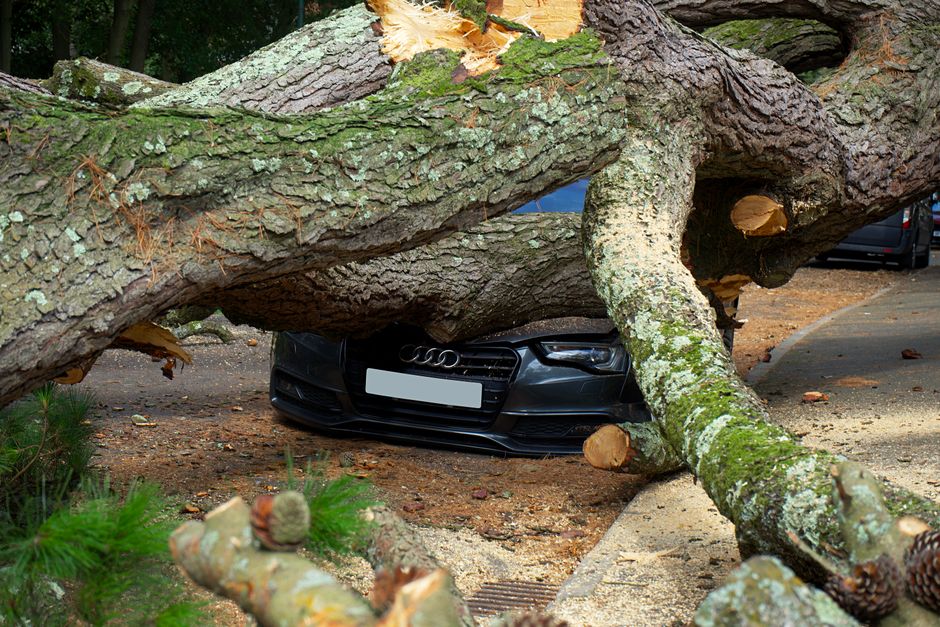
Short answer: yes, you can be left out of pocket. If your lease car is written off or stolen, your motor insurer pays what the car was worth that day - not what you still owe the leasing company. If the settlement figure is higher, the difference is yours to find. GAP insurance covers that difference.
Key Takeaways
- Guaranteed Asset Protection (GAP) insurance pays the gap between your motor insurer's total loss payout and the amount the finance company says you owe.
- On a lease you need Lease & Contract Hire GAP - not Return to Invoice. Buying the wrong type is the most common mistake we see.
- The exposure is largest in the first half of the contract, on long terms, and where you paid a big initial rental upfront.
- The Financial Conduct Authority (FCA) forced most of the GAP market to pause sales in February 2024 over poor value, and firms resumed only after cutting commissions. Shop around - the first price you're offered is rarely the best one.
- GAP is optional. If you could absorb a four-figure bill without pain, it's a reasonable thing to decline.
What's in this guide
- Do you need GAP insurance on a lease car?
- What is GAP insurance and how does it work?
- How big could the shortfall actually be?
- What types of GAP cover are there?
- How much does GAP insurance cost - and where should you buy it?
- Who genuinely needs GAP - and who doesn't?
- What doesn't GAP insurance cover?
- How to buy GAP insurance without overpaying
- Frequently asked questions
Do you need GAP insurance on a lease car?
You need it if a shortfall of a few thousand pounds, arriving with no warning, would genuinely hurt. On a lease you don't own the car, so a write-off doesn't end the contract - the funder issues a settlement figure, your insurer pays market value, and any difference is your bill. GAP covers that difference.
That's the honest position. It isn't a legal requirement, it isn't a condition of any lease we arrange, and plenty of customers sensibly decline it. But the risk is real and it's front-loaded: the gap between what a car is worth and what a contract is worth tends to be widest in the first twelve to eighteen months, which is exactly when nobody expects a lorry to change lanes into them.
Two things push the risk up. A long term - four years rather than two - keeps more rentals outstanding for longer. And a large initial rental (the upfront payment, often nine months' worth on a standard 9+35 profile) is money you have already spent and won't get back if the car is written off in month four. Lease GAP policies frequently include a contribution towards that initial rental, which is the part people forget about.
What is GAP insurance and how does it work?
Guaranteed Asset Protection (GAP) insurance sits alongside your comprehensive motor policy. It only pays out after a valid total loss claim - the car written off or stolen and not recovered. Your motor insurer settles at market value; GAP then pays the shortfall between that payout and what the leasing company needs to close the agreement.
The British Vehicle Rental and Leasing Association (BVRLA) puts it plainly in its consumer advice: if the insurance payout doesn't cover the settlement figure proposed by the leasing company, you make up the difference yourself unless you took out GAP. Nothing about a lease pauses because the car has gone.
So why does a gap exist at all?
Because two different sums are being calculated. Your insurer values the vehicle as it stood on the day of the loss - age, mileage, condition, what similar cars are selling for. The funder calculates what it needs to close a contract early, based on the remaining rentals and the agreement's terms. Those two numbers were never designed to match, and in a falling used-car market they can drift a long way apart.
It helps to remember what a lease rental is actually made of: you're paying the difference between what the vehicle cost to acquire and what it's forecast to be worth at the end of the term, plus interest charges. Early in the contract, very little of that has been paid down.
An illustrative example - and why the numbers move
Say you lease a car with a £35,000 list price on a 36-month contract with nine months' rental upfront. Twelve months in, it's written off. Your insurer assesses market value at £22,000. The funder's settlement figure comes back at £25,500.
The shortfall is £3,500 - plus the initial rental you've already spent, which nothing refunds. Lease GAP would cover the £3,500 and, depending on the policy, contribute towards that upfront payment up to a stated limit.
These are round, illustrative figures chosen to show the mechanism. Your own settlement figure depends entirely on your agreement and your funder - ask for it in writing before you decide.
How big could the shortfall actually be?
Anywhere from nothing to several thousand pounds. On a fairly priced car, late in a short contract, a comprehensive payout often clears the settlement figure entirely - and some customers who bought GAP never had a gap to claim for. Early in a long contract on a fast-depreciating model, four figures is common.
The variables that matter, in rough order of impact:
How far into the term you are
Month six is high risk. Month thirty of a 36-month deal usually isn't. The outstanding balance falls as the car's value falls, but not always at the same speed.
How quickly the model depreciates
Cars with weak residual values - the forecast worth at the end of the term - fall away from the contract balance faster. Segments where used values have moved sharply are the ones to watch.
What you paid upfront
A 12+35 profile means twelve months' rental gone on day one. That money isn't returned after a total loss unless your GAP policy contributes towards it.
Your funder's settlement method
Early termination terms differ between funders. Some settlements are gentler than others. It's in your agreement - and if you can't find it, ask us and we'll point you to the clause.
What types of GAP cover are there?
Three types are sold in the UK, and only one of them is right for a lease. Lease & Contract Hire GAP is built around the funder's settlement figure. Return to Invoice and Vehicle Replacement GAP are built around a purchase price you never paid, because on Personal Contract Hire (PCH) or Business Contract Hire (BCH) you never bought the car.
| Type of cover | What it pays | Right for a lease? |
|---|---|---|
| Lease & Contract Hire GAP | Shortfall between the insurance payout and the leasing company's settlement figure; often a capped contribution towards your initial rental | Yes - this is the one |
| Return to Invoice (RTI) GAP | Difference between the payout and the price you originally paid for the vehicle | No - there's no invoice price on a lease |
| Vehicle Replacement (VRI) GAP | Difference between the payout and the cost of an equivalent brand-new replacement | No - designed for owners, not hirers |
| Manufacturer or scheme-included cover | Varies; some agreements and salary sacrifice schemes build in early termination protection | Check first - you may already be covered |
That last row matters more than people expect. Some employer schemes include protection against early termination for defined life events, and some manufacturer-backed offers bundle cover in. Before you buy anything, check what's already there. If you're looking at an employer scheme, our salary sacrifice page sets out how those arrangements work, and it's worth asking the scheme provider directly what happens after a total loss.
How much does GAP insurance cost - and where should you buy it?
A multi-year lease GAP policy is typically a one-off premium in the low hundreds of pounds, varying with the vehicle's value, the term and the claim limit. Where you buy it matters as much as what you pay - the same cover from a standalone specialist and from a point-of-sale channel can be priced very differently.
The regulator has been blunt about this. In February 2024 the FCA announced that firms accounting for around 80% of the GAP market had agreed to pause sales over fair value concerns; its data showed that in 2022 only 6% of what customers paid in premiums came back out in claims, with some firms paying as much as 70% of premiums in commission to those selling the product. Sales resumed from May 2024 only where firms could demonstrate fair value, and the FCA noted this happened with materially lower commission levels.
Two practical consequences for you. First, the product is better value than it was - but the FCA's own framing is that its assessment reflects a point in time, so this is not a market to buy on autopilot. Second, always compare at least two or three FCA-authorised providers before committing.
Can you take a few days to think about it?
Yes, and the rules are on your side. Under the FCA's ICOBS 6A rules covering GAP sold in connection with a vehicle, the seller must draw specific information to your attention beforehand - the total premium separately from any other price, the significant benefits and unusual exclusions, and the fact that GAP is sold by other distributors too. A deferral period then applies before the contract can be concluded, unless you're the one who makes contact to go ahead sooner. Use it.
Who genuinely needs GAP - and who doesn't?
Three groups, and it's worth being honest about which you're in. Buy it if a sudden four-figure bill would be a real problem. Consider it if your exposure is moderate. Skip it if you're late in a short contract, paid little upfront and could absorb the shortfall without much difficulty.
| Your situation | Our view |
|---|---|
| 48-month lease, large initial rental, a four-figure unplanned bill would hurt | Buy it. Your exposure is at its widest and lasts longest |
| 36-month lease, standard 9+35 profile, savings would stretch but not break | Consider it. Get the funder's settlement basis first, then price two or three policies |
| 24-month lease, minimal upfront, comfortable covering a few thousand pounds | Reasonable to skip. The likely gap is smaller and shrinking |
| Scheme or agreement already includes early termination protection | Skip it. Confirm the cover in writing rather than paying twice |
One more scenario worth flagging. Business users on BCH sometimes assume the company can simply absorb a write-off shortfall. Sometimes true - but it's an unbudgeted cost landing in the middle of a financial year, and on a small fleet that stings. If cashflow certainty is why you leased in the first place, GAP fits the same logic as a maintenance package.
What doesn't GAP insurance cover?
GAP is narrow by design. It only responds to a total loss - the vehicle written off or stolen and unrecovered - and only after your motor insurer has accepted the claim and made an offer. It won't help with damage charges, excess mileage, or wanting out of your contract early for any other reason.
Common exclusions to check in the wording
- Voluntary early termination. Changing your mind, moving abroad or simply wanting a different car is not a GAP claim.
- End-of-contract charges. Damage beyond BVRLA fair wear and tear standards, or mileage over your contracted allowance, sits outside GAP entirely.
- Arrears. Rentals you had already missed before the loss generally aren't covered.
- Claims your motor insurer declines. No valid total loss claim, no GAP payout. If your comprehensive cover fails, GAP fails with it.
- Your excess - unless the policy specifically includes an excess contribution. Many do, up to a stated limit. Check rather than assume.
Those first two are worth internalising, because they're the charges most lease customers actually meet. Damage and mileage are managed, not insured against - our guides on what's included in a maintenance package, tyre and alloy insurance and cosmetic (SMART) repair insurance deal with those risks properly.
How to buy GAP insurance without overpaying
Work in this order and you'll either buy well or decline with confidence. It takes about half an hour. The single most valuable step is the first one, because until you know how your funder calculates a total loss settlement you're guessing at the size of the risk you're insuring.
- Ask your funder how a total loss settlement is calculated and get it in writing. It's in the agreement; the wording varies between funders.
- Check what you already have. Employer scheme, manufacturer offer, existing motor policy add-on - some cover overlaps.
- Buy Lease & Contract Hire GAP specifically. If a quote mentions invoice price, it's the wrong product for a lease.
- Match the policy term to the lease term. A 36-month contract wants three years of cover, not two.
- Compare at least three FCA-authorised providers. You can check any firm on the Financial Services Register.
- Read the claim limit - the maximum the policy will pay. On a high-value car a low limit can leave a gap inside your gap cover.
- Check the initial rental contribution and the excess contribution, if any, and note the caps.
- Use the deferral period. There's no prize for signing the same day.
Not sure whether your exposure justifies it?
Our team arranges leases across every funder in the UK market, so we can tell you how a particular agreement treats a total loss before you commit to anything. We'd rather you declined GAP for the right reason than bought it for the wrong one.
Have a look at what's available first - the term and profile you choose change your exposure as much as the cover you buy.
Frequently Asked Questions
What to do next
Get your funder's settlement basis in writing, decide which of the three groups above you fall into, then either buy the right product from an FCA-authorised provider or decline it deliberately. Choosing a shorter term or a smaller initial rental also reduces your exposure - worth weighing when you pick the deal itself.
Our advisers know how each funder handles a total loss, and we'll talk you through it whether or not you end up buying anything. If you want the broader picture on what a lease does and doesn't include, the leasing Q&A and our jargon buster are the two pages most first-time customers find useful.
Talk it through before you commit
Over 25 years arranging leases means we've seen how every major funder handles a write-off. Call our team on 0333 003 3325 - no pressure, no scripted upsell.
Browse Special Offer DealsSources
- Before you lease - is it for me? - BVRLA
- GAP insurers agree to suspend sales following FCA concerns over fair value - Financial Conduct Authority
- Firms to recommence GAP insurance sales following FCA action - Financial Conduct Authority
- Leasing: frequently asked questions - BVRLA
Written by the First Vehicle Leasing content team. FVL has arranged personal and business vehicle leases for UK drivers for over 25 years, and is authorised and regulated by the Financial Conduct Authority and a member of the BVRLA. Guides in this knowledgebase are reviewed and updated as regulation and market conditions change.
Will I be approved?
Five questions, no sign-up, and an honest answer before you apply for anything.
Check my eligibility