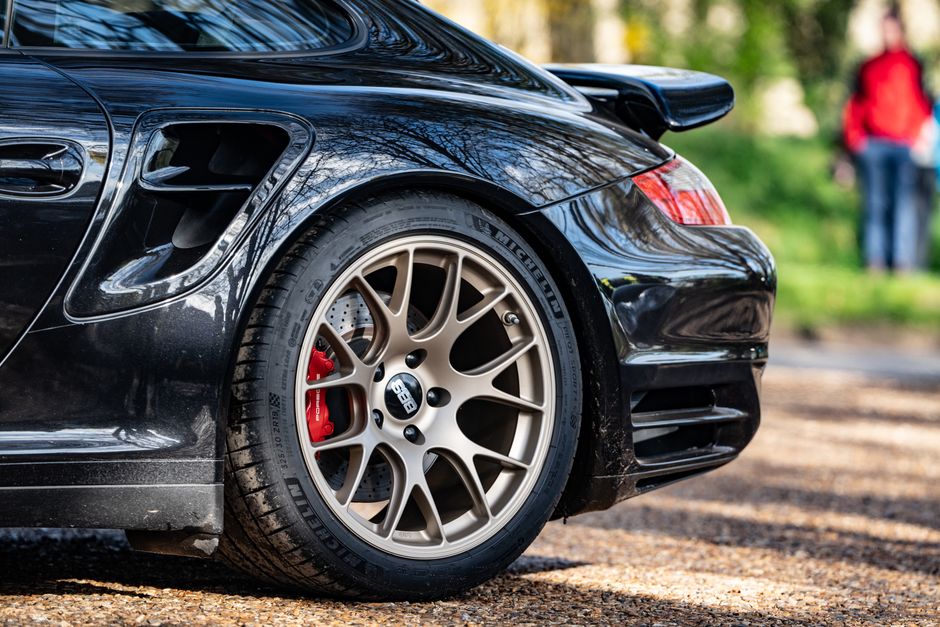
Straight answer: tyre and alloy insurance is worth it if your lease car sits on large diamond-cut alloys and low-profile tyres, you park on the street, and your daily roads are rough. On small painted 16 or 17-inch wheels with off-street parking, it usually isn't - you'd likely spend more on the policy than on repairs.
Key Takeaways
- Wheel damage is one of the most common things a standard motor policy won't economically cover - the excess and the at-fault claim usually cost more than the repair.
- Under BVRLA fair wear and tear standards, scuffs totalling up to 50mm around the rim are acceptable at handback. Damage to spokes or the wheel hub, dents, cracks and corrosion are not.
- Cover typically pays a capped contribution per wheel and per tyre, with a set number of claims a year - it is not unlimited and it is not a maintenance package.
- Worn-out tyres are never covered. Most policies also require a minimum tread depth at the point of claim, above the 1.6mm UK legal minimum.
- Buy it early or not at all: most policies must be taken within 30 to 90 days of delivery and won't touch pre-existing damage.
What's in this guide
- Is tyre and alloy insurance worth it on a lease car?
- What does tyre and alloy insurance actually cover?
- What counts as fair wear and tear on wheels and tyres?
- What do wheel and tyre repairs cost if you pay yourself?
- What isn't covered? The exclusions that catch people out
- Hit a pothole - should you claim on the council or your insurer?
- Who should buy wheel cover, and who shouldn't?
- How does it compare with other lease protection add-ons?
- What to check before you buy a policy
- Frequently Asked Questions
Is tyre and alloy insurance worth it on a lease car?
It's worth it when the repair bills would be big and the risk is real: 19-inch-plus diamond-cut or laser-cut alloys, low-profile tyres, street parking, tight urban roads. It's poor value on smaller painted wheels, off-street parking and a driver who has never kerbed a car. The wheels decide it, not the postcode alone.
The reason wheel cover exists is that alloys and tyres fall into an awkward gap. They're expensive, they get damaged constantly, and your comprehensive motor policy is a blunt instrument for a £150 repair - most car insurance excludes cosmetic wheel damage anyway, and where it doesn't, the excess and the hit to your no-claims bonus swallow the benefit.
On a lease there's a second layer. You hand the car back, an independent inspector looks at it, and anything beyond the agreed return standard gets charged. Wheels are one of the first things they look at because they're easy to assess and hard to hide.
But - and our team says this to customers regularly - the cover is not automatically good value. If you're on 17-inch painted alloys, park on a driveway and do most of your miles on decent roads, you may go three years without a single claimable incident. The honest position is that this is a product with a narrow but genuine sweet spot, and plenty of drivers sit outside it.
What does tyre and alloy insurance actually cover?
It pays a capped contribution towards repairing or replacing wheels and tyres damaged by everyday accidental or malicious incidents - kerbing, potholes, punctures, slashed tyres. Cover is per wheel and per tyre, with a limited number of claims a year, and most policies carry no excess. It is insurance, not a service plan.
Alloy wheel cover
This is cosmetic repair work, usually done by a mobile technician at your home or workplace using SMART repair (Small to Medium Area Repair Technique - localised refinishing that fixes the damaged area rather than the whole wheel). Where the wheel can't be repaired, the policy pays a contribution towards replacement rather than the full cost. Typical market limits sit in the region of £150 to £250 per wheel, so a £600 OEM replacement rim still leaves you contributing.
Tyre cover
This covers accidental or malicious damage that makes the tyre unroadworthy - a sidewall gouge from a pothole, a puncture that can't be plugged, vandalism. Payouts are capped per tyre, commonly in the £300 to £400 range depending on the provider. Puncture repairs are usually covered up to a much smaller limit.
Usually covered
Kerb scuffs and rim damage, pothole punctures, sidewall damage, malicious damage reported to police, mobile SMART repairs, replacement contributions where repair isn't possible.
Never covered
Tyres worn out through normal use, pre-existing damage, corrosion and lacquer peel from age, manufacturing defects, theft of wheels, and damage from a road traffic accident where the car is written off.
Check the wording
Wheels over 23 inches, chrome-effect and split-rim wheels, non-standard aftermarket alloys, and cracked or buckled rims - some policies cover cosmetic damage only.
What counts as fair wear and tear on wheels and tyres?
Under BVRLA fair wear and tear standards, scuffs totalling up to 50mm around the circumference of the wheel rim or trim are acceptable. Damage to the wheel spokes or hub is not. Dents and holes in rims are not. There must be no corrosion. Tyres must be the correct type, size, class and speed rating, with no sidewall or tread damage.
This matters more than most drivers realise, because it sets the bar for what you'll actually be charged for. The British Vehicle Rental and Leasing Association (BVRLA) is the industry trade body, and its Fair Wear and Tear Guide is the benchmark almost every UK funder inspects against. Light kerb rash within that 50mm allowance is not a charge. A scuffed spoke, a buckled rim or "white worm" corrosion under the lacquer almost certainly is.
The BVRLA also recommends drivers appraise the vehicle 10 to 12 weeks before it's due back, checking tyres for damage and uneven tread wear and inspecting wheels, trims and spokes. That window exists for a reason: it gives you time to get repairs done at your own price rather than the funder's. If you want the wider picture on handback charges, our guide on how to avoid unexpected bills on a lease covers the full inspection process.
One caveat worth knowing: not every funder applies the standards identically. Check the fair wear and tear booklet your own finance company issues at the start of the agreement - that document is the binding one.
Hit a pothole - should you claim on the council or your insurer?
Try the council first. Under the Highways Act 1980, highway authorities have a duty to maintain the roads they're responsible for, and you can claim for damage. Claiming on your motor policy instead is usually treated as an at-fault claim, because there's no third party to recover from, so your premium and no-claims bonus take the hit.
Be realistic about the odds. Councils rely heavily on the statutory defence that they weren't aware of the defect, so claims succeed far more often where the pothole had already been reported and left unrepaired. Photograph the defect with something for scale, note the exact location, get written repair quotes, and report it through the GOV.UK pothole reporting service to create a dated record.
That's precisely where a wheel and tyre policy earns its keep: it pays out on the damage without any of that argument, and without touching your motor insurance.
What do wheel and tyre repairs cost if you pay yourself?
A standard painted alloy refurb is the cheapest outcome - roughly £75 to £120 per wheel through a mobile specialist. Diamond-cut faces need lathe work and cost noticeably more, commonly £120 to £300 a wheel. A cracked or buckled rim, or an OEM replacement, runs from a couple of hundred pounds into four figures on premium cars.
Tyres vary just as widely. Budget rubber for a small hatchback can be well under £100 fitted; a low-profile premium tyre on a 21-inch performance wheel can be several hundred pounds each. That spread is the whole argument. The bigger and more specialised the wheel, the faster cover pays for itself.
A worked example - does the maths stack up?
Illustrative figures only, but the method is the point. Say combined tyre and alloy cover costs £400 for a three-year lease.
- Painted 17-inch alloys, refurb at roughly £100 a wheel: you'd need to damage four wheels across three years just to break even.
- 20-inch diamond-cut alloys, re-cut at roughly £200 a wheel: two damaged wheels covers the premium, and a third puts you ahead.
- Add one pothole-destroyed low-profile tyre at £250: the second scenario is comfortably in profit; the first is close to it.
Run that sum against your own car before you buy anything. If you can't see yourself getting to break-even, put the money aside instead and pay for a repair if one happens.
What isn't covered? The exclusions that catch people out
Worn tyres, pre-existing damage and corrosion are excluded on every policy we've seen. Most also set a minimum tread depth - often 2mm - at the point of claim, which is stricter than the 1.6mm UK legal minimum. Non-standard aftermarket alloys, chrome-effect and split-rim wheels are widely excluded, as is theft.
Two more that surprise people. First, timing: most providers insist you buy within 30 to 90 days of taking delivery from a dealer or leasing company, and several cap the vehicle age at seven or ten years at the start date. Miss the window and the product simply isn't available to you.
Second, authorisation. Repairs carried out before the insurer approves them are routinely refused, and damage reported late - often beyond 30 days - can be declined too. Photograph the damage, report it, then book the repair. Not the other way round.
On tyres specifically, the cover only bites where the damage makes the tyre unroadworthy. A cosmetic graze to the sidewall that would still sail through an MOT isn't a claim. And nothing in these policies replaces tyres that have simply worn out - under GOV.UK tyre rules, keeping tread above 1.6mm across the central three-quarters is your legal responsibility as the driver, and on a lease it's a maintenance cost, not an insured one. If replacement tyres are what you're actually worried about, look at what's included in a maintenance package instead - that's the product that covers wear items.
Who should buy wheel cover, and who shouldn't?
Buy it if your car has 19-inch or larger wheels, a diamond-cut or laser-cut finish, low-profile tyres, and you park on-street or drive tight urban roads daily. Skip it if you have 16 to 18-inch painted alloys, off-street parking and a clean kerbing record - the premium likely exceeds your expected repair spend.
Cover usually makes sense
- Diamond-cut, laser-cut or polished finishes - expensive to restore properly
- 19-inch-plus wheels with 40-profile or lower tyres
- On-street or multi-storey parking, narrow city streets
- Heavier EVs and performance models, where tyres are pricier and wear faster
- Anyone who has kerbed a wheel in the last couple of years
Cover is usually poor value
- Small painted or powder-coated alloys on a supermini or small hatch
- Off-street parking, mainly motorway and A-road mileage
- Short 24-month agreements with low mileage
- Vans and pick-ups on steel wheels with high-profile tyres
- Drivers comfortable funding a one-off £100 to £200 repair themselves
One nuance on electric cars. EVs are heavy, often ride on large wheels with low-profile tyres, and they chew through rubber faster than an equivalent petrol car. If you're leasing an EV - particularly through salary sacrifice, where the monthly cost is already coming out of gross pay - the case for wheel and tyre protection is stronger than average, and a maintenance package is worth pricing alongside it.
How does it compare with other lease protection add-ons?
Tyre and alloy cover protects the wheels only. Cosmetic (SMART) repair cover handles bodywork scuffs and small dents but excludes wheels. GAP insurance deals with a total loss. A maintenance package covers servicing and wear items including replacement tyres. They solve different problems and overlap far less than the names suggest.
| Product | What it protects | Best for | Key limitation |
|---|---|---|---|
| Tyre & alloy insurance | Accidental and malicious wheel and tyre damage | Large or diamond-cut alloys, low-profile tyres, urban parking | Capped per wheel/tyre; limited claims per year; no wear items |
| Cosmetic (SMART) repair | Minor dents, scratches and scuffs to body panels | Cars parked in busy car parks; dark or metallic paint | Excludes wheels, glass, lamps and panel replacement |
| Maintenance package | Servicing, MOT, brakes and replacement tyres | High-mileage drivers wanting a fixed monthly cost | Doesn't cover accidental or malicious damage |
| GAP insurance | Shortfall if the vehicle is written off or stolen | Anyone who couldn't absorb an early-termination shortfall | Irrelevant to day-to-day damage of any kind |
If you're weighing up more than one, read them side by side: cosmetic (SMART) repair insurance and GAP insurance both have their own sweet spots, and buying all four "just in case" is how a sensible monthly payment quietly turns into an expensive one.
What to check before you buy a policy
Compare the per-wheel and per-tyre limits, the number of claims allowed per year and over the full term, the excess, and whether diamond-cut finishes and your wheel diameter are included. Then check the purchase window and the tread depth requirement. Two policies at the same price can differ enormously on all of those.
- Claim limits per wheel and per tyre - and whether an unrepairable wheel gets a contribution or a full replacement.
- Number of claims - anything from two to five per year, sometimes with a total cap across the term. Each wheel usually counts as one claim, so a single pothole hitting two wheels uses two.
- Excess - many wheel policies have none. Some have a small one. Don't assume.
- Wheel type and size - diamond-cut cover is common but not universal; chrome-effect and split-rim wheels are widely excluded, and most policies cap diameter at 21 to 23 inches.
- Cosmetic only, or cracks and buckles too? Pothole damage is structural. A cosmetic-only policy won't help.
- Purchase window and photo evidence - typically 30 to 90 days from delivery, and you'll usually need to photograph all four wheels at the start.
- Term matching - line the cover up with your lease length so it doesn't expire before handback.
Auto Express product testing found flat-rate three-year wheel-only cover from around £199 on a leased Cupra Born, with combined tyre and wheel cover costing substantially more - and noted that buying independently rather than as a dealer add-on generally gets you a better deal. Worth remembering when a policy is presented at the point of order.
All UK insurance distribution is regulated by the Financial Conduct Authority (FCA), and any firm selling you this cover must be authorised. Read the Insurance Product Information Document (IPID) - the standardised one-page summary every insurer must provide - before you commit. It takes two minutes and it's where the exclusions live.
Not sure which add-ons you actually need?
Our team has arranged leases for over 25 years, and we'd rather tell you to skip a product than sell you one you won't claim on. Talk it through against your specific car, wheels, parking and mileage - it takes a couple of minutes on the phone.
Call 0333 003 3325 or browse the current offers below.
Frequently Asked Questions
Sources
- What is alloy wheel and tyre insurance, is it worth having? - Carwow
- Returning your leased vehicle - British Vehicle Rental and Leasing Association
- Report a pothole - GOV.UK
- Tyres and wheels: the law - GOV.UK
- Best alloy wheel insurance providers - Auto Express
Written by the leasing specialists at First Vehicle Leasing, a UK vehicle leasing broker with over 25 years' experience, authorised and regulated by the Financial Conduct Authority and a member of the BVRLA. Questions about protection products on your next lease? Call our team on 0333 003 3325.
Will I be approved?
Five questions, no sign-up, and an honest answer before you apply for anything.
Check my eligibility