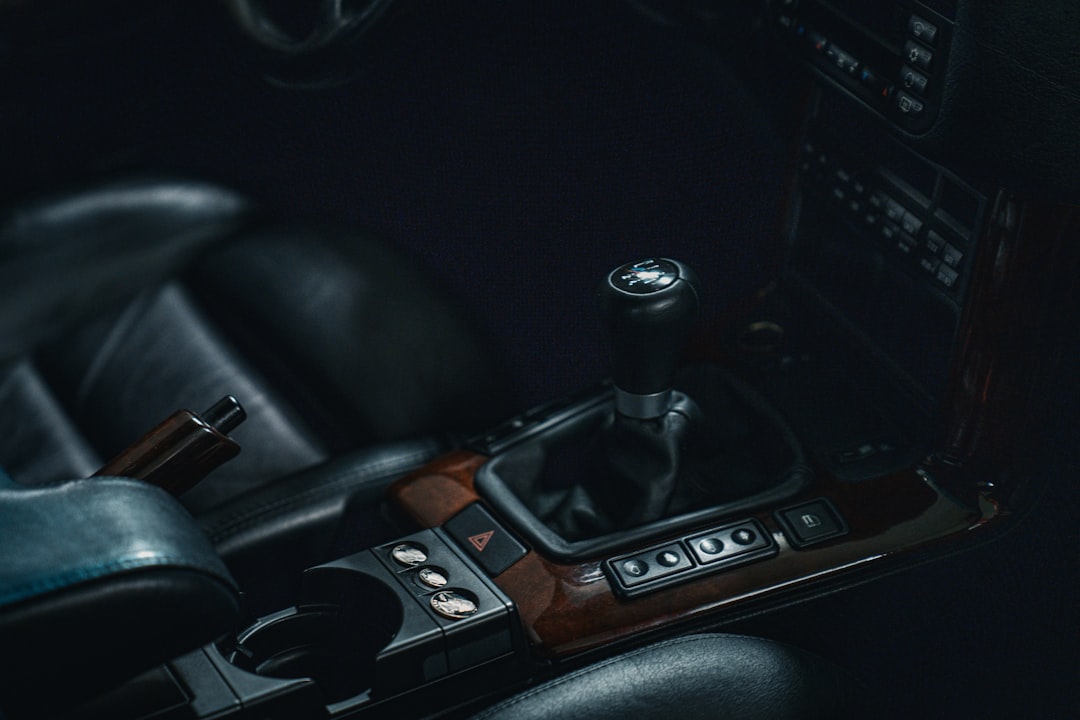
Yes, gearbox choice changes things on a lease, but fewer than most people assume. Where a model offers both, the automatic normally costs a bit more per month, may carry a different CO2 figure for company car tax, and is far easier to find in stock. What it doesn't change is who carries the resale risk. That stays with the funder.
What's in this guide
- Does gearbox choice change anything on a lease?
- Is an automatic more expensive to lease than a manual?
- How does gearbox choice affect company car tax and CO2?
- What types of automatic gearbox are you choosing between?
- Does gearbox choice affect availability and delivery times?
- Does your driving licence limit which gearbox you can lease?
- Does the gearbox affect end-of-lease charges?
- How should you decide between automatic and manual?
- Frequently Asked Questions
Key Takeaways
- Where a model is offered with both gearboxes, the automatic usually carries a higher list price, so the monthly rental is normally a little higher. The gap is often smaller than the list price difference suggests, because automatics tend to be forecast to hold their value better.
- Gearbox can change the WLTP CO2 figure of a derivative, which feeds the Benefit in Kind (BIK) percentage on a company car. Fully electric cars sit at 4% for the 2026/27 tax year; petrol and diesel cars sit roughly between 15% and 37% depending on CO2.
- Manuals are a shrinking part of the new car market, so in-stock manual cars are scarce and a manual choice more often means a factory order and a longer wait.
- If you passed your test in an automatic, your licence carries DVLA code 78 and you cannot lease and drive a manual. There is no equivalent restriction the other way round.
- You hand the car back at the end, so the long-term resale disadvantage of an unfashionable gearbox is the funder's risk, not yours.
Does gearbox choice change anything on a lease?
It changes four things: the monthly rental (usually slightly higher for an automatic on models that offer both), the CO2 figure and therefore company car tax on a business lease, how quickly you can get the car, and whether your licence permits you to drive it at all. Everything else about the contract is identical.
The term, the mileage allowance, the initial rental, the fair wear and tear standards, the credit assessment - none of these change because of the gearbox. A 36-month contract on a manual and a 36-month contract on the automatic version of the same car are the same product with different numbers on the front.
And there's one thing gearbox choice does not do on a lease, which matters more than people realise. If you buy a manual today and the used market has moved even further towards automatics in three years' time, that's your loss when you sell. On a lease it isn't. The funder buys the car, forecasts what it will be worth at the end, and carries the risk if that forecast turns out to be wrong. You pay the gap between what the car costs to acquire and its forecast end value, plus interest charges, and then you give the keys back.
That's a genuine advantage of leasing during a technology shift, and it applies here.
Is an automatic more expensive to lease than a manual?
Usually yes, but by less than the list price gap implies. Manufacturers charge more for the automatic version of a model, which pushes the rental up. Against that, automatics are generally forecast to hold their value better than manuals, which pushes the rental back down. The two effects partly cancel out.
Here's why. A rental is built from the gap between what the vehicle costs to acquire and what it's forecast to be worth at the end of the term, plus interest charges. The automatic starts from a higher acquisition cost, so that pulls the rental up. But if the funder also expects the automatic to be worth more at handback, the gap widens less than the list price difference on its own would suggest.
In our experience, on mainstream models where both gearboxes exist, the monthly difference is modest and occasionally the automatic works out level or even cheaper on a particular offer. That last case sounds odd until you remember how leasing pricing works. When we've committed to volume on a specific derivative, that derivative prices sharply, and it's usually the automatic because that's what the market buys.
| What changes | Manual | Automatic |
|---|---|---|
| List price of the derivative | Lower | Higher on most models |
| Forecast value at end of term | Generally weaker | Generally stronger |
| Typical effect on monthly rental | Usually a little lower | Usually a little higher |
| Choice available | Limited and shrinking | Broad, including all EVs |
| Who carries the resale risk | The funder | The funder |
If you want to test whether a particular price is actually good, the method is in our guide to comparing lease deals and spotting a good one. Just make sure you're comparing the same term, mileage and initial rental on both gearboxes, or the comparison tells you nothing.
How does gearbox choice affect company car tax and CO2?
On a business lease, gearbox can shift the derivative's official WLTP CO2 figure, and CO2 sets the Benefit in Kind (BIK) percentage - the proportion of the car's list price you're taxed on as a company car driver. A few grams either way can move you into a different band, so check the exact derivative rather than the model.
Which direction it moves is not fixed. Older torque-converter automatics were usually thirstier and dirtier than the manual equivalent. Modern dual-clutch and multi-speed automatics are often the cleaner option, particularly where the automatic is paired with a hybrid system. There's no rule of thumb worth trusting here. Look at the number on the specific version you're pricing.
What are the actual rates?
According to HMRC's published company car tax rates, fully electric cars attract a BIK rate of 4% for the 2026/27 tax year, rising to 5% in 2027/28. Fleet News's summary of the current BIK bands sets this out alongside the CO2-based bands. Petrol and diesel cars sit roughly between 15% and 37% of list price depending on emissions, with higher-emission models at the top of that range. Diesels that don't meet the RDE2 standard carry a 4 percentage point supplement, capped at 37%.
Example, and these are illustrative round numbers rather than a quote: a £40,000 electric car at 4% gives a taxable benefit of £1,600 for the 2026/27 tax year. A 40% taxpayer pays £640 a year, around £53 a month. The same £40,000 list price on a petrol car in a 29% band gives a taxable benefit of £11,600, and £4,640 a year for a 40% taxpayer. That difference dwarfs anything the gearbox itself does.
Which is the honest point here. If you're a company car driver worrying about the tax cost of an automatic, you're looking at the wrong variable. Fuel type moves the number by hundreds of pounds a month; gearbox moves it by a band at most. If tax is your priority, look at electric car lease deals or an employer-run salary sacrifice scheme, both of which take the choice out of your hands anyway. Every EV is effectively an automatic.
Electric cars have already settled this argument
Battery electric vehicles have a single-speed transmission. No clutch, no gears in the traditional sense, nothing to change. If your next lease is electric, the gearbox question disappears entirely and your licence treats the car as an automatic.
That's a large part of why manuals are vanishing from price lists. As electrified drivetrains take a bigger share of registrations, the manual share falls with it.
What types of automatic gearbox are you choosing between?
"Automatic" covers four quite different mechanisms, and they feel different to drive. Torque converter, dual-clutch, CVT and single-speed electric. If you've tried an automatic before and disliked it, there's a fair chance you tried one type and wrote off all of them.
Torque converter
The traditional automatic, now usually with eight or nine speeds. Smooth at low speed and relaxed on the motorway. Common in larger saloons, SUVs and premium models.
Dual-clutch (DSG, DCT, S tronic)
Two clutches preselecting gears, so shifts are very quick. Excellent on the move; some versions feel slightly hesitant in stop-start traffic and tight car parks.
CVT
A continuously variable transmission with no fixed ratios, used widely on hybrids. Very smooth in town. Under hard acceleration the engine note holds steady, which divides opinion.
Single-speed (electric)
Fitted to every battery electric car. One ratio, no shifts at all, and the smoothest of the lot. Counts as an automatic for licensing purposes.
Our advice is simple: drive the actual gearbox before you commit to three or four years of it. A dual-clutch in a hot hatch and a CVT in a family hybrid are not remotely the same experience. If you're unsure which suits you, our team can point you at the right derivatives, and the guide to choosing the right spec and trim covers how to lock the details down before an order goes in.
Does gearbox choice affect availability and delivery times?
Significantly. Manual derivatives are a small and shrinking slice of the UK new car market, so far fewer are built to stock. If you want a manual, expect a narrower choice of models, fewer trim and colour combinations, and a greater likelihood of a factory order with a wait attached.
The scale of the shift is easy to underestimate. What Car? research on manual gearbox availability found that around a quarter of new mainstream models on sale were still offered with a manual, with manual registrations down to roughly 29% of the market in 2023 from about half in 2019. The direction of travel since then has been one way.
In practical terms, that means the shortcut of taking a physically built car sitting at a compound is far more likely to be available in automatic form. If speed matters to you, read in-stock vs factory order alongside how delivery works and how long it takes. A manual buyer who also wants a specific colour is often the customer waiting longest.
So is holding out for a manual a bad idea? Not at all, if you genuinely prefer driving one. Just go in knowing the choice is thinner and the wait may be longer, and start looking earlier than you otherwise would.
Does your driving licence limit which gearbox you can lease?
It can. If you passed your practical test in an automatic, your licence carries DVLA code 78 and you're restricted to automatic vehicles. You cannot legally drive a manual, whether you own it, borrow it or lease it. A full manual licence has no such restriction and lets you drive both.
The DVLA list of driving licence codes on GOV.UK defines code 78 as a restriction to vehicles with automatic transmission. It appears against category B on the back of the licence. Removing it means passing a further practical test in a manual car.
Two practical consequences worth knowing before you order:
- Check every named driver on the policy, not just yourself. A partner or employee with code 78 can't legally drive a manual lease car, and driving outside your entitlement can put your insurance position at risk.
- The restriction only runs one way. A full manual licence covers automatics with no additional test, so a manual driver moving to an automatic lease has nothing to do.
Nobody at the funder is going to phone the DVLA on your behalf. Responsibility for holding the right entitlement sits with the driver, and it catches people out more often than you'd expect, particularly on second-driver arrangements.
Does the gearbox affect end-of-lease charges?
Only in one respect. Under BVRLA fair wear and tear standards, mechanical condition is assessed at handback, and a slipping or noisy clutch on a manual is treated as damage rather than acceptable wear. Automatics have no clutch pedal to abuse, so that particular risk doesn't exist.
The BVRLA guidance on returning your leased vehicle sets out the industry-wide standard used by funders. It defines fair wear and tear as deterioration from normal use, as distinct from damage caused by a specific event, harsh treatment or neglect. Worn synchromesh, a slipping clutch and abrupt shifting on an automatic all sit on the wrong side of that line if they result from misuse or missed servicing.
Honestly, this is a small consideration for most drivers. A clutch that's been used normally over three years and 30,000 miles won't attract a charge. It's worth knowing about if you're leasing a manual for a driver who does a lot of heavy town work, or if the car will be shared with a newly qualified driver still learning clutch control.
Servicing matters more than gearbox type. Miss the schedule and you risk charges regardless of what's between the pedals. If you'd rather have that handled, see should I add a maintenance package.
Not sure which derivative you actually want?
Our team prices manual and automatic versions of the same car side by side every day, on matching terms and mileage, so you can see the real monthly difference rather than guessing from list prices. Tell us the model and how you drive, and we'll do the comparison.
How should you decide between automatic and manual?
Start with your licence, then your driving pattern, then availability, and only then price. That order matters, because a licence restriction rules out one option entirely, and the price difference between the two on a like-for-like lease is usually the smallest factor of the four.
A quick decision checklist
- Does every driver hold a full manual licence? If no, it's an automatic. Decision made.
- Is the car electric or a full hybrid? If yes, it's an automatic by design. No choice to make.
- Do you spend most of your miles in heavy traffic or a city? Choose the automatic. Most drivers who make this switch don't go back.
- Do you need the car quickly? Automatic in-stock choice is far broader.
- Do you actively enjoy driving a manual, and does your chosen model still offer one? Take it, and order early because choice is limited.
- Is the monthly difference the deciding factor? Compare the two on identical term, mileage and initial rental before you conclude anything.
So which one do most of our customers end up with?
Automatic, overwhelmingly, and often because the model they wanted doesn't offer anything else. Where both exist, the people who deliberately choose the manual tend to be drivers who enjoy the process and do most of their miles on open roads. That's a legitimate preference and we'd never talk anyone out of it.
One last point on term. If you're weighing a manual because you're worried about being stuck with something you don't like, a lease already limits that exposure. Our guide to choosing your lease length covers how 24, 36 and 48-month contracts differ, and getting your annual mileage right will affect your monthly cost far more than the gearbox ever will.
Frequently Asked Questions
Ready to compare gearboxes on real prices?
We'll price the manual and the automatic on identical terms so you can see exactly what the difference costs. Call our team on 0333 003 3325 or browse the current offers.
View Special OffersSources
- What are the current benefit-in-kind (BIK) company car tax bands? - Fleet News
- Which cars come with a manual gearbox? - What Car?
- Driving licence codes - DVLA / GOV.UK
- Returning your leased vehicle - British Vehicle Rental and Leasing Association (BVRLA)
Written by the leasing team at First Vehicle Leasing, a BVRLA member authorised and regulated by the Financial Conduct Authority, arranging personal and business vehicle leases across the UK for over 25 years.
Will I be approved?
Five questions, no sign-up, and an honest answer before you apply for anything.
Check my eligibility