Introduction
Thinking about making the switch to an electric car? With new technology and endless acronyms, it can feel confusing at first. That’s why we’ve created this 2025 Electric Car Guide: a simple way to understand how EVs work, what all the jargon means, and whether leasing an electric car is the right move for you.
In the sections below, you’ll find plain-English explanations of EV terms like BEV, PHEV and WLTP, plus clear guidance on charging, range, batteries and everyday use. By the end, you’ll know exactly what matters when considering an electric car lease in the UK.
Types Of Electric Vehicles
Before you decide which EV is right for you, it helps to know the different types available. Each offers distinct benefits depending on your driving style, mileage, and budget.
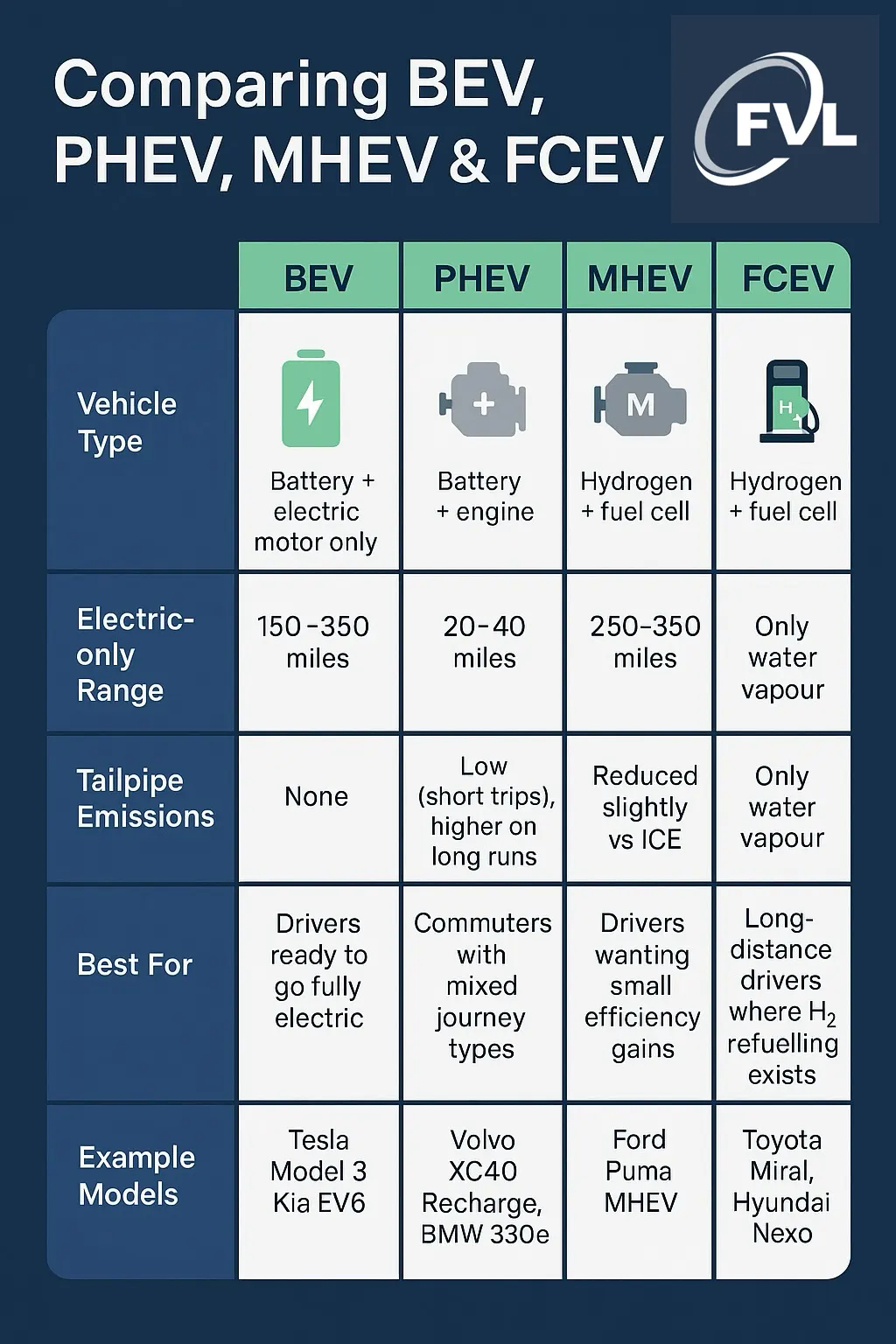
BEV – Battery Electric Vehicle
Fully electric cars powered by a battery with zero tailpipe emissions. They’re ideal for those ready to go fully electric, with ranges now often exceeding 250 miles.
Example: Tesla Model 3, Kia EV6.
PHEV – Plug-in Hybrid Electric Vehicle
Best for drivers making short daily trips but needing petrol backup for longer journeys. PHEVs can run 20–40 miles on electricity before switching to the engine.
Example: Volvo XC40 Recharge.
MHEV – Mild Hybrid Electric Vehicle
A stepping-stone technology. The battery cannot power the car alone but helps the engine use less fuel. Lower cost but limited benefits compared to full EVs.
FCEV – Fuel Cell Electric Vehicle
Hydrogen cars generate electricity on board, producing only water as exhaust. Infrastructure is minimal in the UK, but refuelling takes minutes.
Example: Toyota Mirai.
REX – Range Extender
A rare format today, using a small petrol engine to recharge the battery. Seen in older BMW i3 models.
Charging & Power Explained
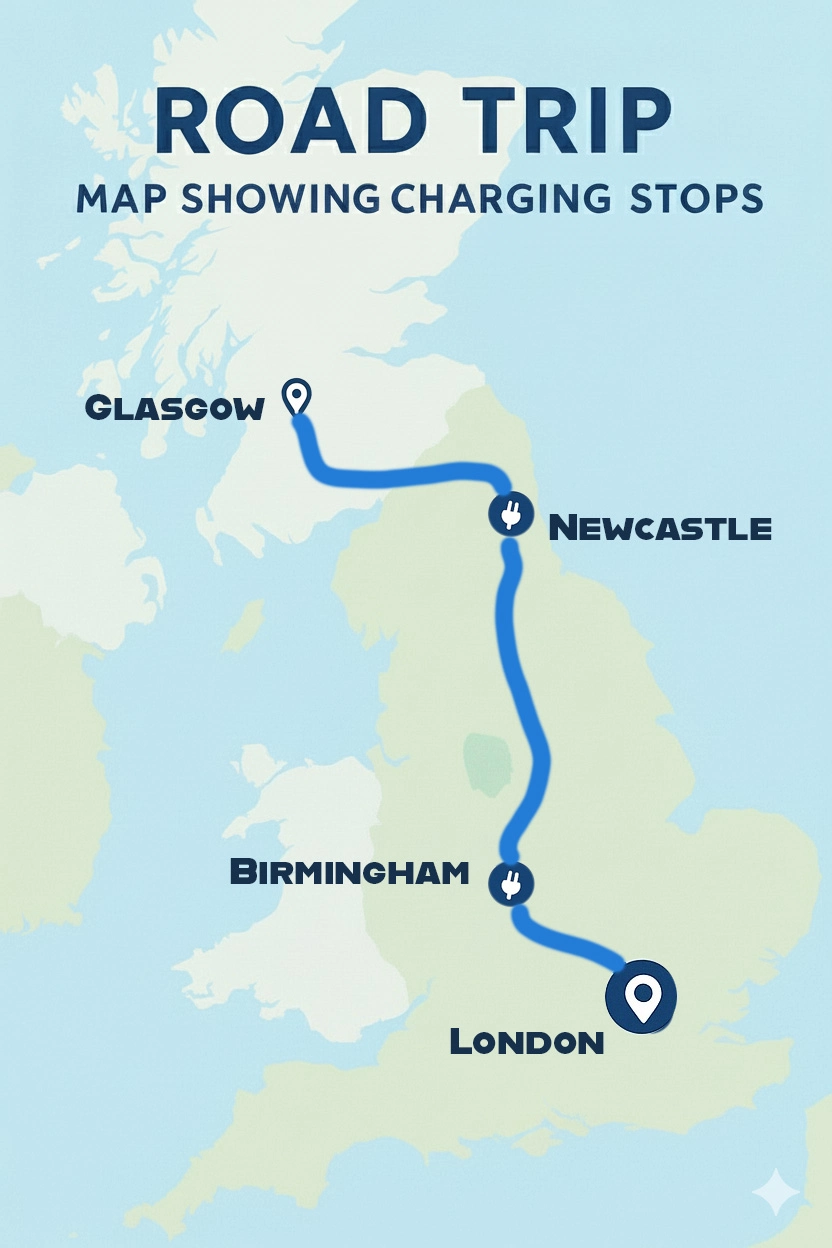
Electric cars can be charged in different ways, and understanding the basics makes a big difference to running costs and convenience. Below we explain the essentials in plain English, then show you how this translates into real-world use.
Volts, Amps, Watts & kWh
Think of electricity like water: volts are the pressure, amps the flow, and watts the power produced. A car battery is measured in kWh (kilowatt-hours), which tells you how much energy is stored. For example, a 60kWh battery with efficiency of 4 mi/kWh can deliver about 240 miles of range.
AC vs DC Charging
-
AC (Alternating Current) is what you get at home. A standard three-pin plug gives ~2.3kW, while a wallbox typically gives 7.4kW (single-phase) or up to 22kW (three-phase).
-
DC (Direct Current) is used by public rapid chargers. These bypass the car’s onboard charger and deliver 50kW to 350kW directly, enabling an 80% charge in as little as 20–40 minutes.
Charging Speeds Compared
| Type | Power Output | Typical Location | Time to 80% (60kWh EV) |
|---|---|---|---|
| Slow | 2–3 kW | 3-pin socket | 18–24 hours |
| Fast | 7–22 kW | Home wallbox | 3–8 hours |
| Rapid | 50–350 kW | Motorway/service | 20–60 minutes |
This table makes it easy to see which charging option suits daily use versus long journeys.
Connectors: CHAdeMO vs CCS
-
CHAdeMO: Mainly used by Japanese brands such as Nissan Leaf and Mitsubishi Outlander PHEV.
-
CCS (Combined Charging System): Standard across Europe and most UK EVs. Compatible with rapid charging networks.
Real-World Scenarios
-
Commuter in a semi-detached home: A 7.4kW wallbox is ideal — full charge overnight for ~£8 based on 30p/kWh tariff.
-
Business driver on the motorway: Rapid DC charging keeps downtime short, but costs more (~70p/kWh).
-
City driver without off-street parking: Use a mix of workplace charging and rapid top-ups at hubs.
A Simple Guide to EV Charging Types
| Charging Type (Nickname) | Where You'll Find It | Best For (The Use Case) | The Main Drawback |
|---|---|---|---|
| Trickle Charge (Slow AC) | Any standard 3-pin wall socket, using a special portable cable. | Emergency use or as a last resort. Good for very long stays (e.g., a weekend at a relative's house). | Painfully slow. It can take over 24 hours to fully charge an average EV battery. ⏳ |
| Destination Charge (Fast AC) | Home wallboxes, workplaces, supermarkets, gyms, hotels, and public car parks. | This is your main, everyday charging. Perfect for overnight at home or topping up while you're busy for a few hours. 🏡 | Not fast enough for a quick stop on a long motorway journey. |
| Motorway Top-up (Rapid DC) | Motorway service stations and dedicated public charging hubs. | Long-distance travel. Adds a significant amount of range (e.g., 10% to 80%) in 20–40 mins. | It’s the most expensive way to charge. Frequent use can degrade long-term battery health slightly faster. |
Range & Efficiency
Understanding how far an EV can travel on one charge is crucial when planning your switch.
WLTP vs Real-World Range
WLTP figures are based on lab testing and tend to be optimistic. Expect 10–15% less in daily use. The US EPA test cycle is stricter, but figures are harder to find in the UK.
Range Anxiety
This is the fear of running out of charge. With over 50,000 public charging points now live in the UK, range anxiety is less relevant than ever.
MPkWh (Miles per kWh)
The EV equivalent of MPG. For example, 4.0 mi/kWh on a 60kWh battery = 240 miles. Compare this figure when shopping for EVs to judge efficiency.
Regenerative Braking
Regen captures energy when slowing down, putting it back into the battery. In city driving this can add 10–15% to range.
Batteries & Technology
Battery technology is at the heart of every EV, and it’s evolving fast.
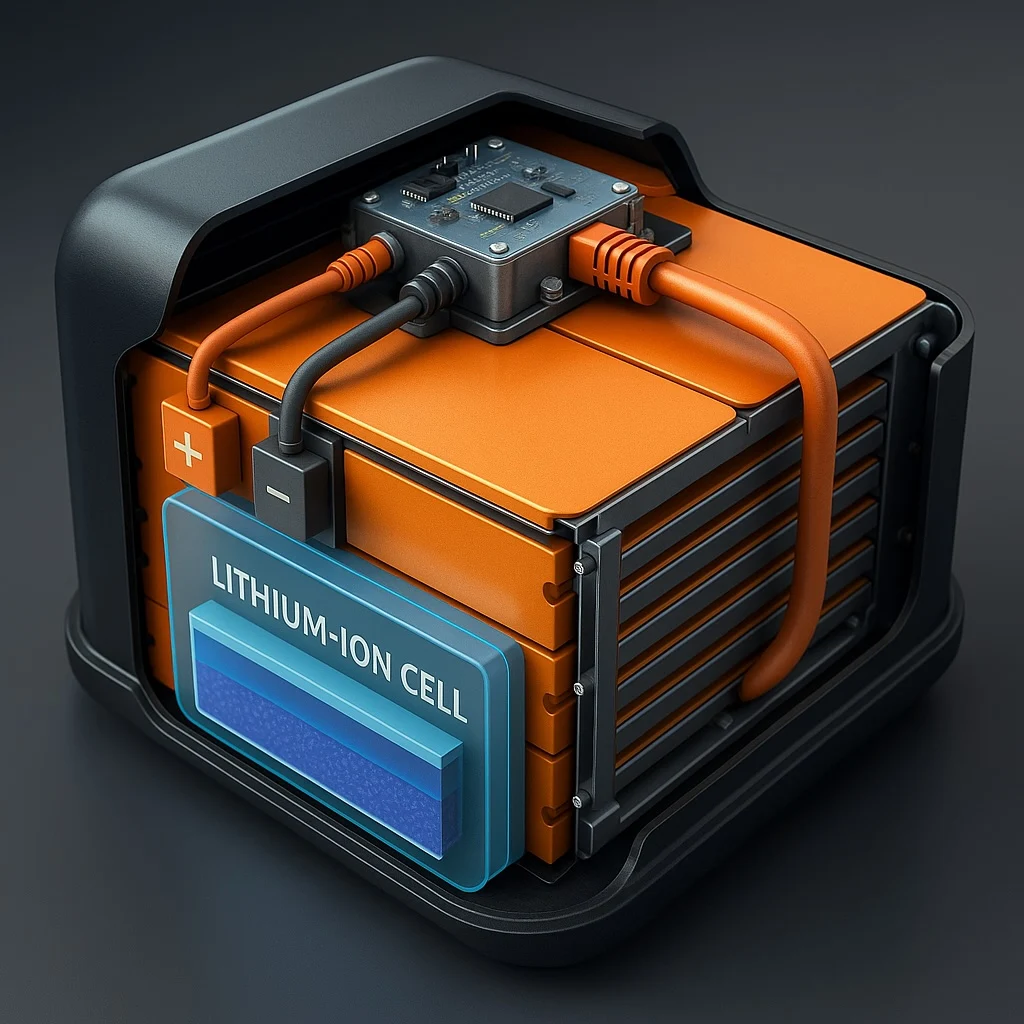
Lithium-Ion Batteries
Currently the standard in all EVs. They offer good energy density and reliability, with warranties usually covering 8 years or 100,000 miles.
Solid-State Batteries
The next big leap: denser, lighter, and faster to charge. Car makers like Toyota and BMW are investing heavily, but they aren’t mainstream yet.
Battery Degradation
All batteries lose capacity over time, but it’s usually only 1–2% per year. Leasing can be a smart choice to avoid long-term ownership concerns.
Vehicle-to-Load (V2L)
Some EVs, like the Hyundai Ioniq 5, can power devices such as laptops, kettles, or even another EV. Handy for camping or power cuts.
Heat Pumps
Heat pumps make EVs more efficient in cold weather by reducing cabin heating drain on the battery.
Practical & Policy Considerations
ULEZ & Clean Air Zones
Most UK cities are adopting Clean Air Zones, with London’s ULEZ being the most famous. EVs are typically exempt, saving drivers daily fees.
Leasing vs Buying
-
Leasing: Lower upfront cost, predictable monthly payments, and flexibility to upgrade as tech improves.
-
Buying: Higher upfront cost but may suit those driving high annual mileages or planning to keep the car long term.
EV Charging: Frequently Asked Questions
Let's Wrap Up
This guide should help you cut through the jargon and understand the essentials of EVs. If you’re ready to take the next step, our team at First Vehicle Leasing can guide you through the options. Get in touch with us today if you want to learn more about EV's or take out a lease and save money on running costs.