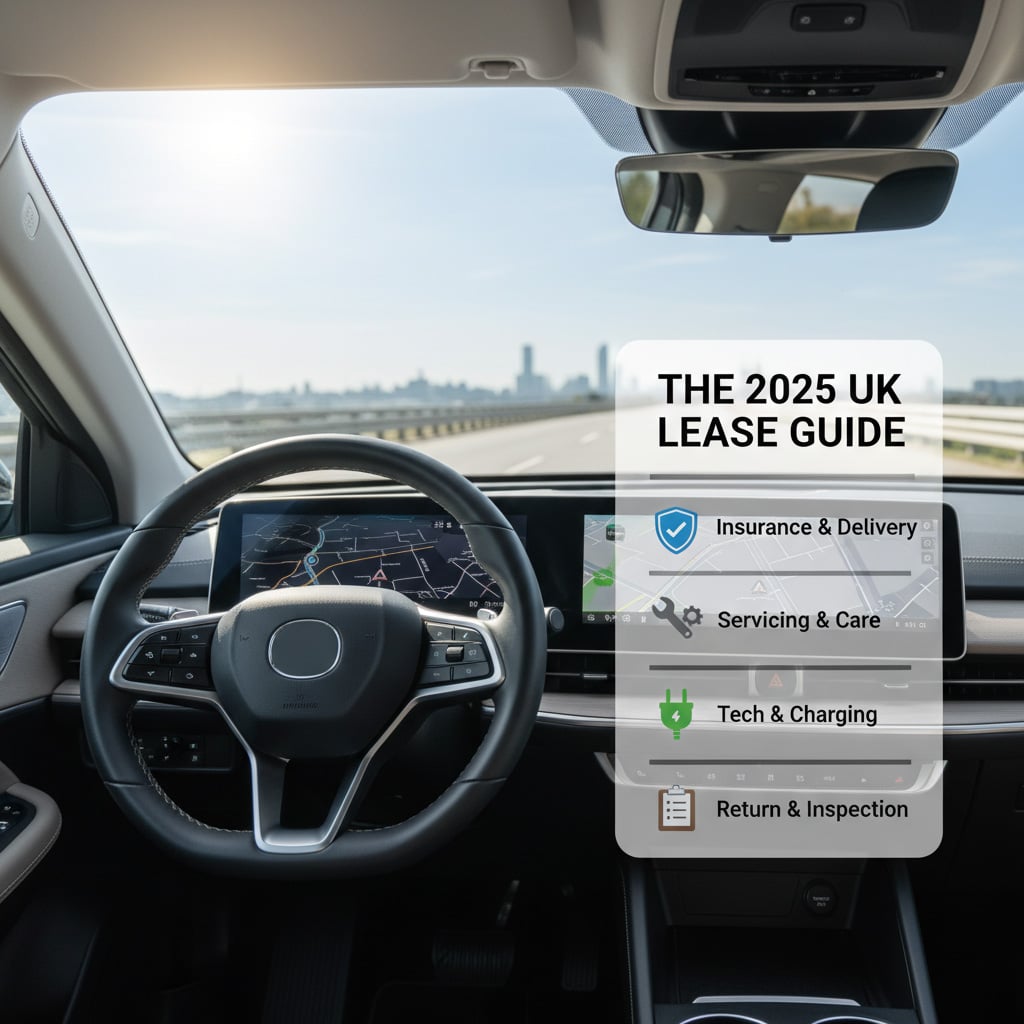

Collecting a new lease car is the easy part. Over the next three or four years you'll deal with insurance, servicing, charging and, at the end, the return inspection, and each one has its own rules. This 2026 UK lease car guide from First Vehicle Leasing takes you through every stage, using the rules for the 2026/27 tax year and the latest EV changes.
Key Takeaways
- You need fully comprehensive insurance before delivery. The finance company is the owner and registered keeper. GAP insurance is optional.
- Road tax is normally included in your rental. In 2026/27 a new EV pays £10 in its first year, then £200 a year, plus a £440 supplement only if its list price is more than £50,000.
- Have the car serviced on schedule at manufacturer-approved garages and keep every record. A missing service history is a common end-of-lease charge.
- Renters and flat owners can claim up to £500 towards a home charger until 31 March 2027. Homeowners with their own driveway can't.
- Check the car against the BVRLA Fair Wear and Tear Guide 10–12 weeks before it's collected.
What Insurance Do You Need for a Lease Car?
You need fully comprehensive cover in place before the car is delivered. When you get quotes, tell the insurer it's a leased car. The finance company (the funder) is the owner and registered keeper, and you're the main driver. GAP insurance is optional, but it's worth thinking about because a write-off payout rarely matches what you'd owe.
GAP (Guaranteed Asset Protection) covers the difference between your insurer's market-value payout and the early termination sum the funder asks for. You don't have to buy it from us or from anyone else. Under the FCA's Consumer Duty, firms selling GAP have to show that it offers fair value, so compare a few policies and read the exclusions. Our guide to lease protection and add-ons explains the options.
What Should You Check on Delivery Day?
Take five minutes before you sign anything. Walk round every panel and alloy wheel, check the seats, dashboard and headlining, make sure the model, trim and colour match your order, and count the keys. Photograph any marks and write them on the delivery note before you sign, then contact us the same day.
- Exterior: scuffs, chips and kerbed wheels, however small.
- Interior: marks on the upholstery, trim and screens.
- Spec: the right trim level, colour and options.
- Kit: both keys, the handbook and, on an EV, every charging cable. People often forget the cables, and you'll be charged if one is missing at return.
Who Pays for Servicing, MOT and Road Tax?
You pay for servicing unless you've added a maintenance package, and it has to follow the manufacturer's schedule at an approved garage. Road tax (Vehicle Excise Duty, or VED) is paid by the funder and built into your rental. A car needs an MOT from its third birthday, so the MOT only comes into play on longer contracts.
A maintenance package puts servicing, MOTs and routine wear items such as tyres into the monthly rental. Without one, keep every invoice. When tyres need replacing, fit ones of the same quality and specification. Swapping premium tyres for cheap budget ones is a charge we see time and again.
| Car type (registered from April 2017) | First year | Year 2 onwards | Expensive Car Supplement (years 2–6) |
|---|---|---|---|
| Fully electric (new) | £10 | £200 | +£440 if list price is more than £50,000 |
| Petrol, diesel or hybrid (new) | Based on CO2 | £200 | +£440 if list price is more than £40,000 |
Rates are for 1 April 2026 to 31 March 2027, according to GOV.UK vehicle tax guidance. The £50,000 EV threshold also applies to EVs registered from 1 April 2025.
So why does road tax matter if the funder pays it?
Because it's priced into your rental. An EV listed just under £50,000 avoids £2,200 of supplement over five years, which can make it cheaper to lease than a similar car just over the line. Factory options count towards the list price, so watch the extras.
How Do You Avoid Excess Mileage Charges?
Divide your contract's total mileage by the number of months, then check the odometer against that figure every month. Every mile over the allowance is charged at the pence-per-mile rate set out in your agreement. If you're heading over, call us early. Some funders will re-quote the mileage part-way through a contract, but not all of them will.
For example, 30,000 miles over 36 months works out at about 833 miles a month. If you only spot a problem in the last six months, there's very little room to fix it.
What Counts as Fair Wear and Tear?
Under the BVRLA Fair Wear and Tear Guide, fair wear is the normal deterioration that comes with everyday use. Damage is different: it comes from a specific event such as an impact, harsh treatment or negligence, and damage is what you get charged for. Small stone chips are usually fine. Kerbed alloys, deep scratches, warning lights and torn seats usually aren't.
The BVRLA recommends checking your car 10–12 weeks before it's due back. You can repair damage yourself before collection, as long as the work is done to a professional standard with a fully transferable warranty. If you disagree with an inspection, you can pay for an independent engineer to review the evidence. See the BVRLA's advice on returning your leased vehicle and our end-of-contract guides.
Based on FVL's experience, three mistakes cause most of the avoidable bills:
- Servicing at a non-approved garage, which breaks the service history.
- Fitting cheap tyres that don't match the original specification.
- Returning the car with a warning light on. That's an automatic charge.
Will I be approved?
Five questions, no sign-up, and an honest answer before you apply for anything.
Check my eligibilityCan You Modify a Lease Car or Take It Abroad?
Only within limits. The car has to go back in its original condition, so permanent changes such as window tinting, engine remapping or drilled fittings are out. Tow bars need the leasing company's approval. Private plates are fine with the funder's help, and to drive abroad you need a VE103 certificate from the funder before you travel.
Vinyl wraps are usually allowed, but they must be removed professionally before the car goes back. The VE103 is the only legal alternative to the V5C logbook. Letters of authority and photocopies won't do, and you need one for the Republic of Ireland too. Apply a few weeks before you travel. Our guide to taking your lease car abroad has the full checklist.


Is Leasing an Electric Car Worth It in 2026?
For many drivers, yes. The government's Electric Car Grant takes up to £3,750 off eligible new EVs with a recommended retail price of £37,000 or less, and you get the saving through lower rentals. Company car drivers pay 4% Benefit in Kind (BIK) in 2026/27. That rises to 5% in 2027/28, 7% in 2028/29 and 9% in 2029/30.
The grant has two bands: £3,750 (Band 1) and £1,500 (Band 2). Band 1 covers selected versions of the Renault 5 and the Ford Puma Gen-E, plus selected BMW iX1 models since July 2026. The Skoda Elroq is in Band 2. Bands depend on the exact version, so check the one you want before you order.
Plan ahead for one thing. From April 2028 the government intends to bring in Electric Vehicle Excise Duty (eVED), a pay-per-mile charge of 3p a mile for EVs and 1.5p for plug-in hybrids. A three- or four-year lease starting now will run into it, and it isn't yet clear how funders will handle it. If you're employed, salary sacrifice can cut the cost further.


How Should You Set Up EV Charging at Home?
If you have off-street parking, a 7kW smart wallbox on an off-peak tariff is the cheapest way to run an EV. Renters and flat owners can claim up to £500, covering 75% of the cost, through the Office for Zero Emission Vehicles (OZEV) chargepoint grant until 31 March 2027. Homeowners with their own driveway aren't eligible.
Don't book the installation until OZEV has confirmed you're eligible. Renters need written permission from their landlord first. The charger belongs to your property, not the lease, so it stays useful when you change cars. If you only have on-street parking, ask your council about kerbside chargepoints. Full details are in the GOV.UK chargepoint grant update.
Do You Need Breakdown Cover and a Dashcam?
Check your agreement first. Many new cars come with the manufacturer's roadside assistance, and a maintenance package may add more. If you buy your own cover, include onward travel, because repairs on a leased car should go through approved garages. A dashcam is optional, but it gives you independent evidence if a claim is disputed.
Choose a dashcam mount or hardwiring kit that comes out cleanly, and tell your insurer you have one. For car care, wash the car regularly and use seat covers and a boot liner if you carry children or dogs. Stains and odours are assessed at return.
What Happens at the End of Your Lease?
About three months before the end date, check the car against the BVRLA guide and book any repairs. Make sure the servicing is up to date, gather every key, cable and document, and be there on collection day so you can agree the condition report. This is also a good time to talk to us about your next car.
- 10–12 weeks out: check the car in good daylight and arrange any repairs.
- 8 weeks out: make sure servicing and any MOT are done and the tyres are legal.
- 4 weeks out: if you added a private plate, start the DVLA transfer so the car goes back on its original registration. Clear your personal data from the infotainment system.
- Collection day: be there and sign the condition sheet only once you agree with it.
Cars in this article


Related guides
Tyre & Alloy Insurance Explained: Is Wheel Cover Worth It?How to Avoid Unexpected Bills on a LeaseWhat Happens at the End of a Car Lease?What's Included in Your Monthly Lease Payment?View all guidesFrequently Asked Questions
Ready for Your Next Lease?
First Vehicle Leasing has been arranging leases for over 25 years and is a BVRLA member regulated by the FCA. Call our team on 0333 003 3325 or browse the latest offers.
View DealsSources
Written by Andy Bell, First Vehicle Leasing.