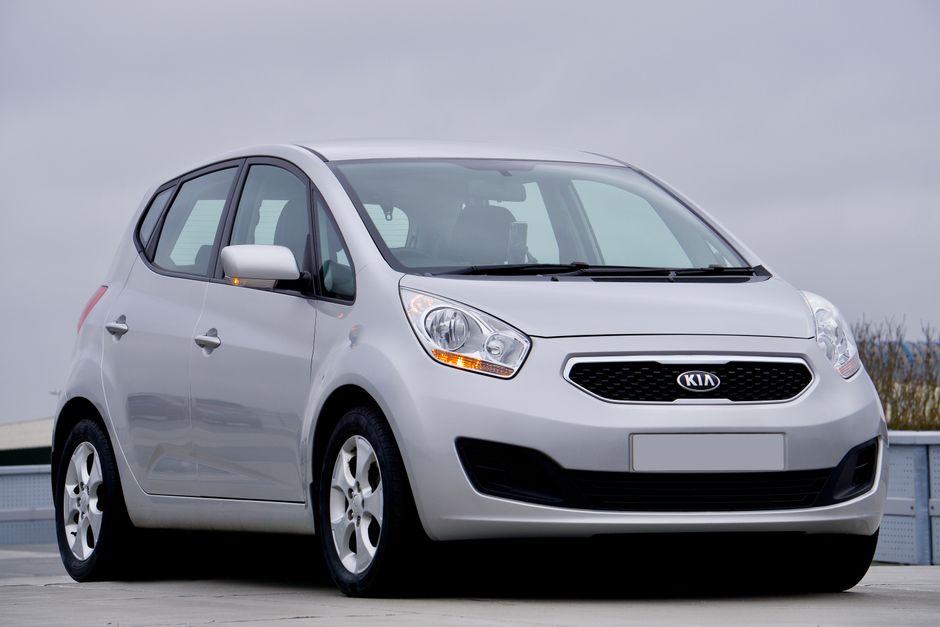
Over three years, leasing and buying finish closer together than most people expect. In the illustrative example below, a £34,000 petrol hatchback costs about £444 a month to buy with cash and sell at three years, against about £420 a month to lease on a 9+35 contract. Keep the same car for eight years and buying wins clearly.
Key Takeaways
- On our illustrative three-year comparison, leasing costs £420 a month and buying with cash costs £444 a month - a gap of about £880 over the full three years.
- Buying only pulls ahead when you keep the car well past the finance term. On the same illustrative car held for eight years, ownership drops to roughly £318 a month.
- A lease rental covers the gap between what the vehicle costs to acquire and its forecast value at the end of the term, plus interest charges. You are not paying for the whole car.
- Personal Contract Hire (PCH) prices include VAT; Business Contract Hire (BCH) prices are shown excluding VAT. Never compare one against the other.
- For the 2026/27 tax year, a fully electric company car is taxed at a Benefit in Kind (BIK) rate of 4%, against roughly 15-37% for petrol and diesel. That gap changes the maths entirely for business drivers.
What's in this guide
- What does leasing actually cost versus owning?
- The worked example: a £34,000 car over three years
- What the buying column quietly leaves out
- When does buying actually win?
- How do the numbers change for a business?
- How do you tell if a lease deal is good value?
- Which one is right for you? A checklist
- Frequently asked questions
- Sources
What does leasing actually cost versus owning?
Leasing costs you a fixed monthly rental and nothing else at the end. Owning costs you depreciation - the value the car loses while you have it - plus tax, servicing and repairs, offset by whatever you get back when you sell. Over three years those two totals usually land within a few hundred pounds of each other.
That is the honest headline, and it is worth sitting with for a moment, because both camps tend to overstate their case. Leasing is not automatically cheaper. Buying is not automatically "an investment". The variable that actually decides it is how long you keep the car.
A quick word on what you're paying for when you lease, because it explains why the numbers come out where they do. A lease rental covers the gap between what the vehicle costs to acquire and what it is forecast to be worth at the end of the term - its residual value - plus interest charges. The funder buys the car outright and their money stays tied up in it for the whole contract, so those interest charges are a real and substantial part of the figure, not a rounding error. If you want that broken down properly, our guide on what's included in your monthly payment goes line by line.
The reason a broker's lease can undercut what you'd manage yourself is mechanical rather than magical. We commit to manufacturers in volume - hundreds of vehicles at a time - so the acquisition cost is lower than an individual can negotiate. Meanwhile the residual value is forecast against the vehicle itself, based on what that car will be worth in three years' time, not against what the funder paid. Lower cost in, same value out: the gap the customer funds narrows, and so does the sum the interest is charged on.
The worked example: a £34,000 car over three years
Here is the comparison in full. We've used an illustrative £34,000 list price petrol hatchback, held for three years and 30,000 miles, compared against a Personal Contract Hire (PCH) lease on a 9+35 profile - nine months' rental upfront, then 35 monthly payments. Every figure below is a round illustrative number, not a quote.
| Cost line (3 years) | Buy with cash | Lease (PCH, 9+35) |
|---|---|---|
| Paid upfront | £32,000 purchase | £2,970 initial rental (9 × £330) |
| Monthly payments | £0 | £11,550 (35 × £330) |
| Road tax (VED) | £400 (years 2 and 3 at £200) | Included for the term |
| Servicing | £600 | £600 |
| Money back at the end | +£17,000 (sale at 50% of list) | £0 - hand the keys back |
| Net three-year cost | £16,000 | £15,120 |
| Cost per month | £444 | £420 |
The buying column works out as £32,000 + £400 + £600 - £17,000 = £16,000, or £444 a month across 36 months. The leasing column is £2,970 + £11,550 + £600 = £15,120, which is exactly £420 a month. A difference of £880 over three years - about £24 a month.
So is leasing actually cheaper than buying?
On these assumptions, marginally. But £880 across three years is well inside the margin of error on a residual value forecast, and if that car happened to hold 55% of its list price instead of 50%, buying would win. Anyone who tells you leasing is dramatically cheaper over three years is selling something.
What leasing genuinely buys you at that price is certainty. The residual value risk sits with the funder. If the used market softens - and it has for several EV models in recent years - that is their loss, not yours. You've fixed your motoring cost on day one and you know what it is.
Two footnotes on the lease side. Road tax is bundled into the rental for the contract term, which we cover in is road tax included in a lease?. And the mileage allowance is a contractual limit, not a guideline - go over it and you'll pay a pence-per-mile charge at the end, explained in excess mileage charges explained. Set that allowance honestly at the outset and it never becomes a problem.
What the buying column quietly leaves out
Our buying figure of £444 a month is flattering to ownership. It ignores the interest you'd pay if you financed the car rather than paying cash, the return that £32,000 could have earned sitting elsewhere, and the repair bills that arrive once the manufacturer warranty expires. Add those in and the gap widens.
Finance interest
Most people don't buy a £34,000 car with cash. On Hire Purchase or PCP you pay interest on top of the purchase price, and that cost never appears in the "but I'll own it" argument.
Tied-up capital
£32,000 parked in a depreciating asset is £32,000 not earning interest anywhere else. Our table gives buying the benefit of the doubt and ignores this entirely.
Out-of-warranty repairs
Three years is usually inside warranty, so we've assumed none. Year four onwards is where clutches, dampers, infotainment units and air-con compressors start showing up.
There's also the sale itself. Our £17,000 assumes you achieve a full private sale price. Trade in against your next car or sell to an online buying service and you'll typically get less, which lifts the real cost of ownership. Selling privately takes time, admin and a stranger on your driveway at 7pm on a Tuesday.
And one that catches people out: the Expensive Car Supplement. Under the DVLA vehicle tax rules for the 2026/27 tax year, a petrol, diesel or hybrid car with a list price above £40,000 pays an extra £440 a year on top of the £200 standard rate, in years two to six of the car's life. That's up to £2,200 in total. For fully electric cars the threshold rose to £50,000 from 1 April 2026. Our illustrative car at £34,000 avoids it - a £42,000 equivalent would not, adding £880 to the buying column over the same three years.
When does buying actually win?
Buying wins when you keep the car long after the finance has been paid off. Depreciation is steepest early on - typically 15-35% in the first year according to Carwow, then around 10-15% a year after that - so every year you hold a car beyond three, the average cost per month falls. Leasing has no equivalent tail.
Run the same illustrative car for eight years instead of three and the picture reverses. Assume it retains 20% of list price (£6,800) at eight years, VED at £200 a year for years two to eight (£1,400), servicing across eight years of £2,400, and £1,500 of tyres and out-of-warranty repairs:
| Holding period | Total cost of owning | Cost per month | Equivalent cost of leasing |
|---|---|---|---|
| 3 years | £16,000 | £444 | £420 per month |
| 8 years | £30,500 | £318 | £420 per month |
The workings: £32,000 - £6,800 + £1,400 + £2,400 + £1,500 = £30,500 across 96 months, which is £318 a month. Leasing continuously for those eight years at the same £420 would cost £40,320. Buying is roughly £9,800 better off - assuming rentals stayed flat, which over eight years they wouldn't, but the direction of travel is clear.
So the rule is simple. Change your car every three or four years and leasing is competitive and far less hassle. Keep cars until they're tired and buying wins on pure cost, provided you're willing to accept an ageing car, rising repair bills and the day you have to sell it.
The break-even is roughly the five-year mark
On our illustrative figures, ownership and leasing cross over somewhere around year five - the point at which the car you own has stopped shedding value quickly but hasn't yet started costing serious money to keep on the road. Before that, leasing is competitive. After it, ownership pulls away.
The catch is that very few people actually behave that way. If you have changed car every three years for the last decade, be honest with yourself about the eight-year plan - it usually doesn't survive contact with reality.
How do the numbers change for a business?
For a business the comparison stops being close and starts being lopsided, mostly because of tax. Business Contract Hire (BCH) rentals are usually an allowable expense against profit, VAT is partly recoverable, and if the vehicle is a fully electric company car the Benefit in Kind (BIK) charge on the driver is 4% for the 2026/27 tax year.
The three tax points that matter
VAT. Under HMRC rules, a VAT-registered business can generally reclaim 50% of the VAT on the finance element of a car lease where there is any private use, and 100% of the VAT on a maintenance element. Buying a car outright gives you no VAT recovery at all in most cases. On a van used for business, VAT recovery is normally 100%.
Corporation tax. Lease rentals are deductible against profits. Where the car emits more than 50g/km of CO2, HMRC applies a 15% lease rental restriction, so 85% of the rental is deductible. Buy a car instead and you claim capital allowances - for cars emitting 51g/km or more that's the special rate pool at 6% a year, which takes an extremely long time to give you the relief.
Benefit in Kind. According to HMRC's published company car tax rates, a zero-emission car is taxed at 4% of its P11D value - the list price including VAT and delivery - for the 2026/27 tax year, rising to 5% in 2027/28, 7% in 2028/29 and 9% in 2029/30. Petrol and diesel cars sit at roughly 15-37% depending on CO2 emissions, with higher-emission models typically in the 25-37% range and a 4% surcharge for diesels that aren't RDE2 compliant.
What that means in cash, for a higher-rate (40%) taxpayer with a £40,000 P11D value car in the 2026/27 tax year:
| Company car | BIK rate 2026/27 | Taxable benefit | Tax at 40% |
|---|---|---|---|
| Electric | 4% | £1,600 | £640 a year (£53 a month) |
| Petrol, higher emissions | 31% (illustrative) | £12,400 | £4,960 a year (£413 a month) |
That £360 a month difference dwarfs anything in the lease-versus-buy calculation itself. If you're a company director or an employee with a car allowance, the powertrain choice matters far more than the funding method. Salary sacrifice takes the same principle further, letting an employee fund an electric car from gross pay - our salary sacrifice page explains how the scheme is set up.
How do you tell if a lease deal is good value?
Divide the car's list price by the monthly rental. The answer tells you how many monthly payments fit inside the price of the car, and higher is better. Above 90 is strong value, 80 to 90 is reasonable, below 80 is poor and you should keep looking. It takes about five seconds on a phone.
Applied to our worked example: £34,000 list price divided by a £330 monthly rental gives 103. That's comfortably above 90, so on this test it's a strong deal - which is exactly why it held its own against buying.
The rule that makes or breaks this test
You must compare like with like. A score only means anything against another deal on the same initial rental, term and mileage. A 9+35 can only be compared with another 9+35. Set a 9+35 against a 1+35 and the number is meaningless, because the deal with more money paid upfront will always look better - cost has simply been shifted out of the monthly figure. Our guide to what an initial rental is explains why that upfront payment moves the monthly so much.
Keep the VAT basis consistent too: an inc-VAT rental against an inc-VAT list price, or an ex-VAT rental against an ex-VAT price. Mixing them will throw the score out by a fifth.
What to do with the result:
- Above 90 - strong value. Worth acting on. Deals in this territory are usually where a broker has committed to volume on a particular model, and they don't sit around.
- 80 to 90 - reasonable. A fair market price. Worth taking if it's the car you want, but check two or three alternatives on the identical profile first.
- Below 80 - poor value. Keep looking, or look at a different model. You're paying over the odds for that particular car at that particular moment.
Internationally, consumers use a "1% rule" - a monthly payment at or below 1% of list price marks a strong deal. That's the same test inverted, so a score of 100 is exactly the 1% rule. It's an informal consumer rule of thumb rather than an industry standard, but it points the same way.
One practical consequence: don't fix on a single model before you look. Most people don't need one specific car, they need the best car for the money. Decide what you need and what you can spend, then look at what represents best value inside that budget - the strongest numbers cluster on the special offers, where volume has been committed.
Which one is right for you? A checklist
Answer these five questions honestly and the decision usually makes itself. Based on our experience arranging leases for over 25 years, the people who regret their choice are almost always the ones who guessed at question one.
Lease is likely to suit you if…
- You change car every three or four years anyway
- You want a fixed monthly cost with no resale risk
- You drive a predictable annual mileage you can commit to
- You want a new car in warranty for the whole time you have it
- You're a business or company car driver, especially choosing an EV
Buying is likely to suit you if…
- You genuinely keep cars seven years or more
- Your mileage is high, unpredictable or seasonal
- You want to modify the car or tow beyond a standard limit
- You're comfortable carrying repair costs and resale risk
- You'd buy used and skip the steepest part of the depreciation curve
The five questions, in order: How long will you really keep it? How many miles a year, honestly? Can you cover the upfront amount comfortably? Is it a personal or business vehicle? And would an unexpected £1,500 repair bill be an inconvenience or a problem?
If mileage is the sticking point, read how lease mileage works and what it costs before you commit to a figure. Under BVRLA fair wear and tear standards, which the industry uses to assess vehicles at handback, normal use is expected and accounted for - it's damage beyond that, and excess mileage, that generates end-of-contract charges. Neither is difficult to avoid if you plan for them.
Want the numbers run on your actual shortlist?
Generic examples only take you so far. Our team will price the specific cars you're considering across different terms, mileages and upfront profiles, so you can see the real comparison rather than an illustrative one. Call 0333 003 3325 and we'll do the maths with you.
Frequently Asked Questions
Sources
- Vehicle tax rates tables - GOV.UK
- How much do cars depreciate per year? - Carwow
- Calculate tax on company cars - GOV.UK / HMRC
- British Vehicle Rental and Leasing Association - BVRLA
Written by the leasing team at First Vehicle Leasing, a UK vehicle leasing broker with over 25 years' experience, authorised and regulated by the Financial Conduct Authority and a member of the BVRLA. We keep this guide under review as tax rates and vehicle excise duty change.
Will I be approved?
Five questions, no sign-up, and an honest answer before you apply for anything.
Check my eligibility