
A massive shift in electric vehicle running costs has just occurred following a landmark tax decision. On 27 February 2026, a First-tier Tribunal ruled that public EV charging should be subject to a 5% VAT rate rather than the standard 20%. This judgement corrects a long-standing imbalance that heavily penalised drivers without driveways. If you have been on the fence about transitioning to electric, this ruling could drastically change the maths. At First Vehicle Leasing, we have been closely monitoring this case alongside our industry partners, and the implications for drivers and fleets are huge.
Key Takeaways
- A UK First-tier Tribunal ruled on 27 February 2026 that public EV charging qualifies for the reduced 5% domestic VAT rate.
- The decision caps the 5% rate for electricity usage under 1,000 kilowatt-hours (kWh) per month at a single location.
- Drivers relying entirely on public charging could save roughly £300 a year once the tax cut is applied at the pump.
- HMRC may still seek permission to appeal the decision, meaning operators cannot drop their prices overnight.
- Salary sacrifice schemes remain the most tax-efficient way to drive a new electric vehicle while the industry awaits final implementation.
What Does the 2026 EV Tax Tribunal Ruling Mean?
On 27 February 2026, a First-tier Tribunal ruled that public EV charging qualifies for the reduced 5% domestic VAT rate. The tribunal agreed with charge point operator Charge My Street that supplying under 1,000 kWh per month at a single location legally counts as domestic energy usage.
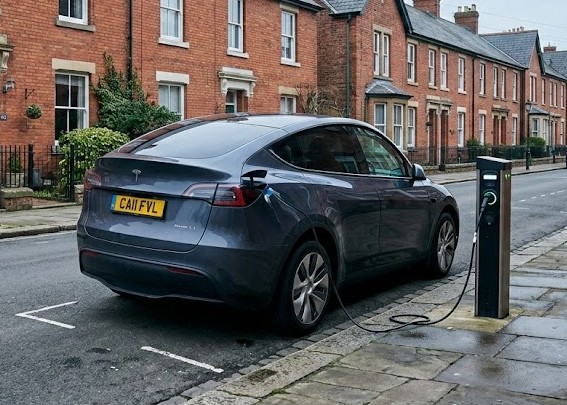
For years, drivers plugging in on the high street have paid 20% VAT, while those charging on their driveways paid just 5%. It was a glaring loophole that penalised people without off-street parking. HM Revenue & Customs (HMRC) previously argued that public chargers were fundamentally different to home electricity supplies. The recent tribunal completely dismantled that argument.
Tax experts at Deloitte pointed out a specific piece of legislation known as the 'de minimis' provision in Note 5(g), Group 1, Schedule 7A of the VAT Act 1994. In simple terms, this law states that if you consume less than 1,000 kWh of electricity per month at a single location, it is classed as domestic use. Because it is almost physically impossible for a single driver to draw 1,000 kWh from one public charger in a month, the tribunal agreed the 5% rate must apply.
How Much Will Drivers Without Home Chargers Save?
If you rely purely on the public network, a 15% VAT reduction will save you roughly £300 a year. Based on driving 10,000 miles annually, your charging costs will drop from around £2,400 to £2,100, finally closing the unfair pricing gap for those without driveways.
We are frequently asked about the financial reality of running an EV when you live in a flat or a terraced house. Until now, the so-called "pavement tax" made the maths harder to justify. Let us break down the exact numbers for a typical driver without a home charger to show exactly how much you stand to gain.
If your car averages 3.33 miles per kWh, you need about 3,000 kWh to cover 10,000 miles. At typical 2026 rapid charger rates of 80p per kWh (which includes the old 20% VAT), that costs you £2,400 a year. Strip out that 20% tax and replace it with the 5% rate, and the price at the pump drops to roughly 70p per kWh. Over a year, you instantly keep £300 in your pocket.
| Charging Scenario (10,000 miles/year) | Annual Cost with 20% VAT | Annual Cost with 5% VAT | Your Annual Saving |
|---|---|---|---|
| Public Rapid Charging (No Home Charger) | £2,400 | £2,100 | £300 |
| Home Charging (Standard Cap Tariff) | N/A | £735 (Already 5%) | £0 |
| Home Charging (Off-Peak EV Tariff) | N/A | £210 (Already 5%) | £0 |
Explore our latest electric vehicle lease deals
Is the 5% VAT Rate Active on Public Chargers Yet?
No, public charging apps and stations will not instantly drop their prices to reflect the 5% VAT rate. HMRC has a window to appeal the tribunal decision, meaning operators must wait for final legal confirmation before adjusting their billing systems and tariffs.
Do not expect to see 70p per kWh rapid charging the next time you visit a service station. While the tribunal victory is massive, it is only the first step. HMRC historically fights these revenue-reducing decisions hard, and they could still drag this through the courts. So, does this mean public charging is finally cheaper than petrol right now? Not quite yet, but the wheels are in motion.
However, legal experts suggest HMRC will struggle to overturn this because the tribunal strongly rejected their interpretation of the rules. For now, our team advises you to keep budgeting for 20% VAT on public networks until official changes are announced by the major networks.
How Will This Impact Salary Sacrifice and Business Leases?
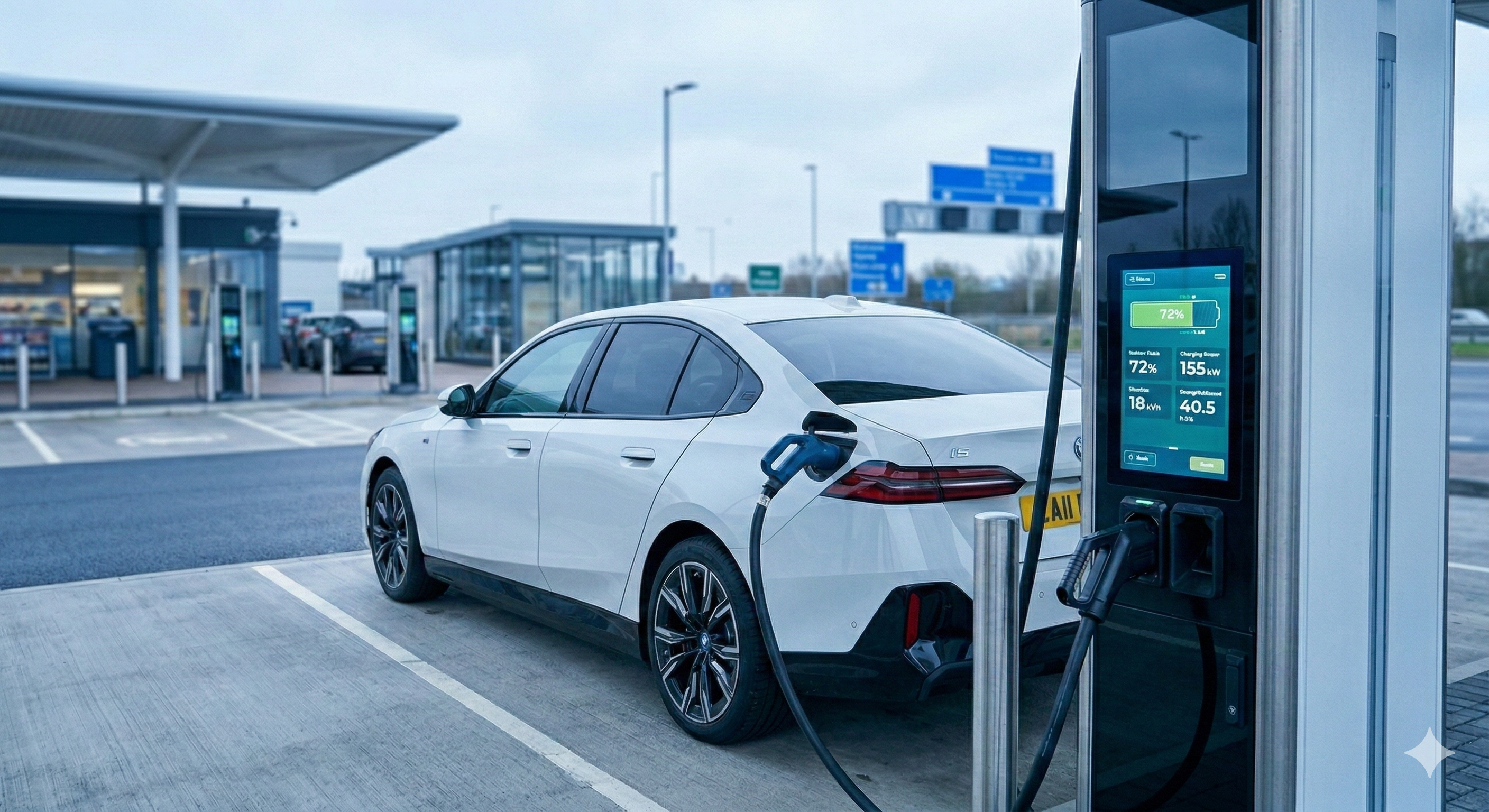
Lower public charging costs make salary sacrifice schemes and Business Contract Hire even more attractive. With Benefit in Kind tax fixed at just 3% for the 2025/26 tax year, reducing your primary running cost removes the final barrier for employees without off-street parking.
If you lease your vehicle through a company scheme, the VAT ruling is the cherry on top. Currently, a salary sacrifice scheme remains the absolute cheapest way to get into a new EV. It allows you to pay for the car from your gross salary before income tax and National Insurance are deducted.
When you combine those massive monthly tax savings with a £300 annual drop in public charging costs, the financial argument for sticking with diesel falls apart. Note that for business users recovering VAT, the rules remain complex. If you have a Business Contract Hire agreement, you can usually reclaim a portion of the VAT on public charging if it is strictly for business miles, but you should always consult your accountant for specific guidance.
Contact our team for a personalised quote
What Should I Do Right Now?
If you lack a driveway and delayed leasing an EV due to charging costs, it is time to reconsider your options. Start comparing lease deals now, calculate your true monthly mileage, and speak to a regulated broker to lock in current vehicle prices.
The goalposts have officially moved. If you have been holding onto an ageing petrol car because public charging seemed financially punishing, this VAT ruling fundamentally changes the equation. Here is a practical framework if you are considering the switch.
First, track your actual miles. Most drivers overestimate their usage. If you only drive 6,000 miles a year, plugging into a local fast charger once a week while you get your groceries is entirely manageable without a home wallbox.
Second, map out your local network. Look for nearby community chargers. Operators are rapidly expanding affordable kerbside options specifically designed for residential areas without driveways. You can learn more about the different speeds and connector types in our comprehensive guide to charging an electric car.
Finally, review your funding options. At First Vehicle Leasing, our experts can guide you through a variety of terms that fit your exact budget. Remember that all personal lease prices include VAT, while business quotes will exclude it. Leasing protects you from the unpredictable residual values of the EV market. You simply drive the car for your contracted term, hand it back, and upgrade to the newest technology.
Frequently Asked Questions
The "de minimis" rule is a provision in the UK VAT Act 1994. It states that if a customer is supplied with less than 1,000 kilowatt-hours (kWh) of electricity per month at a single premises, the supply is automatically classed as domestic and qualifies for the reduced 5% VAT rate, rather than the standard 20% rate.
Yes, according to the 2026 First-tier Tribunal ruling, the 5% VAT rate should apply to any public EV charging facility, regardless of whether it is a slow kerbside charger or an ultra-rapid motorway charger, provided the individual user consumes less than 1,000 kWh per month at that specific location.
Yes, HMRC has the legal right to seek permission to appeal the First-tier Tribunal's decision. If they choose to appeal, the implementation of the 5% VAT rate across the public charging network will be delayed until the higher courts issue a final ruling.
For fleet operators using Business Contract Hire, a drop to 5% VAT on public charging significantly reduces the gross cost of keeping vehicles on the road. While businesses can often reclaim VAT on charging for business miles, lower upfront costs improve cash flow and make reimbursing employees for public charging much simpler.
Sources
- HM Revenue & Customs — UK Government
- Industry Insights — BVRLA
Disclaimer: Financial figures and savings calculations are estimates based on 10,000 miles per year, an EV efficiency of 3.33 miles per kWh, and an average public rapid charging cost of 80p/kWh (dropping to 70p/kWh at 5% VAT). Prices and tax legislation are correct as of February 2026 and subject to change. BIK rates shown are for the 2025/26 tax year. Personal contract hire deals include VAT. Business Contract Hire (BCH) deals exclude VAT. Subject to credit approval and status.
Author: FVL Expert Leasing Team. With over 25 years of experience in the UK vehicle leasing market, we provide authoritative, FCA-regulated advice on personal and business contract hire.