
EV battery life has been the single biggest anxiety for anyone thinking about leasing an electric car. But a landmark UK study of over 8,000 vehicles has just delivered the clearest picture yet of real-world battery performance. At First Vehicle Leasing, we think this data changes the conversation for lease customers in a meaningful way.
Key Takeaways
- The average state of health (SoH) across all tested EVs was 95.15%, far above the 70% warranty threshold most manufacturers set
- Even 8 to 12-year-old EVs retained a median 85% of their original battery capacity
- A typical 3 to 4-year lease will see just 5 to 7% battery capacity loss in most cases
- EV Benefit in Kind (BIK) rates remain ultra-low: 3% for 2025/26 rising to just 4% in 2026/27, per HMRC confirmed rates
- Battery transparency data is expected to strengthen residual values, which directly helps keep lease rates competitive
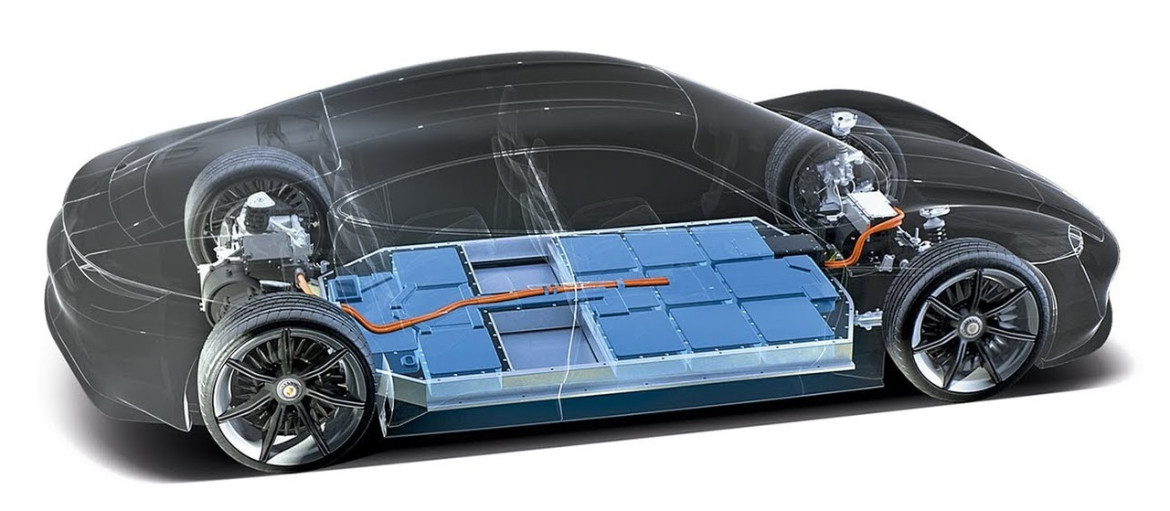
What Does the New Battery Data Actually Show?
Generational's 2025 Battery Performance Index is the largest UK study of used EV battery health to date. It tested over 8,000 electric cars and light commercial vehicles across 36 manufacturers, spanning ages from brand new to 12 years old and mileages up to 160,000+ miles. The headline figure is reassuring for anyone worried about battery degradation on a lease.
The average battery SoH across the entire test fleet was 95.15%. For context, most manufacturers warrant batteries to a minimum of 70% SoH for eight years or 100,000 miles. So the average tested vehicle is sitting comfortably above that threshold. Among 4 to 5-year-old vehicles, the median SoH was 93.53%, with even the bottom 25th percentile managing 91.64%. In the 8 to 12-year-old cohort, the median was still 85.04%.
Separately, Geotab's 2025 study of over 22,700 EVs across 21 models found an average annual degradation rate of 2.3%. At that rate, a battery would retain roughly 81.6% of its original capacity after eight years. The best-performing models in Geotab's analysis showed degradation of just 1% per year.
Does mileage matter more than age?
Here's a surprising finding: mileage alone is an increasingly poor indicator of battery condition. Generational's data showed that high-mileage EVs with 100,000-plus miles frequently returned 88 to 95% SoH. In many cases, a three-year-old fleet vehicle with 90,000 miles represented a stronger battery proposition than a six-year-old car with 30,000 miles. This challenges the old internal combustion engine logic that mileage equals wear. Charging habits, thermal management, and battery chemistry all play bigger roles.
Why Should Leasing Customers Care About Battery Health?
When you lease a car through Personal Contract Hire (PCH) or Business Contract Hire (BCH), you never own it. You hand it back at the end of the contract. So why should battery degradation matter to you? In practice, quite a lot. The residual value (what the car is expected to be worth when your lease ends) is one of the biggest factors in setting your monthly payment. When funders are uncertain about how much an EV will be worth in three or four years, they factor that risk into higher costs for you.
This is exactly what's been happening. The BVRLA has reported that used EV values have been under significant pressure, costing the leasing sector millions and putting upward pressure on monthly rates. Battery health data like Generational's and Geotab's helps funders price risk more accurately instead of relying on worst-case assumptions. As Generational's CEO put it, battery degradation is "not the systemic risk once assumed".
Better data means more confident residual value forecasts, which should flow through to more competitive lease rates over time. That's good news whether you're on a personal or business lease.
Explore our latest electric car lease deals
How Does EV Battery Life Compare Over a Typical Lease Term?
Most car leases run for 24, 36, or 48 months. Based on the latest data, here's what you can realistically expect from your EV's battery over each of those terms. We've used the Geotab average of 2.3% annual degradation alongside Generational's age-based benchmarks.
| Lease Length | Estimated SoH at End | Range Impact (300-mile EV) | Warranty Risk |
|---|---|---|---|
| 24 months | ~95 to 97% | ~285 to 291 miles | Negligible |
| 36 months | ~93 to 95% | ~279 to 285 miles | Negligible |
| 48 months | ~91 to 93% | ~273 to 279 miles | Very low |
The short answer is: on a standard lease, you're unlikely to notice any meaningful range loss. And you'll hand the car back long before warranty thresholds become relevant. Most manufacturers cover batteries to a minimum of 70% SoH for eight years or 100,000 miles, with some like BYD extending that to 250,000km.
What About Rapid Charging?
Geotab's data identified high-power DC fast charging (over 100kW) as the single biggest stressor on battery life, roughly doubling degradation compared to slower home charging. Cars that avoided regular rapid charging saw degradation as low as 1.5% per year. If you mostly charge at home overnight, your battery will thank you. But don't panic if you rapid charge occasionally. Even vehicles in the heavy-use category still performed well above warranty thresholds.
How Do EV BIK Tax Rates Make Leasing Even More Attractive?
Battery longevity is only half the story. The other factor making EV leasing compelling right now is the Benefit in Kind (BIK) tax position for company car drivers. According to HMRC, zero-emission vehicles attract some of the lowest BIK rates in history, and these are confirmed through to 2029/30.
| Tax Year | Zero-Emission BIK Rate | Petrol/Diesel (typical 130g/km) |
|---|---|---|
| 2025/26 | 3% | 31% |
| 2026/27 | 4% | 31% |
| 2027/28 | 5% | 31% |
| 2028/29 | 7% | 32% |
| 2029/30 | 9% | 33% |
BIK rates shown are for the 2025/26 through to 2029/30 tax years as confirmed by HMRC. Rates are subject to future government policy changes. Sections 121 to 148 of the Income Tax (Earnings and Pensions) Act 2003 (ITEPA) govern company car benefit calculations.
Even at 9% in 2029/30, a zero-emission company car will attract less than a quarter of the BIK rate of a comparable petrol or diesel model. For a 40% taxpayer driving a £40,000 EV, the annual BIK bill in 2025/26 is just £480. The same value petrol car at 31% BIK would cost £4,960 per year. That gap is enormous.
What about salary sacrifice?
EV salary sacrifice schemes have exploded in popularity. According to the BVRLA, salary sacrifice grew by 51% in the 12 months to January 2025, with over 70,000 BEV vehicles delivered via salary sacrifice schemes in 2024. The low BIK rate is the engine behind this growth: employees save on income tax and National Insurance, while employers save on employer NI contributions. Salary sacrifice car schemes for EVs escaped any tax changes in the Budget 2025, so the incentives remain firmly intact. If your employer offers a salary sacrifice scheme, this is one of the most cost-effective ways to get into a new electric car.
Get a personalised EV lease quote

What Can You Do to Protect Your Leased EV's Battery?
Even though you'll hand the car back, looking after the battery during your lease makes practical sense. Better battery condition means better range day to day, and it avoids any potential disputes at vehicle return. Based on FVL's experience arranging thousands of EV leases, here's what our experts recommend:
Do
- Charge at home on a 7kW wallbox overnight where possible
- Keep the battery between 20% and 80% for daily use
- Only charge to 100% when you need full range for a long trip
- Use the car's scheduled charging features to charge during off-peak hours
- Keep up with manufacturer service schedules
Avoid
- Regularly relying solely on rapid chargers above 100kW
- Leaving the car at 0% or 100% charge for extended periods
- Ignoring software updates that optimise battery management
- Exposing the car to extreme temperatures for prolonged periods where avoidable
In practice, most lease customers won't need to obsess over this. Modern EVs have sophisticated battery management systems that handle the hard work. Just charge sensibly, and you'll be fine.
What Should You Consider Before Leasing an EV in 2026?
The battery data is encouraging, but every leasing decision should factor in your specific circumstances. Here's a quick decision framework our leasing experts recommend:
EV Leasing Decision Checklist
- Daily mileage: If you drive fewer than 10,000 miles a year, almost any current EV will comfortably cover your needs on a single charge per day
- Home charging: Can you install a wallbox? Home charging at around 7 to 8p per kWh (off-peak) is vastly cheaper than public charging
- Company car or personal? Company car and salary sacrifice drivers benefit most from ultra-low BIK. Check if your employer offers a salary sacrifice scheme
- Lease term: A 36 or 48-month term gives you the best balance of low monthly cost and minimal battery degradation
- Budget: EV lease deals now start from under £200 per month inc. VAT. Browse our latest special offers
If you're a company car driver or considering Business Contract Hire, the combination of strong battery longevity, low BIK, and salary sacrifice savings makes 2026 one of the best times to go electric. The BVRLA and Association of Fleet Professionals continue to advocate for battery health certificates as a standard part of the used EV market, which will only strengthen confidence and residual values further.
What's Coming Next for EV Battery Transparency?
The industry is moving fast. The BVRLA and over 25 organisations have signed an open letter calling for standardised battery health certificates for used EVs. Arval has already started issuing battery health certificates on its used EVs, having tested over 8,300 vehicles across 30 brands. Their data showed an average battery health of 93% at point of resale. Research from the Vehicle Remarketing Association (VRA) confirms that used EVs with battery health certificates sell seven days faster on average than those without.
Meanwhile, the Government is exploring regulations around mandatory state of health monitors on EVs, following UNECE Global Technical Regulations. These would require accessible SoH data for consumers and minimum performance standards of 80% SoH for up to five years. For leasing customers, all of this adds up to better transparency, fairer pricing, and stronger confidence in going electric.
And there's one more thing to factor in: from April 2028, electric Vehicle Excise Duty (eVED) will introduce a pay-per-mile charge of 3p per mile for fully electric cars. For a driver covering 10,000 miles a year, that's an additional £300 annually. It's worth budgeting for, but even with eVED, the total running costs of an EV lease remain significantly lower than a comparable petrol or diesel.
All figures and tax rates correct as of February 2026 and subject to change. Lease pricing subject to credit approval and status. Prices based on individual vehicle specification, mileage, contract length, and initial rental. First Vehicle Leasing is authorised and regulated by the Financial Conduct Authority (FCA). Under FCA regulations, we act as a credit broker, not a lender.
Frequently Asked Questions
Sources
- Generational 2025 Battery Performance Index: Largest UK used EV battery study — Fleet News
- Geotab 2025 EV Battery Health Report — Geotab / Fleet News
- BIK appropriate percentages 2025/26 to 2027/28 — GOV.UK / HMRC
- BIK appropriate percentages 2028/29 to 2029/30 — GOV.UK / HMRC
- Arval used EV battery health certificate analysis — Fleet News
- Consultation on eVED introduction — GOV.UK / HMRC
Written by the editorial team at First Vehicle Leasing, a UK vehicle leasing broker with over 25 years' experience, authorised and regulated by the FCA and a BVRLA member.