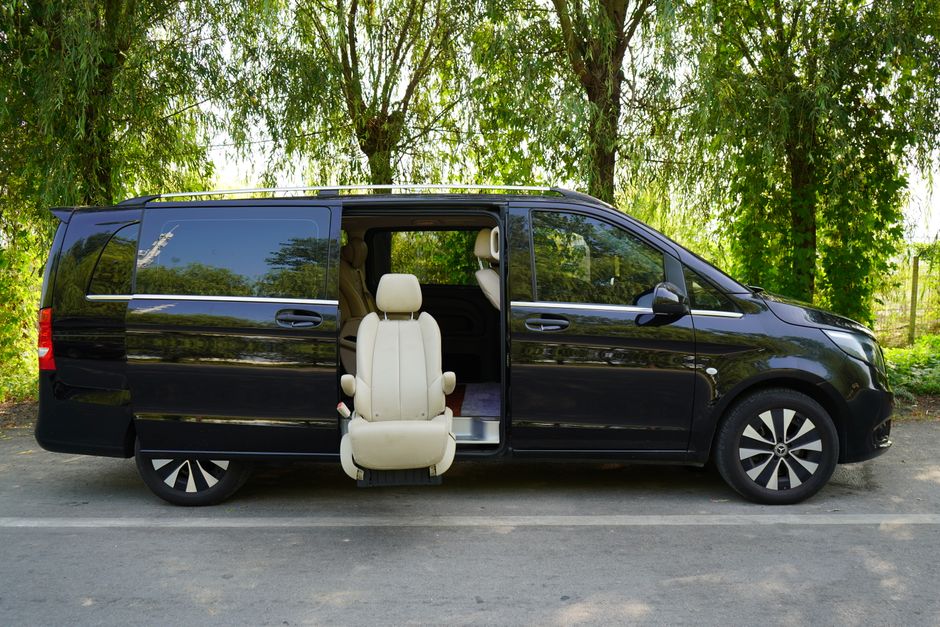
Leasing a van for work is a different animal from leasing a car. HMRC treats vans as commercial vehicles, so a VAT-registered business can usually reclaim all the VAT on the rentals rather than half, the rentals are fully deductible against profits, and the driver pays a flat-rate van benefit charge instead of CO2-based company car tax.
What's in this guide
- How is leasing a van for business different?
- What can your business claim back on a van lease?
- How is van tax different for the driver?
- Should you lease a van or buy one outright?
- What should you check before signing a van lease?
- Are double cab pick-ups still treated as vans?
- Should you lease an electric van?
- How do you choose the right van and term?
- Frequently asked questions
Key Takeaways
- VAT: HMRC's 50% input tax block applies to cars, not commercial vehicles. A VAT-registered business can normally recover 100% of the VAT on van rentals used for business, with apportionment where there is private use.
- Profits: van rentals are fully deductible as a business expense. The 15% lease rental restriction that hits higher-emission cars does not apply to vans.
- Driver tax: a flat van benefit charge of £4,170 for the 2026/27 tax year, plus £798 if private fuel is provided - not a percentage of list price. Zero-emission vans carry a nil charge.
- Business van lease prices are quoted excluding VAT; personal lease prices include it. Never compare the two figures directly.
- Most double cab pick-ups ordered from 6 April 2025 are taxed as cars, not vans, for benefit-in-kind purposes.
How is leasing a van for business different?
Three things change: the VAT, the driver's tax, and the contract itself. A van lease lets a VAT-registered business recover all the VAT on the rentals rather than the 50% allowed on a car, the driver pays a flat annual benefit charge instead of a CO2-linked one, and the agreement is written around a vehicle that works for a living.
That last point gets overlooked and it costs people money. A van lease is priced and inspected as a commercial vehicle. Racking, ply lining, sign writing, roof bars, tail lifts - all fine, all normal, but all subject to the funder's permission and, in most cases, removal and reinstatement before handback. End-of-contract condition is judged against the British Vehicle Rental and Leasing Association (BVRLA) Fair Wear and Tear Standard for light commercial vehicles, which is a separate document from the car standard and allows for the kind of wear a working van actually picks up.
The commercial funding line matters too. Business Contract Hire (BCH) - a business lease where you rent the vehicle for a fixed term and hand it back at the end - is underwritten against the business, not the individual. Funders will want accounts, bank statements or, for a newer business, a director's guarantee. Nothing unusual, but it's a different credit conversation from a personal lease.
| Point of difference | Business van lease | Business car lease (BCH) |
|---|---|---|
| VAT on rentals | Normally 100% recoverable for business use | 50% recoverable where any private use is possible |
| Rentals against profits | 100% deductible | 100% if CO2 is 50g/km or less, otherwise 85% |
| Driver benefit-in-kind | Flat £4,170 (2026/27), nil if zero-emission | List price × a CO2-based percentage |
| Commuting | Allowed without triggering the charge if other private use is insignificant | Counts as private use |
| Modifications | Racking, ply lining and livery common - permission and reinstatement needed | Rarely relevant |
| Return standard | BVRLA LCV Fair Wear and Tear Standard | BVRLA car standard |
What can your business claim back on a van lease?
If your business is VAT-registered and the van is used for business, you can normally recover 100% of the VAT on the rentals. The 50% input tax block that applies to leased cars doesn't apply to commercial vehicles. On top of that, the full rental is deductible against your taxable profits.
An illustrative example. Say a van leases at £320 a month plus VAT. The VAT is £64, so you pay £384 and reclaim the £64 on your next return. The £320 net rental then reduces taxable profit. Compare that with a car on the same nominal rental, where half the VAT sticks and, for anything over 50g/km CO2, 15% of the rental is disallowed against profits.
Two honest caveats. First, where the van has genuine private use - a director doing the weekly shop in it, for instance - HMRC expects VAT recovery to be apportioned to the business proportion. Incidental private use on a working day is not the issue; regular family use is. Second, if you're not VAT-registered you can't reclaim anything, so the number that matters to you is the VAT-inclusive rental. Plenty of small trades sit under the £90,000 registration threshold, and it changes the maths completely.
So is it worth registering for VAT just to reclaim it?
Almost never on its own. VAT registration brings obligations across your whole turnover, and the recovery on one van won't outweigh charging VAT to customers who can't reclaim it. Talk to your accountant. Our guide to reclaiming VAT on a business lease covers the mechanics in more depth, and how business leasing affects your tax and accounts explains how rentals sit in your books.
Sole trader, partnership or limited company?
All three can lease a van on business terms. The funder cares about trading history and affordability rather than legal structure - sole traders are underwritten personally as well as commercially, so expect to provide bank statements and, sometimes, proof of trading via HMRC self-assessment records.
Where structure does bite is the tax. A limited company deducts the rentals against corporation tax and reports any private use as a benefit. A sole trader deducts the business proportion of the rentals against income tax and simply disallows the private slice - no benefit charge, because you can't provide a benefit to yourself.
How is van tax different for the driver?
If an employee or director uses a company van privately, they pay tax on a flat van benefit charge - £4,170 for the 2026/27 tax year, according to HMRC. That's the same figure whether the van cost £22,000 or £52,000. If the employer also pays for private fuel, a further flat charge of £798 applies.
In cash terms, a basic-rate taxpayer pays £834 a year on the van benefit (20% of £4,170) and a higher-rate taxpayer £1,668. Private fuel adds £159.60 or £319.20 respectively. The employer pays Class 1A National Insurance on the same benefit values.
Two features make vans much kinder than cars here:
Commuting doesn't count
Under HMRC's restricted private use condition, an employee can take the van home and commute in it without triggering the charge, provided any other private use is insignificant. Do that in a company car and the benefit applies in full.
Electric vans are nil
The van benefit charge for a zero-emission van has been nil since the 2021/22 tax year. No income tax for the driver, no Class 1A for the employer, even with unrestricted private use - though the van still has to be reported.
The contrast with company car tax is stark. A company car driver pays on list price × a CO2-based percentage, which for petrol and diesel models sits at roughly 15-37% depending on emissions. Our Benefit-in-Kind tax guide sets out how those bands work. For cars, low-emission and electric models are also where salary sacrifice earns its keep - see our salary sacrifice car leasing page - but salary sacrifice is a car scheme, not a van one, and it doesn't help a business that simply needs load space.
Should you lease a van or buy one outright?
Leasing wins on cash flow, predictability and hassle. Buying wins if you intend to run the van into the ground over eight or ten years. A lease rental covers the gap between what the van costs to acquire and what it's forecast to be worth at the end of the term, plus interest charges - so the longer you'd keep a vehicle beyond a normal lease term, the more the ownership route can pay off.
| Consideration | Leasing (BCH) | Buying outright or on HP |
|---|---|---|
| Upfront cash | An initial rental, typically 3, 6 or 9 months' worth | Full price or a deposit plus larger monthly payments |
| Resale risk | Sits with the funder - you hand the van back | Sits with you, and van values move |
| Tax treatment | Rentals fully deductible; VAT recoverable on business use | Capital allowances on the vehicle; VAT recoverable on purchase for business use |
| Road tax | Included for the contract term - the funder is the registered keeper | Your responsibility annually |
| Best suited to | Replacing every 3-5 years, predictable monthly costing, warranty cover throughout | Keeping a van 7 years plus, unpredictable mileage, heavy conversions |
If you're leaning towards leasing, it's worth checking value across deals rather than fixing on one model - our lease comparison guide explains how to compare properly. And if you're weighing whether the lease should sit in the business at all, personal versus business lease is the guide for that decision.
What should you check before signing a van lease?
Mileage, maintenance, modifications and the return standard. Those four decide whether a van lease costs what you expected. Vans cover more miles than cars, get modified more, and get inspected against a different standard - so the assumptions you set at order stage matter more than the headline rental.
The pre-signature checklist
- Set mileage honestly. Guessing low to shave the monthly figure is a false economy - excess mileage is charged in pence per mile at the end. Add up your actual weekly route, then add a margin.
- Decide on maintenance. A maintenance package rolls servicing, tyres and MOT into the rental. On a high-mileage van chewing through tyres, it's often worth it. On a low-mileage 3-year contract that never reaches an MOT, less so.
- Get modifications approved in writing. Racking, ply lining, beacons, tow bars, tail lifts and vehicle wraps normally need the funder's consent before fitting, and usually have to be removed and any damage made good before handback.
- Read the LCV wear and tear standard. Under the BVRLA Fair Wear and Tear Standard for light commercial vehicles, all keys must be present and working, electric and hybrid vans must come back with undamaged charging cables, and panel cracking or distortion is chargeable. Load area condition is assessed too.
- Inspect early. Check the van against the standard around ten weeks before collection so there's time to repair anything sensibly, rather than paying the funder's rate for it afterwards.
- Confirm the licence position. Standard category B licence rules differ for heavier zero-emission vans up to 4.25 tonnes - check the current DVLA position before ordering anything above 3.5 tonnes.
One practical aside worth knowing: on a lease, road tax is included for the term because the funder is the registered keeper, and the standard light goods vehicle VED rate is £360 for 2026/27. That's one less annual bill to chase - a small thing, but fleet admin is death by a thousand small things.
Are double cab pick-ups still treated as vans?
Mostly, no. From 6 April 2025, HMRC stopped using the one-tonne payload test for benefit-in-kind and capital allowance purposes and applies a primary suitability test instead. Because most double cab pick-ups carry people as readily as goods, HMRC expects the majority to be treated as cars for tax.
The practical effect is large. Under the van rules, the driver pays on £4,170. As a car, the benefit is list price × a CO2-based percentage, which on a big diesel pick-up will usually land at the top of the scale. Illustrative example: a £35,000 pick-up at 37% gives a benefit of £12,950, costing a higher-rate taxpayer £5,180 a year against £1,668 under the van charge.
Transitional arrangements do exist. Where a double cab pick-up was purchased, leased or ordered before 6 April 2025, the previous van treatment can continue until the earlier of disposal, lease expiry or 5 April 2029, per HMRC's Employment Income Manual. VAT is the odd one out - the payload test still applies there, so a pick-up with a payload over one tonne can remain a commercial vehicle for VAT purposes while being a car for benefit-in-kind. Confusing, entirely deliberate, and worth an accountant's eye before you commit.
If the crew needs seats and a load area, a crew van is usually the cleaner answer on tax now. If you genuinely need towing capacity and off-road ability, run the numbers on the car treatment before you order.
Should you lease an electric van?
If the van returns to a depot or a driveway each night and does a predictable urban or regional round, an electric van is often the strongest financial case in the market: nil van benefit charge, no fuel duty, and grant support reflected in the price the funder pays. If it does long unplanned motorway runs fully loaded, be more careful - payload and real-world range both drop under load.
The Plug-in Van Grant remains available, worth up to £2,500 for small vans and up to £5,000 for larger vans, and government has confirmed it continues to at least 2027 with the exact 2026/27 levels published separately. On a lease you don't claim it yourself - the funder buys the van and the grant is reflected in the price used to calculate your rental.
Points our team raises with customers most often: check the payload on the electric version against the diesel one, because batteries are heavy; confirm charging at base before you sign, not after; and remember that zero-emission vans pay VED at the light goods vehicle rate now rather than nothing. Clean air zone exemptions are frequently the deciding factor for urban operators.
Not sure whether electric fits your routes?
Our team looks at this every day - depot charging, payload after batteries, and whether the round trip works in winter with the heater on. We'd rather tell you a diesel still suits your operation than put you in a van that doesn't. Call us on 0333 003 3325 and talk it through before you shortlist.
How do you choose the right van and term?
Start with the job, not the badge. Size the load area and payload to your heaviest realistic week, set mileage from your actual routes, then pick a term that matches how long you'll want that specification. Everything else - trim, maintenance, initial rental - flows from those three decisions.
A simple decision framework
Under 12,000 miles a year
A four or five year term usually gives the lowest monthly cost, and warranty cover runs deep into the contract. Maintenance packages are optional at this mileage.
12,000-25,000 miles
Three or four years, and seriously consider maintenance - tyres and services at this mileage add up, and a fixed rental is easier to price jobs against.
Over 25,000 miles
Shorter terms tend to work better, maintenance is close to essential, and be realistic about condition at handback given how the van will be used.
On specification, we find most customers under-spec load area and over-spec trim. Ply lining, a bulkhead and a second side door earn their keep every day. Heated leather does not. And if you have any flexibility on model, look at what represents the best value for the size and payload you need rather than fixing on one badge first - the strongest deals cluster where volume has been committed.
For the wider picture on how a business lease works end to end, our business leasing explained guide covers contracts, credit and end-of-term in detail.
Frequently Asked Questions
Ready to price up your next van?
Tell us the load you carry, the miles you cover and the budget you're working to, and we'll come back with the vans that genuinely fit - including the ones you hadn't considered. Over 25 years of arranging business vehicle contracts, FCA regulated and BVRLA accredited.
Sources
- Van benefit charge and fuel benefit charges for cars and vans for tax year 2026 to 2027 - HM Revenue & Customs / GOV.UK
- BVRLA refreshes LCV Fair Wear and Tear Guide - British Vehicle Rental and Leasing Association
- Vehicle tax rates (V149) - DVLA / GOV.UK
- EIM23151: Car benefit - double cab pickups 6 April 2025 onwards - HM Revenue & Customs
- Government discounts for electric vans and trucks extended - Department for Transport / GOV.UK
Written by the FVL business leasing team. We've arranged commercial vehicle contracts for UK businesses for over 25 years, and we're authorised and regulated by the Financial Conduct Authority and a member of the BVRLA. Questions about your own position? Call our experts on 0333 003 3325.
Will I be approved?
Five questions, no sign-up, and an honest answer before you apply for anything.
Check my eligibility