
Key Takeaways
- You must obtain a VE103B Vehicle on Hire certificate from your leasing company before crossing any border — photocopies of the V5C and letters of authority are not acceptable substitutes.
- UK insurance automatically gives you third-party cover across the EU, but you'll almost certainly want comprehensive cover — speak to your insurer well before departure.
- Most European countries have lower drink-driving limits than England and Wales (0.05% vs 0.08%) — and the UK Government launched a consultation in January 2026 on lowering the domestic limit to match.
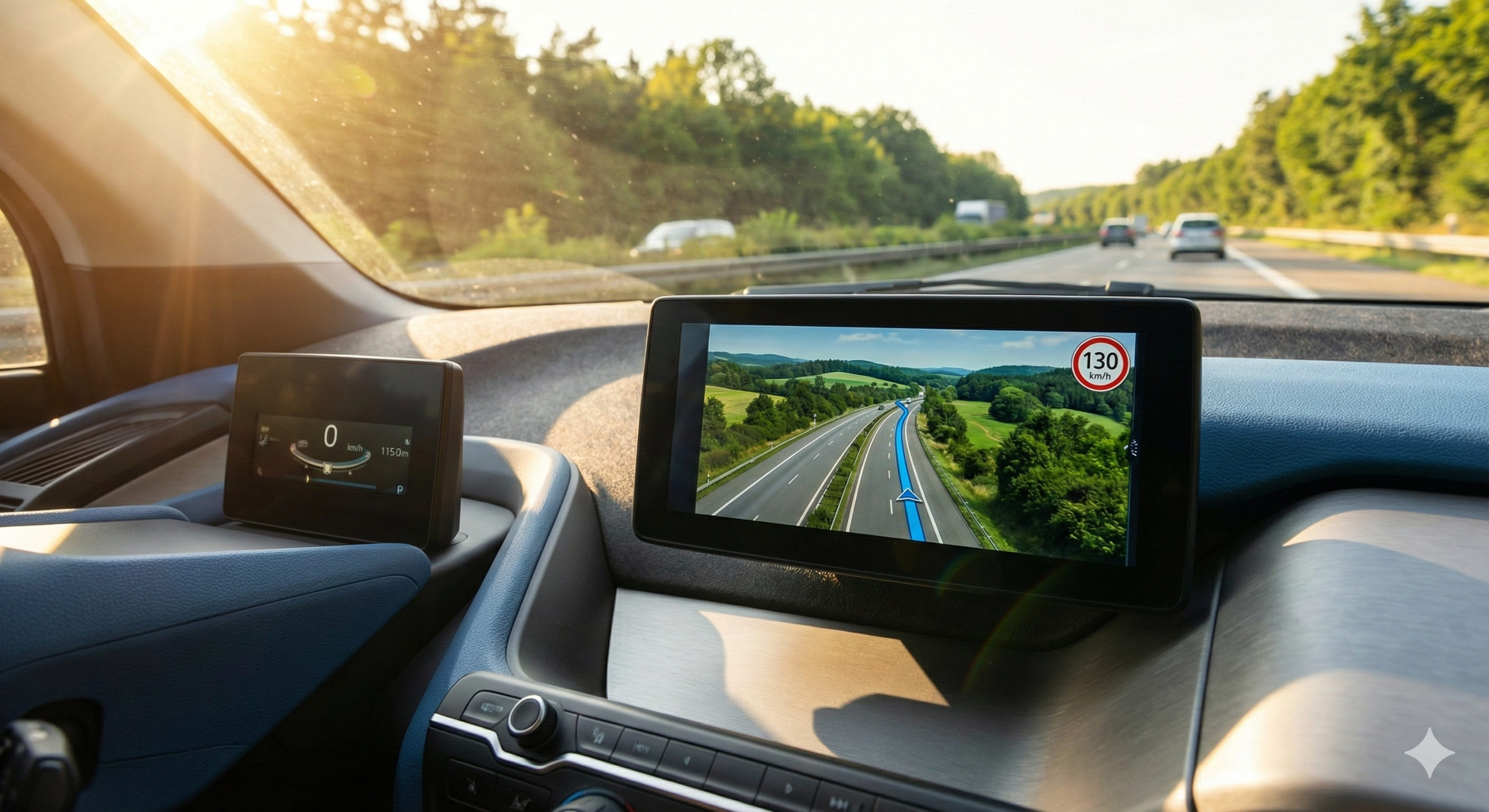
- Speed limits across Europe are in km/h, with most motorways set at 130 km/h (81 mph). France drops its limits in wet weather.
- 🆕 From 1 January 2026, Spain requires a V16 emergency beacon instead of a warning triangle — buy a DGT-approved one before you go.
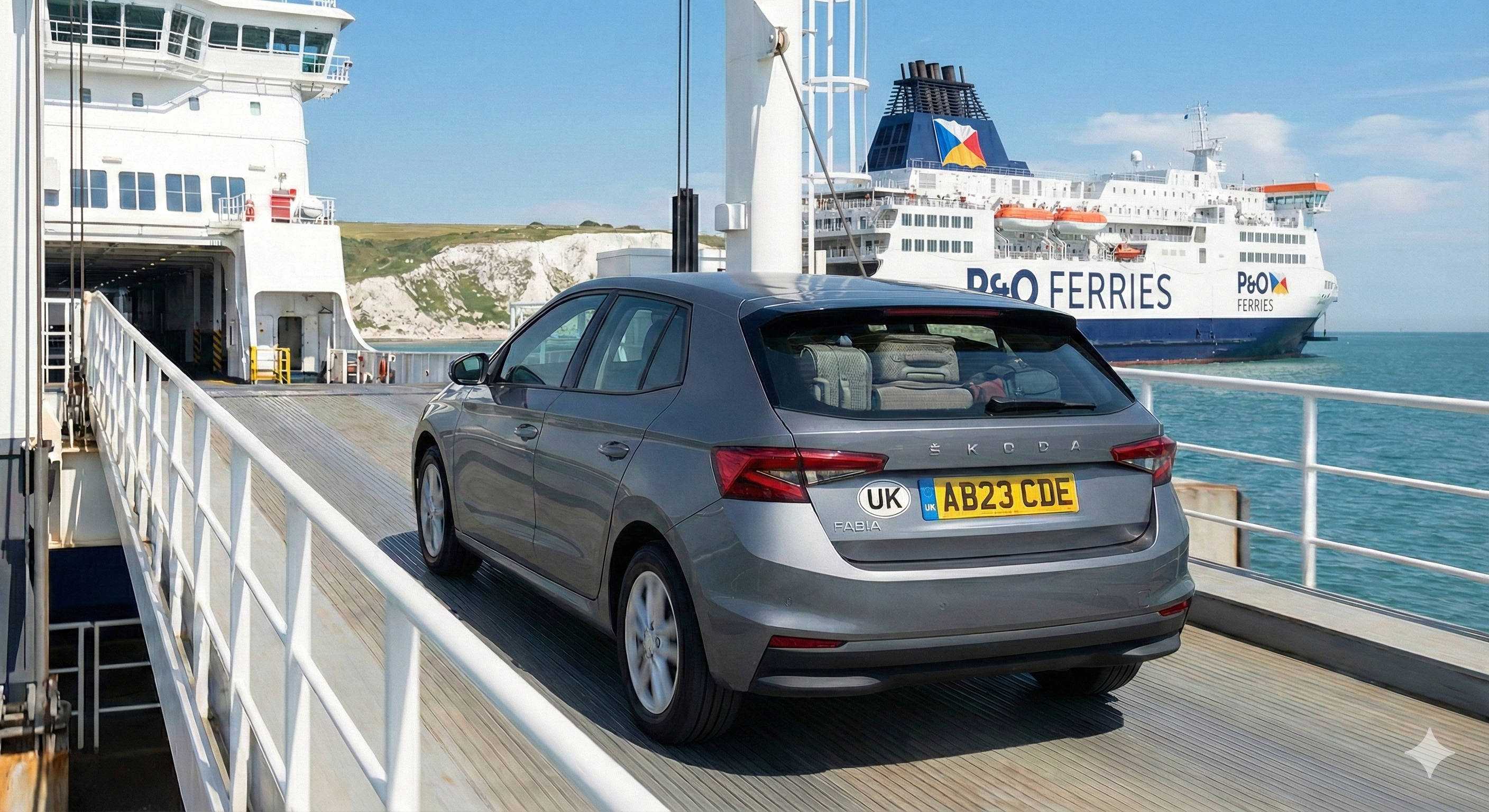
Right, confession time. Last summer I drove my lease car through France, across Spain and back again. Three countries, two ferries, one extremely full boot and approximately fourteen moments of mild panic about whether I had the right paperwork. Spoiler: I did — but only because I spent weeks beforehand obsessively researching what I'd need. 📋
Now that I'm gearing up for another trip in 2026, I've gone through the whole process again, and honestly, a few things have changed. So I figured I'd save everyone else the headache and put it all in one place. This is my no-nonsense, been-there-done-that guide from First Vehicle Leasing — complete with the stuff that actually tripped me up last year.
Do I Need Permission to Take My Lease Car Abroad?
Short answer: yes, absolutely, no exceptions. Because you don't own the car (the finance company does), you must get their written blessing before you so much as glance at a ferry timetable. They'll sort the documentation you need, and without it, you could face fines or — worst case — have the car impounded at the border. 😬
What Is a VE103B Certificate and Where Do I Get One?
According to the BVRLA, the VE103B Vehicle on Hire Certificate is the document you need. It's produced by the DVLA and acts as a legally recognised substitute for the V5C (the vehicle logbook). The UK Government's driving abroad guidance confirms you need one whenever you're driving a hired or leased vehicle outside the UK.
Here's what you need to know from experience:
- Contact your leasing company at least 4-6 weeks before travel — don't leave it until the week before like one colleague of mine who shall remain nameless 🙄
- The certificate is valid for up to 12 months from the date of issue
- It must include the name and address of the person driving the car abroad
- Up to two additional drivers can be listed on a single certificate
And I cannot stress this enough: photocopies and letters of authority are not accepted. I know someone who tried to wing it with a printed email from their leasing company. It did not go well at the port.
Planning a European road trip in your lease car? Browse our personal car leasing deals — our team can arrange your VE103B before your trip.
What Documents Do I Need to Drive My Lease Car in Europe?
Beyond the VE103B, there's a mini mountain of paperwork to gather. I actually made a checklist last year and laminated it (yes, I'm that person). Here's what you need:
| Document | Required? | Where to Get It |
|---|---|---|
| VE103B certificate | ✅ Mandatory | Your leasing company |
| UK photocard driving licence | ✅ Mandatory | DVLA |
| Valid insurance certificate | ✅ Mandatory | Your insurer |
| International Driving Permit (IDP) | ⚠️ Only if paper licence / Crown Dependency licence | Post Office — £5.50 |
| MOT certificate (if applicable) | ✅ Recommended to carry | Your garage / gov.uk |
| GHIC or EHIC card | ✅ Strongly recommended | NHS website |
| Crit'Air sticker (France) | ✅ If entering French cities | Official French government website — approx. €4.76 inc. postage |
One thing that surprised me: you don't need an International Driving Permit (IDP) for the EU, Switzerland, Norway, Iceland or Liechtenstein if you have a UK photocard licence. But if you've still got a paper licence (or one issued in Jersey, Guernsey or the Isle of Man), you'll need to either upgrade or grab an IDP from a Post Office for £5.50.
Do I Still Need a Green Card?
Nope — not for the EU or EEA countries. That requirement was dropped back in August 2021. However, if you're venturing further afield — Albania, Turkey, Belarus, for example — you will still need one. Check with your insurer.
Insurance: What's Covered and What Isn't?
Here's something that caught me off guard last year. Your UK motor insurance automatically provides minimum third-party cover across the EU. So technically, you're legal to drive. But third-party only means if you crash into a Provençal stone wall (not speaking from experience, I promise 🫣), your insurer pays for the wall, not your car.
In practice, you'll want to call your insurer and confirm:
- That your comprehensive cover extends to the countries you're visiting
- How many days of European cover you get (some policies limit it to 90 days)
- Whether your breakdown cover works abroad — most standard UK policies don't cover you outside the UK
Our leasing experts always recommend taking out separate European breakdown cover if your policy doesn't include it. Getting a car repatriated from southern Spain isn't cheap. Trust me, the peace of mind is worth the £30-£60.
European Speed Limits: A Quick Country Comparison
This is the one that always gets people. You're cruising along thinking "80 feels about right" — then you realise the signs are in km/h and you're doing 80 km/h in a 50 zone. Not ideal. 🚗💨
| Country | Urban (km/h) | Rural (km/h) | Motorway (km/h) | Wet Motorway (km/h) |
|---|---|---|---|---|
| France | 50 | 80 | 130 | 110 |
| Spain | 50 | 90 | 120 | 120 |
| Germany | 50 | 100 | 130 (advisory) / unrestricted on some stretches | Varies |
| Italy | 50 | 90 | 130 | 110 |
| Netherlands | 50 | 80 | 100-130 | 100 |
| Belgium | 50 | 70-90 | 120 | 120 |
| UK (for comparison) | 30 mph (48 km/h) | 60 mph (97 km/h) | 70 mph (113 km/h) | 70 mph |
Key thing I learned the hard way: France is really strict about its wet-weather speed reductions. If it's raining, the motorway limit drops from 130 to 110 km/h, and the rural limit drops from 80 to 60 km/h. There are cameras everywhere, and the fines range from €45 to a whopping €1,500.
And on the Autobahn? Those "unrestricted" sections in Germany are magical, but they're less common than you'd think. Most stretches actually have a 130 km/h advisory limit, and wherever there's a posted limit, the Polizei enforce it aggressively.
Looking for the perfect road trip car? Explore our SUV lease deals or check out our electric car leasing offers — ideal for those lower-emission zones across Europe.
Drink-Driving Limits: Europe vs the UK
So can you have a cheeky glass of rosé with lunch and drive back to your gîte? Honestly, in most of Europe, probably not.
The drink-drive limit in England, Wales and Northern Ireland currently sits at 80mg of alcohol per 100ml of blood — one of the highest in Europe. Scotland has already lowered its limit to 50mg. And here's the big news for 2026: the UK Government launched its new Road Safety Strategy in January 2026, which includes a consultation on lowering the limit in England and Wales to match Scotland at 50mg.
But when you're driving abroad, their limits apply to you:
| Country | Blood Alcohol Limit (mg/100ml) | Notes |
|---|---|---|
| France | 50 | 20 for novice drivers (first 3 years) |
| Spain | 50 | 30 for novice drivers |
| Germany | 50 | 0 for novice drivers |
| Italy | 50 | 0 for novice drivers & professional drivers |
| Czech Republic | 0 | Zero tolerance |
| Hungary | 0 | Zero tolerance |
| England & Wales | 80 (consultation underway to reduce to 50) | May change during 2026/27 |
| Scotland | 50 | In place since 2014 |
My advice? Just don't. One glass of wine at altitude in the Pyrenees hits differently to one in your local. Keep the keys in your pocket if you've had anything at all. 🍷🚫🔑
What Extra Kit Do I Need in the Car?
This varies wildly by country, and getting it wrong means on-the-spot fines. Last summer I bought one of those "European driving kits" from Amazon for about £25 and it had almost everything I needed. Almost.
The Universal Essentials
- UK sticker — unless your number plate already shows the UK flag with the Union Jack. GB stickers are no longer recognised
- Warning triangle
- Hi-vis jacket(s) — one for each passenger in France
- Headlight beam deflectors — to stop you dazzling oncoming drivers. Some newer LED headlights have a dip setting for continental driving; check your car's manual
🆕 Spain's New V16 Beacon Rule (2026)
This is brand new and caught me out during my research. From 1 January 2026, Spain requires all vehicles to carry a V16 emergency beacon — an orange flashing light you pop on your roof if you break down. Warning triangles are no longer legally acceptable there. Make sure you buy a DGT-approved one; cheaper versions sold online may not meet Spain's technical standards.
France Extras
- Crit'Air sticker if you're entering any of the 11+ cities with low-emission zones (Paris, Lyon, Marseille, etc.) — costs about €4.76 including international postage from the official French government website. Allow up to six weeks for delivery! ⏳
- Winter tyres are mandatory in mountain regions between 1 November and 31 March
- Speed camera detectors must be disabled — including sat-nav camera alerts. Fines up to €1,500
Equipment requirements and fines stated are correct as of February 2026 and may change. Always check the latest guidance on gov.uk's driving abroad page before you travel.
Driving on the Right: Practical Tips From Someone Who's Done It
Everyone says "oh, driving on the right is easy, you'll get used to it." And they're right — when you're in a stream of traffic on a motorway. Where it gets dodgy is when you pull out of a quiet car park at 7am after three croissants and your muscle memory says "go left." 😅
Here's what actually helped me:
- Stick a Post-It note on the dashboard that says "DRIVE ON THE RIGHT" — it sounds daft, but it works
- Roundabouts go anti-clockwise in continental Europe — the opposite of the UK. This genuinely takes getting used to
- Overtake on the left, not the right. Your mirrors will feel wrong for the first hour
- Use a sat-nav — Google Maps on your phone in a holder works brilliantly and shows the local speed limit on screen. Just don't hold the phone
- Remember 112 — it's the emergency number across all of Europe
Will Foreign Mileage Count Towards My Lease Limit?
Yes. Every single mile (or kilometre, converted back) counts towards your contract's total mileage allowance. A two-week road trip across France and Spain can easily add 2,000-3,000 miles. If your lease is set at 8,000 miles per year, that's a significant chunk eaten up in a fortnight.
Based on FVL's experience, excess mileage charges typically range from around 5p to 20p per mile depending on the vehicle. On a trip of 3,000 extra miles at, say, 10p per mile, you're looking at an unexpected £300 bill at the end of your lease. Worth doing the sums before you leave. 🧮
If you think you'll go over, contact your leasing company before the trip. It's usually cheaper to increase your annual mileage allowance mid-contract than to pay the excess charge later.
Your Pre-Trip Checklist ✅
Here's my actual pre-trip checklist — the one I used last summer and I'm using again this year. Feel free to screenshot it:
- Contact your leasing company — request VE103B certificate (4-6 weeks ahead)
- Call your insurer — confirm comprehensive cover extends abroad, check number of days covered
- Arrange European breakdown cover if not already included
- Check your driving licence — photocard, in date, correct address
- Order Crit'Air sticker if visiting French cities (allow 6 weeks for delivery)
- Buy a European driving kit — hi-vis, triangle, beam deflectors, UK sticker
- Buy a V16 beacon if visiting Spain (DGT-approved only)
- Calculate your mileage — will this trip push you over your contract allowance?
- Check tyre condition and pressures — especially important for longer trips
- Download offline maps — roaming charges and signal black spots in rural France are real
- Store 112 in your phone — European emergency number
- Pack your GHIC/EHIC card
Mileage charges, insurance costs and equipment prices mentioned are indicative and subject to change. Always confirm with your leasing provider and insurer. Prices correct as of February 2026.
I hope this saves at least one person from the same frantic 2am Googling I did the night before my ferry last year. Driving your lease car abroad is genuinely one of the best things about having a car on Personal Contract Hire (PCH) — you get a reliable, well-maintained motor for a European adventure without the depreciation headache of owning it. Just do the prep work and you'll be fine. 🌍
If you're planning a trip this year, First Vehicle Leasing can help with everything from choosing the right car to sorting your VE103B. We've been doing this since 1998 and we've seen every possible question (and a few impossible ones). Happy travels — and drive safe out there.
Bon voyage! 🇫🇷 ¡Buen viaje! 🇪🇸 And if you see a slightly overwhelmed bloke in a lease car squinting at French road signs somewhere near Bordeaux this summer... wave. It's probably me. 👋😄
Ready to find the perfect car for your next European road trip? Speak to our FCA-regulated leasing experts at First Vehicle Leasing on 0333 003 3325 or request a callback. We'll get you sorted — paperwork and all.
Frequently Asked Questions
Can I take my lease car to the Republic of Ireland?
Yes, but you still need a VE103B certificate — even for travel from Great Britain or Northern Ireland to the Republic. The same documentation rules apply as for any other country abroad.
How long can I keep my lease car abroad?
UK law still applies to your UK-registered vehicle if it's abroad for less than 12 months. Your vehicle must remain taxed and insured in the UK throughout. If you're planning to be away longer than 12 months, different rules apply and you may need to register the vehicle locally — check with DVLA.
Do I need winter tyres for driving in Europe?
It depends on the country and the time of year. In France, winter tyres are mandatory in mountain regions from 1 November to 31 March. Germany, Austria and several other countries also have winter tyre requirements. If you're leasing a car and need tyres changed, check whether this is covered by your maintenance package — and always get approval from the leasing company before fitting non-standard tyres.
What happens if my lease car breaks down abroad?
Your standard UK breakdown cover almost certainly won't help you in France. You'll need separate European breakdown cover, which typically costs £30-£60 for a single trip or around £100+ for annual cover. If you break down on a French motorway (Autoroute), you must use the orange emergency phones rather than your mobile — it's the law. Always put on your hi-vis jacket before leaving the car.
Are low-emission zones a problem for lease cars?
Generally no — most lease cars are relatively new and meet Euro 6 emissions standards, which means they'll qualify for the best Crit'Air category (level 1 or 2) in France. If you're leasing an electric vehicle, you'll get a green sticker and have unrestricted access everywhere. Just remember that even electric cars still need to display a Crit'Air sticker. Explore our electric car lease deals if you want the smoothest continental experience.